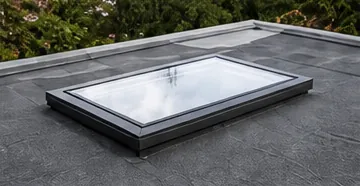
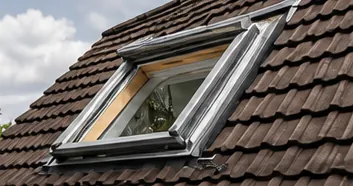
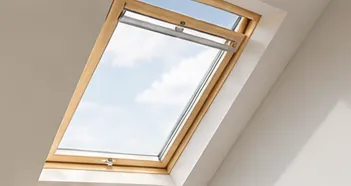
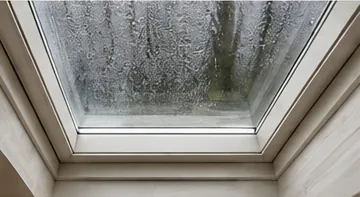
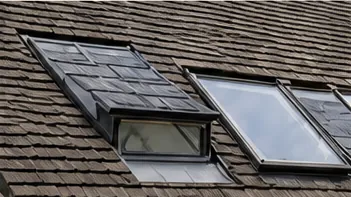
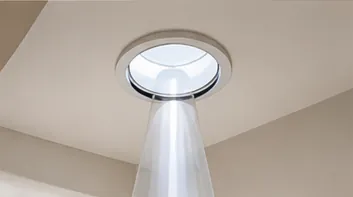
Landings are only one half of the story. In the larger interwar houses, the upstairs bathroom is often on the inside of the plan, away from the outside walls, with a tiny window, or no window at all. A compact roof window or a bathroom sun tunnel above it solves the daylight problem, and the roof window version adds a way for steam to leave right under the ridge of the room, away from the mirror and the ceiling paint.
The extension at the back
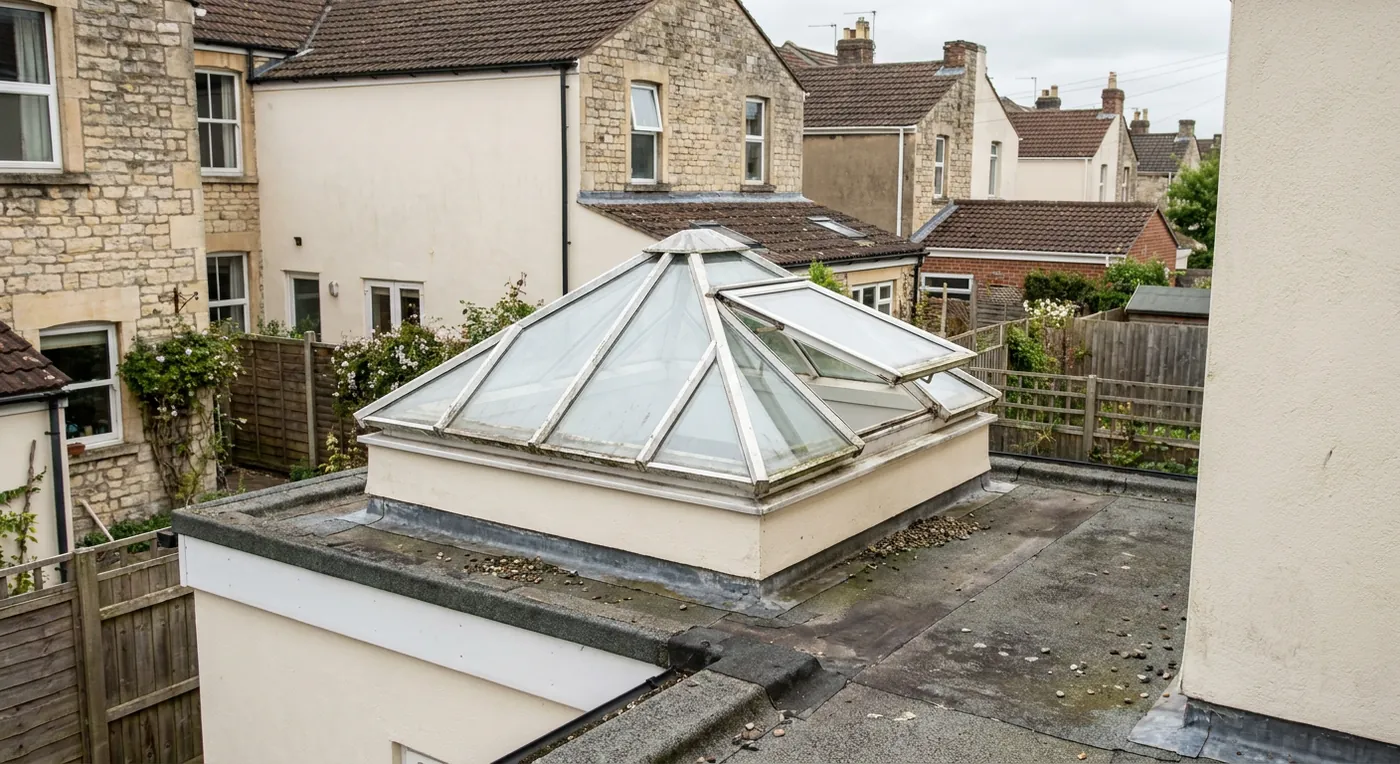
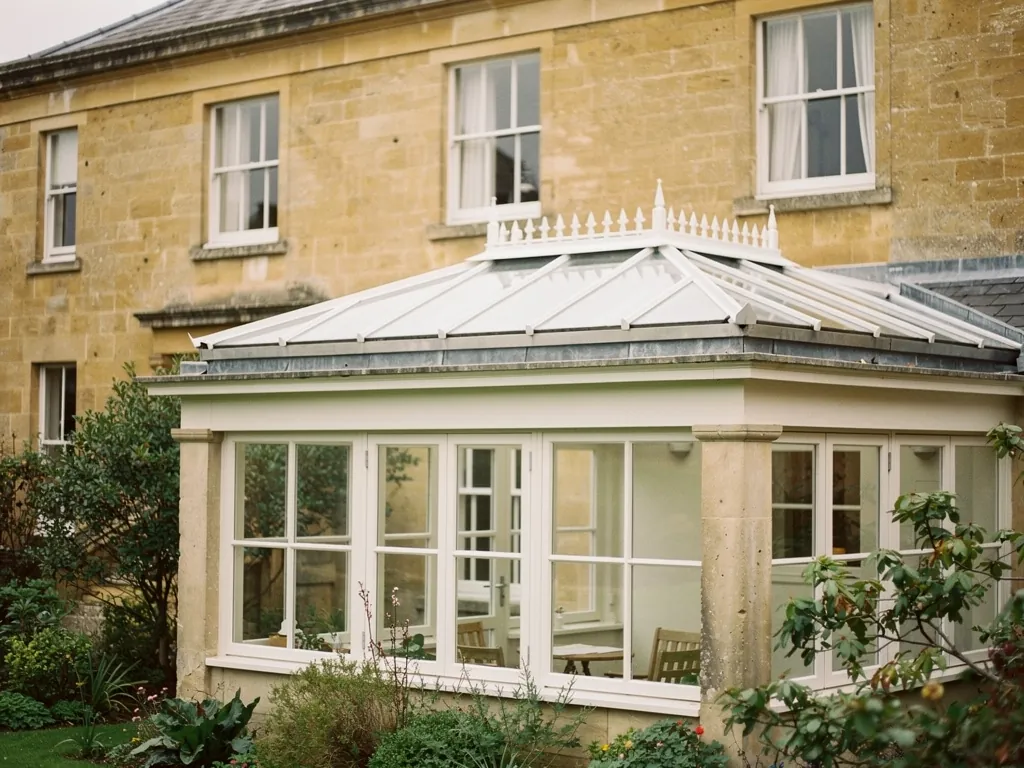
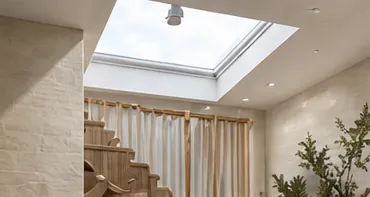
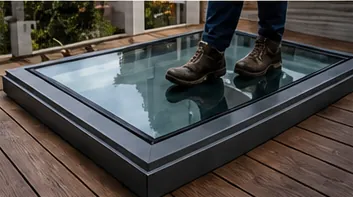
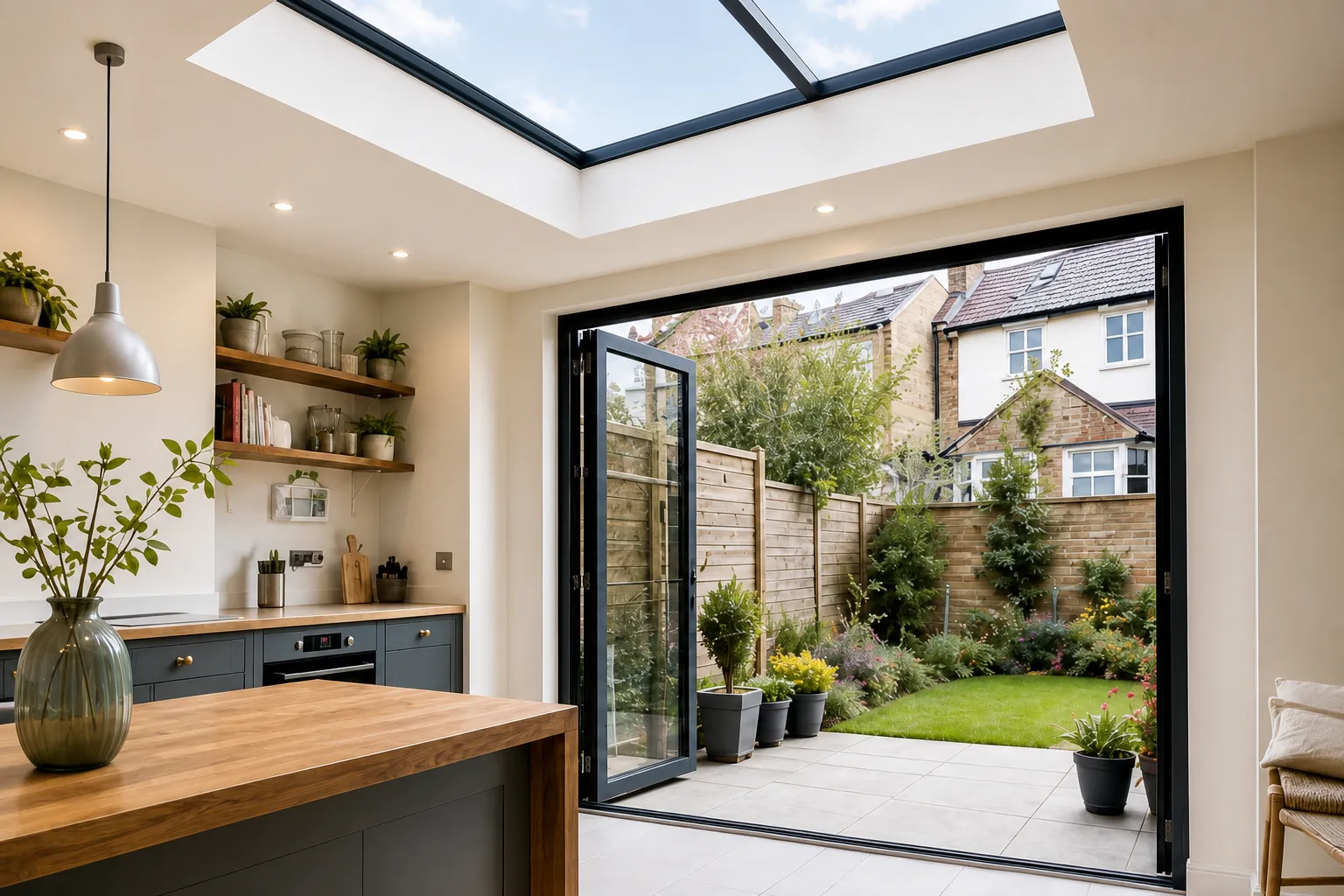
Larger plots invite larger extensions, and in Almondsbury that has meant kitchens and garden rooms with flat roofs, sometimes finished with a lantern. These rooms have glass on one side and a ceiling that picks up heat from above, and in sun they can become hard to sit in. A fixed rooflight there lights the room beautifully and traps the warmth.
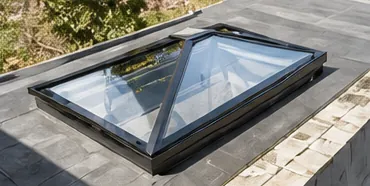
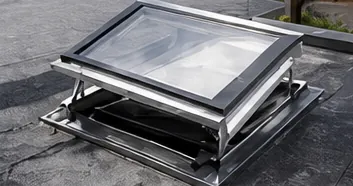
An opening flat rooflight or an opening roof lantern changes that. Positioned high up, it lets the hottest air leave the room without anyone having to prop the bi-fold doors. At that height you would not want to reach for a handle, so most are electric or solar. The rain sensor closes the unit when the weather turns, which matters on rising ground, where a shower can arrive while you are at work. Sound judgement about orientation helps too: a south-facing roof gets the most sun, so a unit there gains most from opening, and from glass that cuts some of the heat.
If the rooflight on an older extension has clouded, or the seal has failed, the question is replacement rather than anything else. Our signs of a failed rooflight page sets out what to look for. Whenever a roof is opened, the energy rules apply: a roof window takes the window limit, a rooflight a different one, and the energy efficient rooflights hub explains the glass choices in plain terms.
Neighbouring places we cover include Patchway and Olveston, and the cost guide lays out what moves a quote up or down.