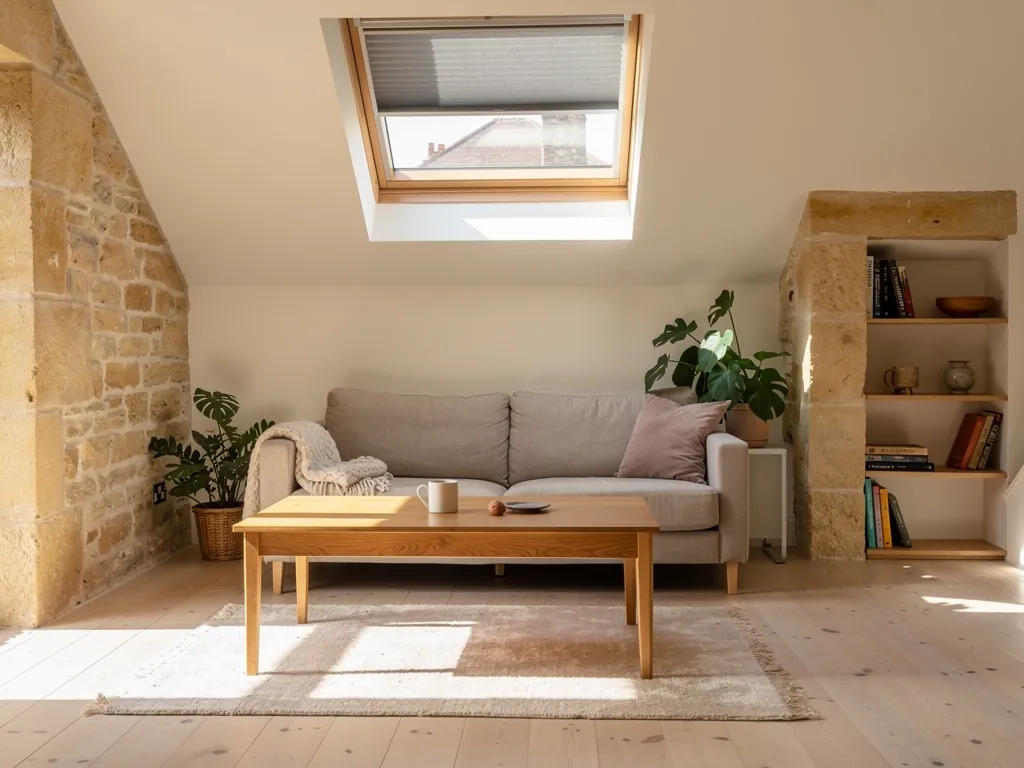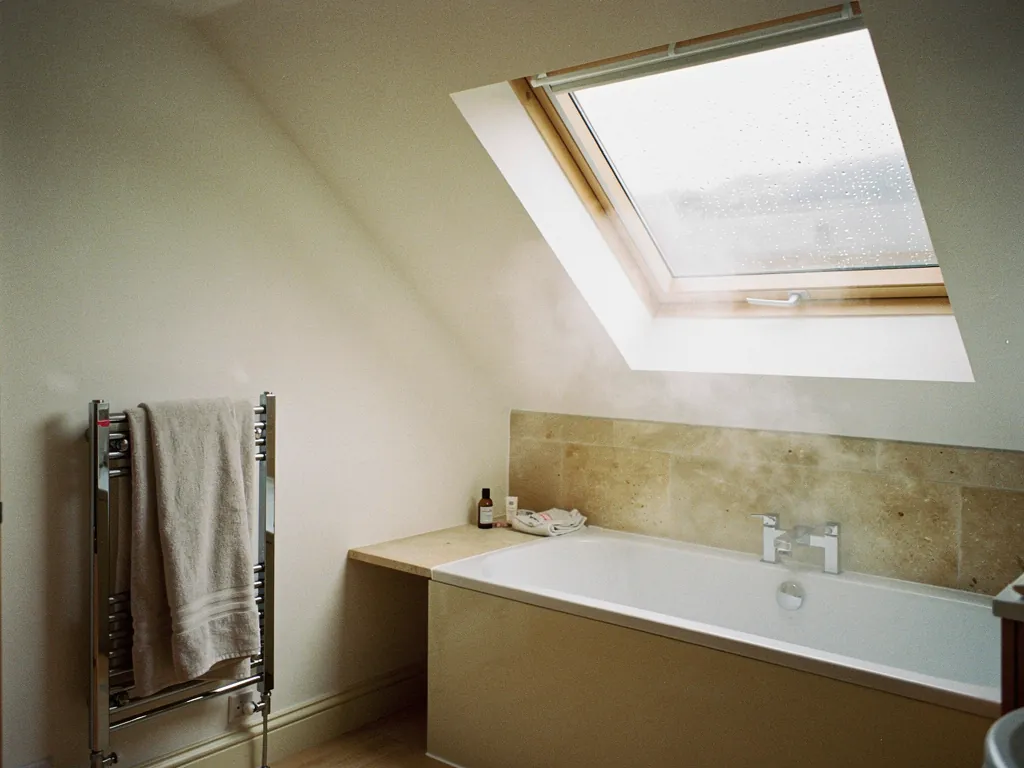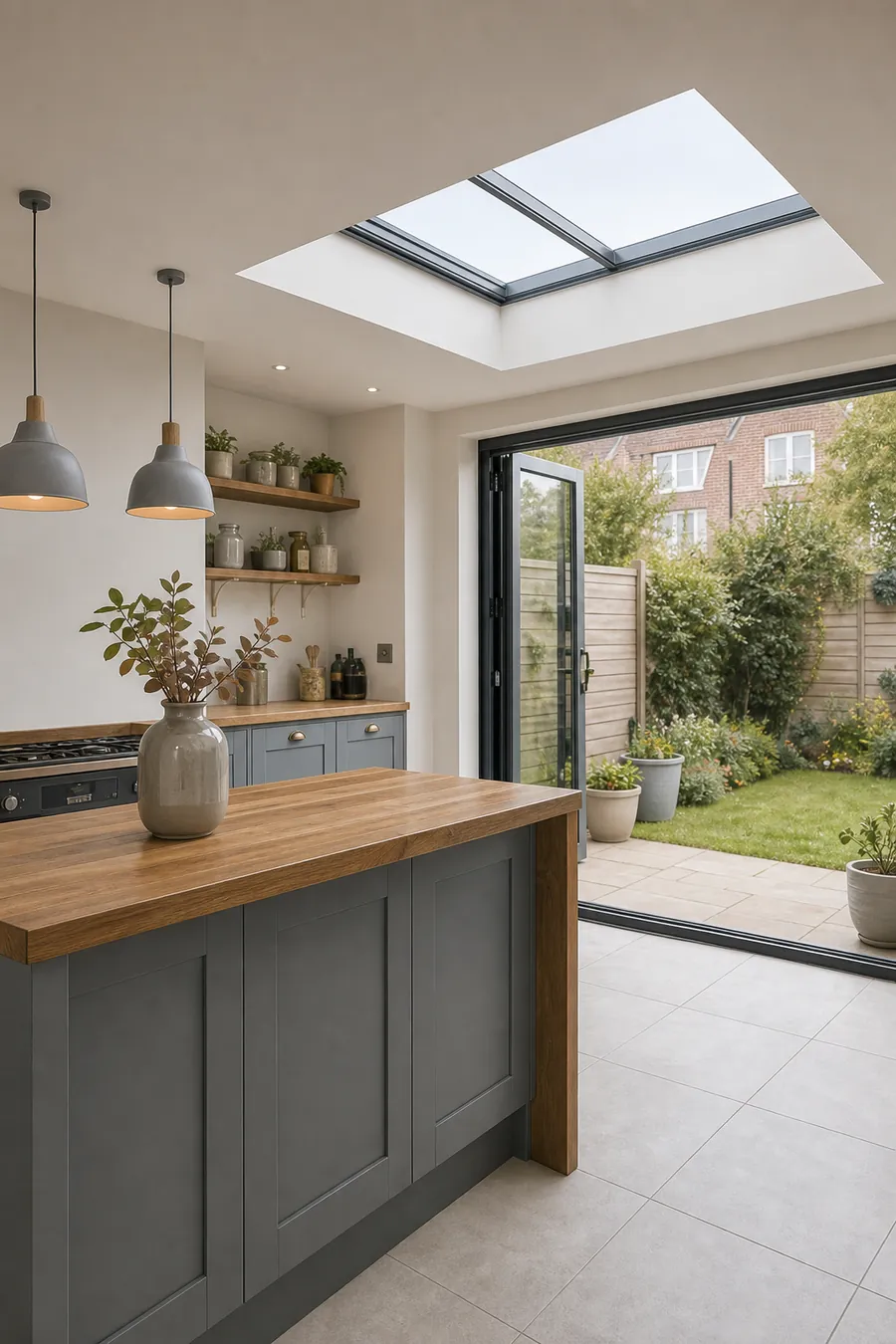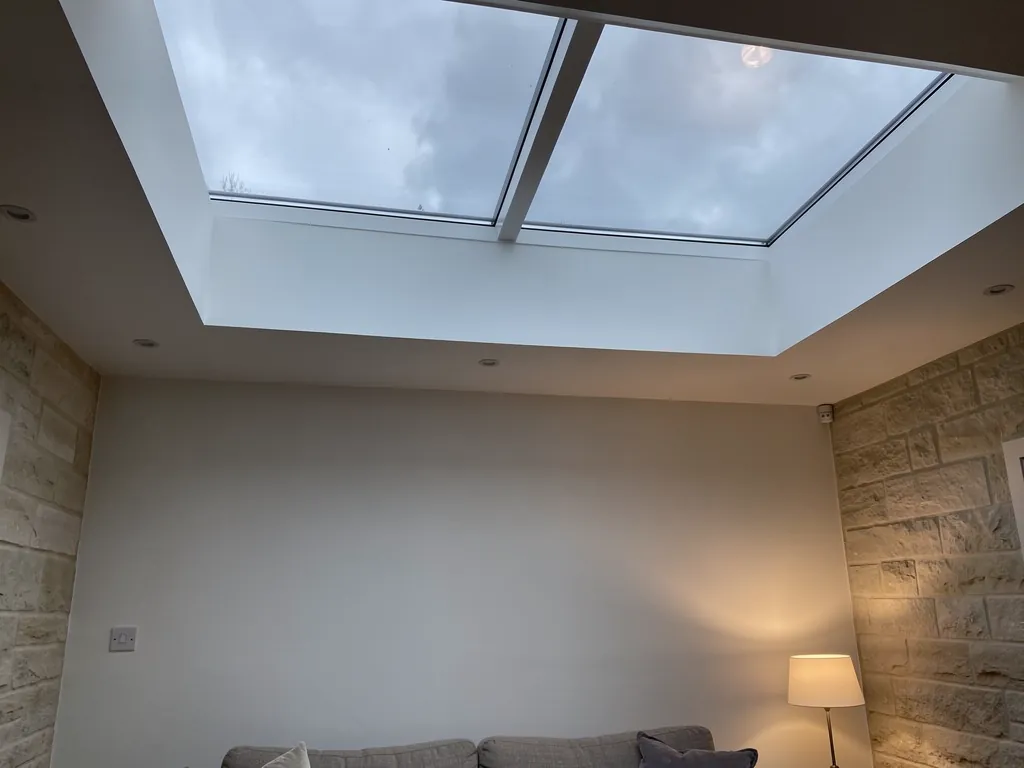
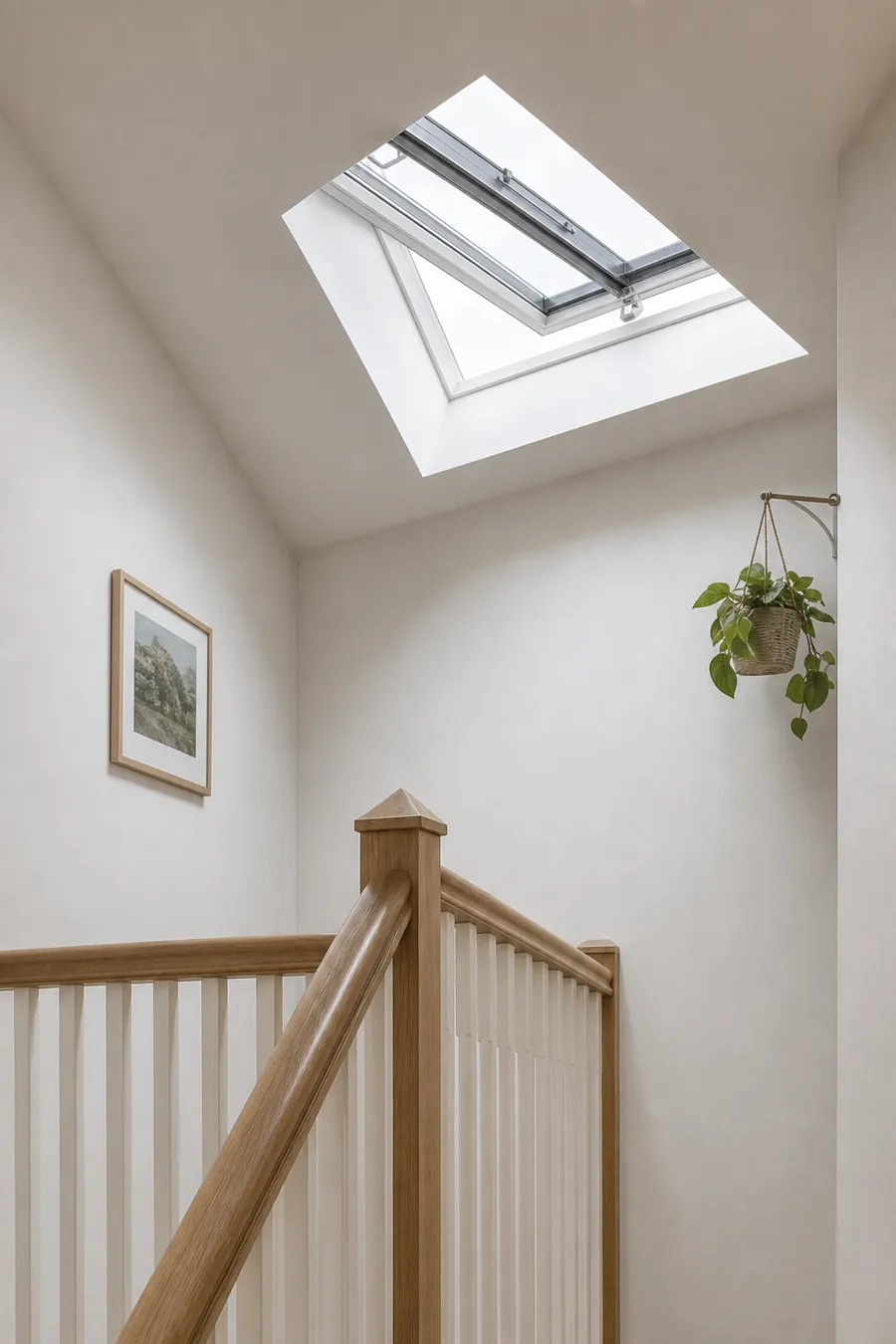
A triple-glazed flat rooflight over a warm living room

Energy Efficient Rooflights in Bristol Warm in winter, cool in summer, and still able to open

An efficient rooflight keeps heat in through winter and the sun's heat out in summer, and the better ones still open to clear damp air. We fit them across Bristol, Bath and the towns within 30 road miles.

Rooflight limit
2.2 W/m²K on existing homes under Part L
Roof window limit
Roof windows take Band B or a U-value of 1.4
Glass edge
Warm edge spacers keep mist from forming at the rim
Workmanship cover
Ten years, written into the quote

Rooms that gain most from better glass

Three levels of efficiency to price

  • Standard double

    • Meets the Part L limits for existing homes
    • Warm edge spacer and argon fill as a baseline
    • Suits a landing or a stairwell
  • Triple glazed

    • A third pane keeps the inner glass warmer
    • Heavier, so the frame is chosen to carry it
    • Suits a cold bedroom or a bathroom
  • Solar control

    • A coating reflects part of the sun's heat
    • Clear view kept, glare softened
    • Suits south and west slopes

How the job runs

  1. Survey and advice

    We visit, measure and plan the best fit.

  2. Written quote

    A clear quote with no obligation.

  3. Fitted by one team

    One team fits everything, cleanly and safely.

  4. Signed off and guaranteed

    We sign off the work and your guarantee begins.

The long read

Efficient rooflights, from U-value to sign-off

How a rooflight loses and gains heat, which glazing and spacer to choose, how to handle the summer sun and condensation, how the fitting protects the performance, and what the upgrades are worth.

  1. 01 Where a rooflight loses heat, and what the numbers measure
  2. 02 Glazing, gas and the edge of the glass
  3. 03 Sunshine through the glass and how to manage it
  4. 04 Condensation on rooflights and how a good unit copes
  5. 05 Fitting a rooflight so the efficiency survives the roof
  6. 06 What the extra cost buys and when it is worth paying
Insulation fitted round a rooflight opening

01

Where a rooflight loses heat, and what the numbers measure

Every roof is an insulated layer, and a rooflight interrupts it. Glass holds heat far less well than a thick quilt of mineral wool, so the room below notices the difference. That is the honest starting point. An energy efficient rooflight does not abolish the gap. It narrows it, and it does so through several details that work together: the glazing, the edge of the glass, the frame, and the way the unit is built into the roof.

The measure of that gap is the U-value, written in W/m²K. Put plainly, it says how many watts of heat pass through one square metre of the unit for every degree of temperature difference between inside and out. A lower figure means less heat escapes. The number is worked out for the complete unit, so a rooflight with excellent glass in a poor frame will score worse than the glass alone suggests. When a maker quotes a figure, ask whether it is for the glass centre or the whole product. The whole product is the one that matters for the rules and for your bills. Our guide to rooflight U-values shows how to read a datasheet line by line.
The limits that apply to existing homes

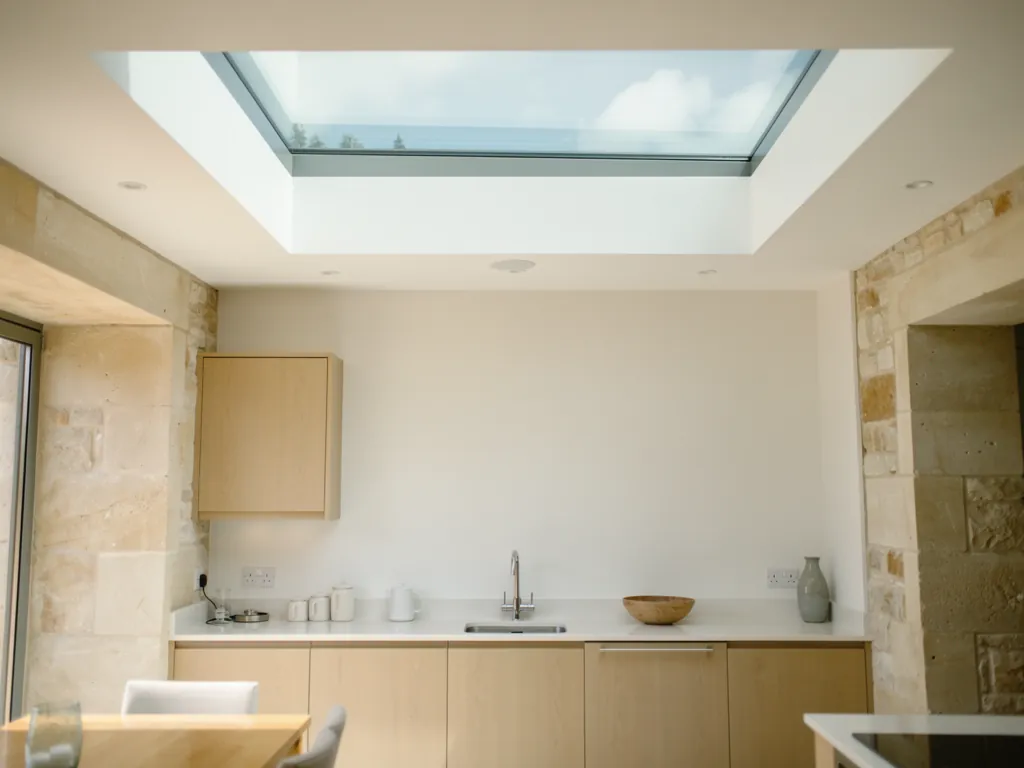
For work on an existing dwelling in England, Part L 2021 sets out the limits in Table 4.2. The ceiling for a flat-roof or low-pitch rooflight is 2.2 W/m²K. A roof window lies in the pitch of the roof and is meant to open, so it is treated as a window and must reach Window Energy Rating Band B, or a U-value of 1.4 W/m²K. Two products, two yardsticks, and the opening one gets the tougher test. Products from reputable makers meet these limits as standard, so the question for an owner is how far to go beyond them.

  • U-value heat lost per square metre for each degree of difference, lower is better
  • Whole unit glass and frame measured together, the figure the rules use
  • Band B the Window Energy Rating grade a roof window must reach
  • Kerb the upstand a flat-roof unit sits on, which also needs insulating

Why heat leaves upward

Warm air rises, so the top of a room is the warmest part, and a rooflight sits right there. The inside pane of a poor unit chills quickly in winter, and air next to it sinks, setting up a faint downdraught that people read as a cold spot. Sitting beneath a loft window in January, you can feel the effect on your head and shoulders long before any thermometer does. A better unit keeps the inner pane closer to room temperature, and that is much of what you are paying for.

The worry about this tends to arrive as a single question, and the short answer on whether skylights make a house colder goes through the trade in plain terms: a little more heat lost in winter, set against daylight that lets you leave lamps off, and sun that warms a room on a clear February morning.

What this means on the roof

On a Victorian terrace in Bedminster the roof slope may carry only modest insulation between the rafters, so a new roof window with a strong U-value can be a real step up beside the old single-glazed skylight it replaces. On a 1930s semi the loft room may have a cold slope above a bed, and the unit overhead sets the comfort of the whole space. We note the existing glass, the insulation round it and the room's use at the survey, then explain which level of performance is worth having in that spot and which is more than it needs.

Open roof window Warm damp air leaving Loft bedroom Cooler air in low
Warm air from the room rises to the roof window, damp air leaves through the open sash and cooler air is drawn in low.
A rooflight with solar control glass on a sunny day

02

Glazing, gas and the edge of the glass

Most rooflights and roof windows sold for homes are double glazed: two panes separated by a gap. The gap is filled with an inert gas such as argon, which conducts heat more slowly than air. One of the inner surfaces carries a low emissivity coating, a thin invisible layer that bounces heat back into the room instead of letting it radiate out through the glass. Together these steps turn a pair of panes into a respectable barrier.

Triple glazing adds a third pane and a second gap. The U-value drops further, and the inner pane stays warmer in cold weather, which suits a bedroom under the roof or a bathroom where you stand beside the window with damp skin. The costs are real, though. Three panes of glass are heavier, so the sash and the hinges work harder, and the unit may need a stronger frame. Daylight falls slightly because each extra pane absorbs a little. The guide to double or triple glazed rooflights sets out when each choice repays the money.

 DoubleTriple
Heat held inMeets the rulesBetter still
WeightLighterHeavier
DaylightHighestSlightly less
Best forLandings, kitchensCold bedrooms, bathrooms

The spacer that holds the panes apart

Round the edge of every sealed unit runs a spacer bar, which keeps the panes apart and holds the gas in. Older spacers were aluminium, a metal that carries heat very well, so the edge of the glass became the coldest strip in the window and the first place for a line of mist to appear. A warm edge spacer is made from a material that conducts far less, which keeps that strip nearer to room temperature. The short answer on the warm edge spacer explains what to look for on a quote. On cost it is among the cheapest upgrades there is, and we would not specify a unit without one.

Glass that does more than insulate

Other coatings sit on the same panes. A self-cleaning layer on the outer face breaks down dirt and lets rain wash it off, which helps on a unit you cannot reach. Acoustic laminated glass dulls the patter of rain, useful in a loft bedroom under a slate roof. Laminated inner panes also hold their pieces together if broken; The regulations do not demand laminated glass over a house, so on our quotes it appears as a suggestion with its price beside it.

A warm loft room on a frosty morning under a new triple-glazed roof window
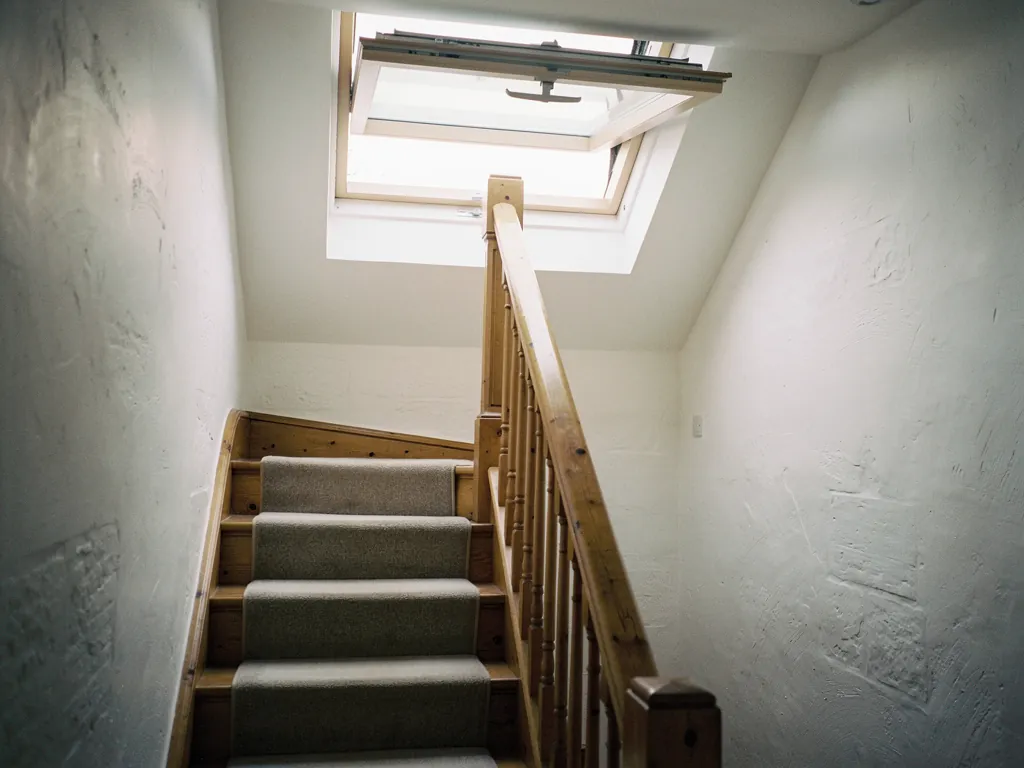
A roof window with a clear inner pane over a loft landing, the glazing lit evenly from edge to edge.

Each of these features is optional, and each adds a little to the quote. The sensible approach is to rank them by the room. For a landing, a warm edge spacer, argon and a good low emissivity coating are plenty. For a bedroom, laminated glass may earn a place. For a sash that opens, the roof windows hub lists the sizes and styles that take these glazing choices.

Afternoon sunshine through a rooflight with solar control glass and a blind half drawn

03

Sunshine through the glass and how to manage it

Efficiency is not only about keeping warmth in. In summer a rooflight lets the sun's heat in as readily as its light, and a room directly under a roof has little to shield it. This is called solar gain, and it is the reason some loft rooms feel pleasant in March and hard to sleep in by August. A well-chosen rooflight deals with the gain as carefully as the heat loss.

The main tool is solar control glass. It carries a coating that turns back part of the sun's warmth yet passes daylight, and tints run from neutral through blue to grey. The effect is a little like wearing sunglasses: the view stays clear, the glare softens and the heat on your skin eases. The short answer on whether solar control glass stops a rooflight overheating gives the balanced view. It helps a good deal, it does not turn a hot room cool by itself, and it can be paired with other measures.

Low energy glass and solar control glass are the same thing.

One keeps warmth in during winter; the other limits heat coming in during summer. Some coatings do a little of both, but they are chosen for different jobs, and a unit can carry each.

Choosing by the direction the roof faces

The compass direction of the slope decides how much of this matters. A rooflight on a north-facing slope seldom sees direct sun and rarely needs solar control, so clear, bright glass suits it. East-facing glass catches the morning sun, which warms a bathroom gently. South and west slopes take the strong afternoon and evening sun, and a bedroom under one of those is where solar control glass repays its cost. Georgian and Edwardian terraces tend to have roofs facing front and back, so one slope of a loft may face the sun and the other not, and the two units can be specified differently.

Blinds, and opening the glass

Blinds fitted outside the glass stop the sun before it reaches the pane, and they work far better than blinds hung inside, which catch the heat after it has entered. Manufacturers make external awning blinds and roller shutters for roof windows, some of them solar powered. Inside blinds still give privacy and darkness for sleep. Combined with glass that reflects some of the heat, they make a sound pair.

Air movement completes the picture. A roof window that opens lets the hottest air at the top of the room leave and draws cooler air in at the eaves or through a lower window. A rooflight with a trickle vent or a tilt position can be left on the latch overnight, so a loft cools down while you sleep. If you want a unit that opens at the touch of a button and closes when it rains, electric opening rooflights do that, and our page on fresh air rooflights looks at how opening and efficiency fit together.

A bathroom with a roof window open above the bath
An opening roof window left on the latch on a warm evening, with the blind drawn on the sunny side.

Planning for summer at the survey avoids an uncomfortable surprise later. We ask which way the slope faces, whether trees or the next roof shade it, and which room is below. That conversation settles whether a unit needs a tint, a blind or simply a sash that opens.

Condensation forming on an old single-glazed rooflight

04

Condensation on rooflights and how a good unit copes

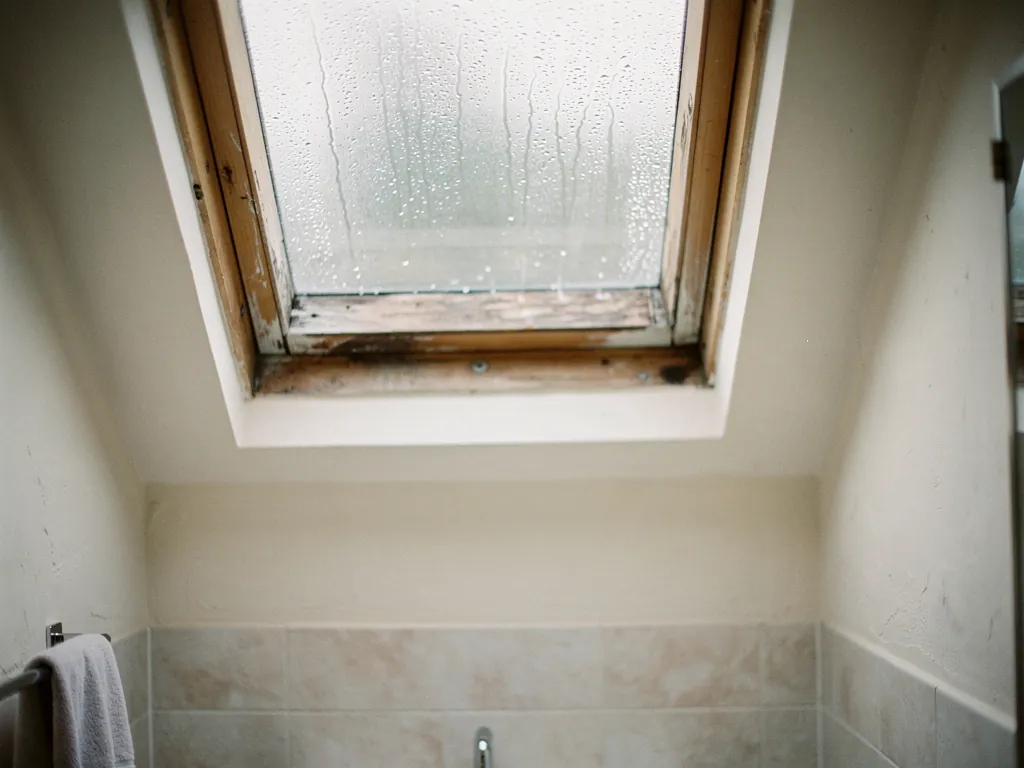
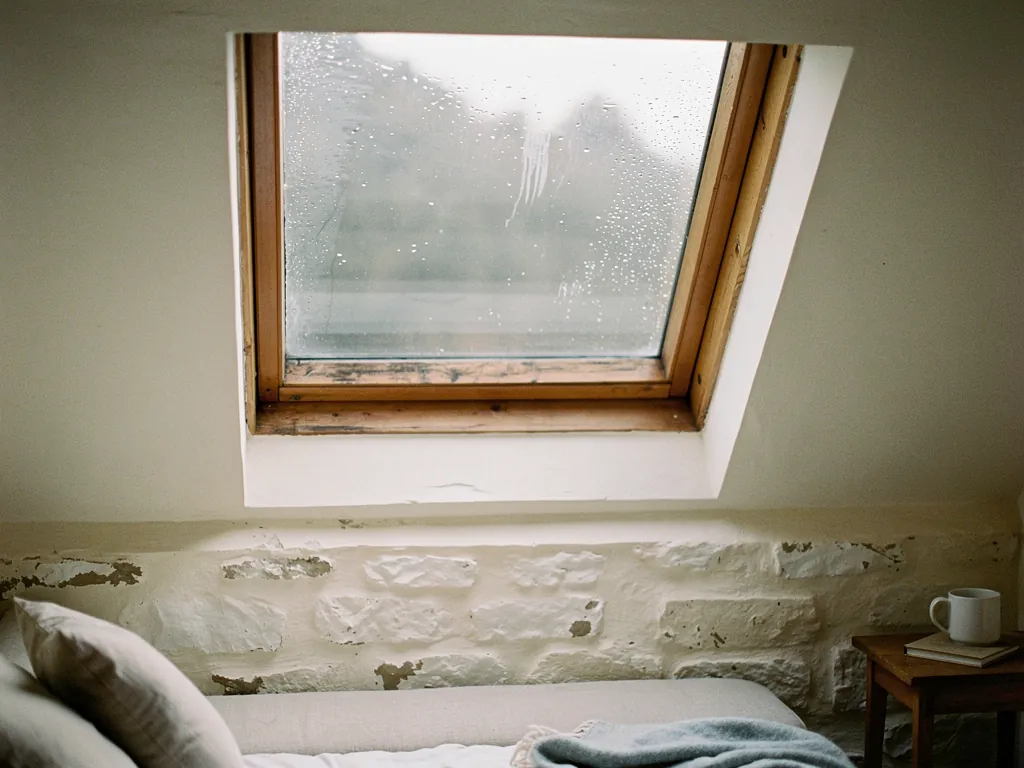
Condensation on the room side of a rooflight is usually a sign of humid air rather than a faulty window. Showers, cooking, drying washing on a rack and simply breathing put moisture into a house, and a loft room has less air to hold it. When a damp room meets a cold surface, droplets form. A rooflight sits high, where warm moist air collects, and in winter it is likely to be the coldest surface in the room, so it is the first place a bathroom or bedroom shows it.

Better products make this less likely, though they cannot rewrite the physics. A warm edge spacer keeps the rim of the glass warmer. A thermally broken frame has an insulating strip between the inner and outer parts, which keeps the room face warmer than the outer one. A triple glazed unit keeps its inner pane warmer still. Each step pushes the point at which water appears further off, which means that on all but the dampest mornings you may see none. Our guide on how to stop rooflight condensation lists the causes in order and what to do about each.

A misted pane in an older roof window
Where condensation tends to form on a roof window, and what each part does to prevent it.
  1. Glass edge: a warm edge spacer slows the chill spreading inward
  2. Inner pane: a low emissivity coating keeps it nearer to room temperature
  3. Frame: a thermal break stops the cold travelling through the profile
  4. Reveal: well-insulated splays keep warm air moving across the glass
  5. Vent bar: a slot at the top lets stale moist air out overnight

Moving the moist air out

The best defence against condensation is air that moves. This is where an opening rooflight earns its place. Cracking a roof window open after a shower, or leaving it on the vent bar overnight, lets the moisture leave before it condenses. A roof window that opens can count towards purge ventilation under Part F, meaning the fast airing that shifts steam and cooking smells, so a bathroom unit does real work. An extractor fan still belongs in a bathroom, and a window that opens sits alongside it, rather than replacing it.

When mist appears inside the sealed unit

One kind of mist is a different problem. If a film or water drops appear between the two panes, where you cannot wipe them away, the sealed unit has given up and its gas has escaped. No amount of airing helps, and the unit is replaced. If only the sealed glass is faulty in a sound frame, fitting a new glass unit is possible and generally not notifiable work. Where the entire rooflight or roof window is tired, a whole new unit is notifiable, so that paperwork is on our list, not yours. To tell which kind you have, see misted and failed rooflights.

It helps to wipe the glass in the morning with a dry cloth and open a window for ten minutes. A damp cloth hides the pattern; a dry one shows whether the water sits on the room side or inside the unit, which is the first thing we check when we visit.

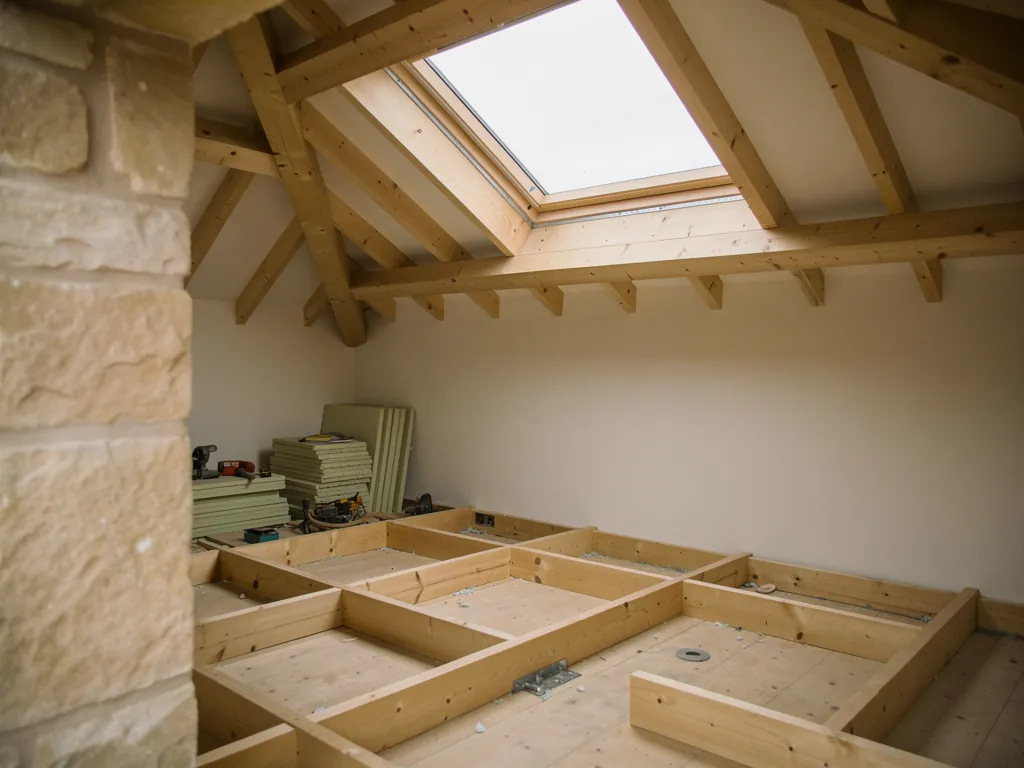
A fitter sealing the insulated lining round a new roof window frame

05

Fitting a rooflight so the efficiency survives the roof

The datasheet figure for a rooflight is measured in a laboratory, with the unit set into a neat test wall. On your roof it is set into slates or tiles, rafters and plasterboard, and gaps at any of those junctions let heat out around the unit. The installation therefore carries half of the result. Two identical windows can behave very differently depending on who fits them and how carefully.

Round a roof window, the key details are these. An insulation collar, a foam or mineral surround supplied by the maker, fills the space between the frame and the rafters. A vapour barrier at the room side stops moist air getting into the roof build-up, where it would condense out of sight. Flashing, the metal trim that sheds water over the slates or tiles, is dressed to the roofing type. Finally the lining or splay inside is boarded and insulated so the reveal does not become a cold bridge, which is a path along which heat flows straight round the insulation.

  1. The old unit is removed, or the opening is cut and the rafters are trimmed.
  2. The frame is fixed through its brackets and checked for level and square.
  3. The insulation collar and flashings are fitted to suit the slate, tile or stone.
  4. The room side is sealed with tape or membrane, then boarded and plastered.
  5. The sash is hung, adjusted and tested, and any vent or electric controls are set up.

Flat roofs have a kerb to insulate

On a flat roof the unit sits on a raised kerb, and the kerb is a weak spot if it is left bare. The kerb needs insulation inside and out, with the membrane turned up over it and sealed beneath the frame. We build or check it before the new rooflight goes on, because a cold kerb defeats very good glass. Our page on flat roof rooflights goes through the options for a deep extension roof.

What the regulations require of the work

A brand new hole in the roof is building work in its own right, and the timbers around it are framed to suit. Fitting a new rooflight or roof window in place of the old one is notifiable, and the paperwork runs through Building Control. A new sealed glass unit in a frame that stays generally is not notifiable. We arrange the notification, then hand you the certificate to keep with the house papers. The work is fitted to the current Building Regulations, against the Part L ceilings already described: 2.2 for a rooflight, and for a roof window 1.4 or Band B.

In a conservation area or a listed house the choice of product is also shaped by what the council will accept. Slim-framed units that sit flush with the slope are usually more welcome than bulky ones, and those houses are covered in our page on conservation rooflights. For the stone terraces of Bath, with the city listed as a World Heritage Site and conservation areas covering a large share of its streets, the thick walls and the heritage setting make the combination of efficiency and discretion central to the choice.

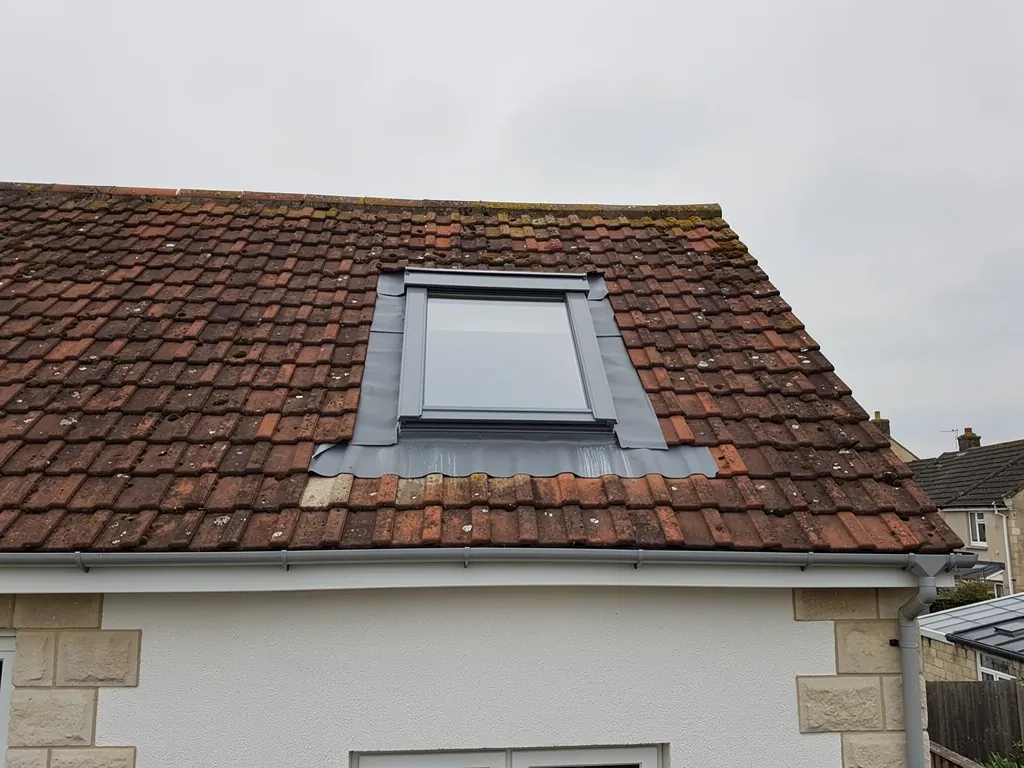
The flashing dressed round a new roof window in a clay tiled roof
A new roof window set into a stone slate slope, with the flashing dressed neatly round the frame.

Each evening we leave the roof closed to the weather, with dust sheets down over floors and furniture while the work goes on. One team handles the job from the first fixing to the final plaster line, which makes it easier to be sure that nothing between the frame and the rafters has been missed.

A written quote for a roof window on a kitchen table

06

What the extra cost buys and when it is worth paying

This is the part where an honest quote differs from a sales pitch. An energy efficient rooflight costs more than a basic one. How much more depends on the size, the frame, the glass and the number of upgrades, and you can read typical UK figures, with the reasons they shift, on the costs page. What the extra money buys is mostly comfort. A warmer inner pane means a bedroom without a cold spot over the bed. Less condensation means less wiping and fewer marks on a ceiling. A good seal and a good frame mean a unit that keeps its performance for years, so you are not replacing it early.

The short answer on whether an energy efficient rooflight is worth it goes through the arithmetic: since a rooflight is a small part of the roof, the saving in heating bills is real but small, and anyone who promises it will repay the extra within a few winters is stretching the case.

UpgradeWhat you noticeWorth it for
Warm edge spacerLess mist at the rimEvery room
Low emissivity coatWarmer inner paneEvery room
Triple glazingColdest-day comfortBedrooms, baths
Solar controlCooler summer roomSouth, west slopes
Thermal breakDry frameBathrooms

Where the money goes furthest

Spend it where the benefit is greatest. A bathroom or a bedroom is used for long hours, and moisture sits there, so spacers, coatings and perhaps a third pane work hard. A landing or a stairwell is passed through in seconds, and the basics are enough. A south-facing loft earns its solar control glass in the first summer. A north-facing slope does not need it, and paying for it would be wasted.

It is also worth weighing the upgrade against doing nothing. Keeping a worn-out single-glazed skylight costs warmth every winter, and the sealed unit in an older double glazed one may have started to fail. Replacing it brings an immediate step in comfort that is larger than the gap between a good unit and a very good one. If you are choosing between a plain replacement and a superior one, the difference between the two is the smaller decision.

Choosing, and what we put on the quote

When we visit for the survey, which costs nothing, we study the roof, the room and the unit already there, then send a written quote with every option on its own priced line, so you can see what a spacer, a third pane or a solar control coating adds. There is no obligation. Opening options are shown on every quote, since a sash that opens can do more for a stuffy room than an extra pane. Our work is covered by a ten-year workmanship guarantee, set out on the guarantee page.

We work across Bristol, Bath and the towns within 30 road miles. In Keynsham, where 1930s semis sit beside newer extensions, a roof window and a rooflight are worth comparing for the same room. You can see the full list of places we cover on our areas page, and a conversation about your own roof is the quickest way to get a price tied to your house.

Guides and answers on energy efficient rooflights

Questions homeowners put before choosing glass

Can I fit a better rooflight into my existing frame?

Sometimes. If the frame is sound, a new sealed glass unit with a warm edge spacer and a low emissivity coating can be fitted into it, and that generally is not notifiable work. If the frame is worn or the unit is old, replacing the whole thing is the better route. We look at both at the survey.

Do energy efficient units cope with a north-facing slope?

Yes, and clear glass suits a north slope well because it gives the most daylight and seldom faces strong sun. The efficiency features still help in winter, when the slope is shaded and cold, so the spacer and coating are worth having wherever the roof faces.

Is a thermal break the same as a warm edge spacer?

No. A warm edge spacer sits between the panes and protects the rim of the glass. A thermal break is an insulating strip inside the frame, separating the inner and outer faces of the profile. Both reduce cold surfaces, and a good unit has both.

How do I read a U-value on a quote?

Look for the figure in W/m²K and ask whether it covers the whole unit or only the glass centre. Lower is better. On an existing home the ceilings are 2.2 for a rooflight, and for a roof window Band B or 1.4. We show the figure for the whole unit on every quote.

Will a more efficient rooflight stop my bathroom misting up?

It makes mist less likely, but it cannot stop steam condensing on its own. Pair it with an extractor fan and a sash that opens, so moist air can leave. That combination suits the bathroom far better than glazing alone.

Pastel-painted Georgian terraced houses with iron railings on a Bristol street

Tell us about the room

A few details is all we need. We'll come out, advise and give you a written quote.

No pressure, no obligation.

Call Get a free quote