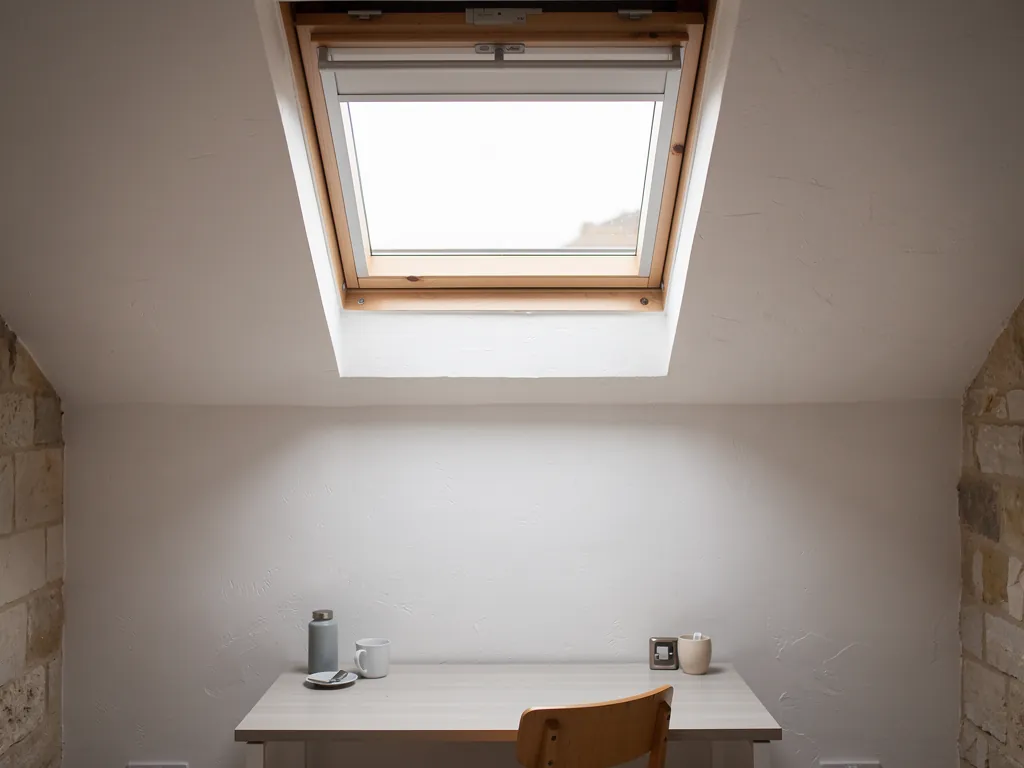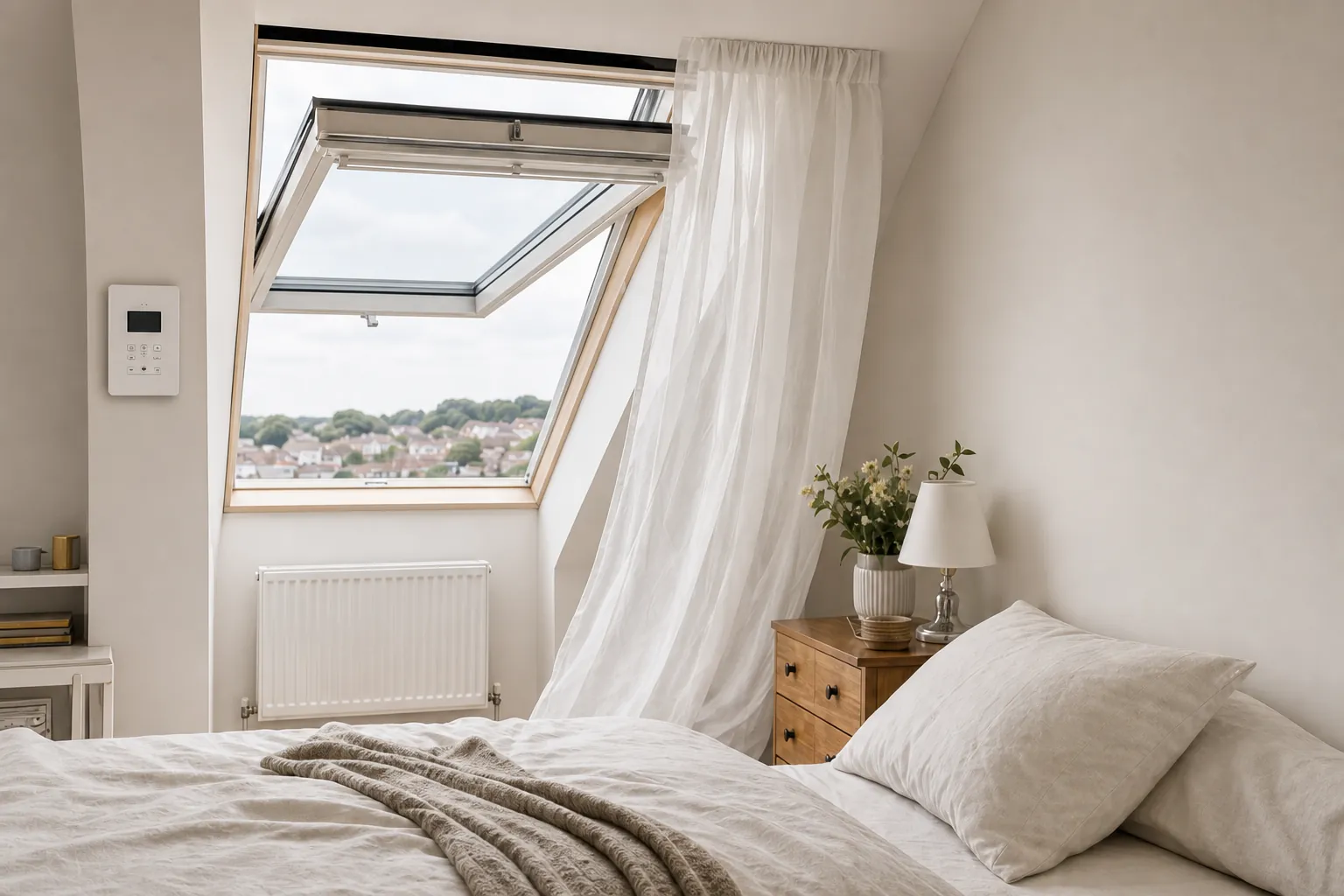
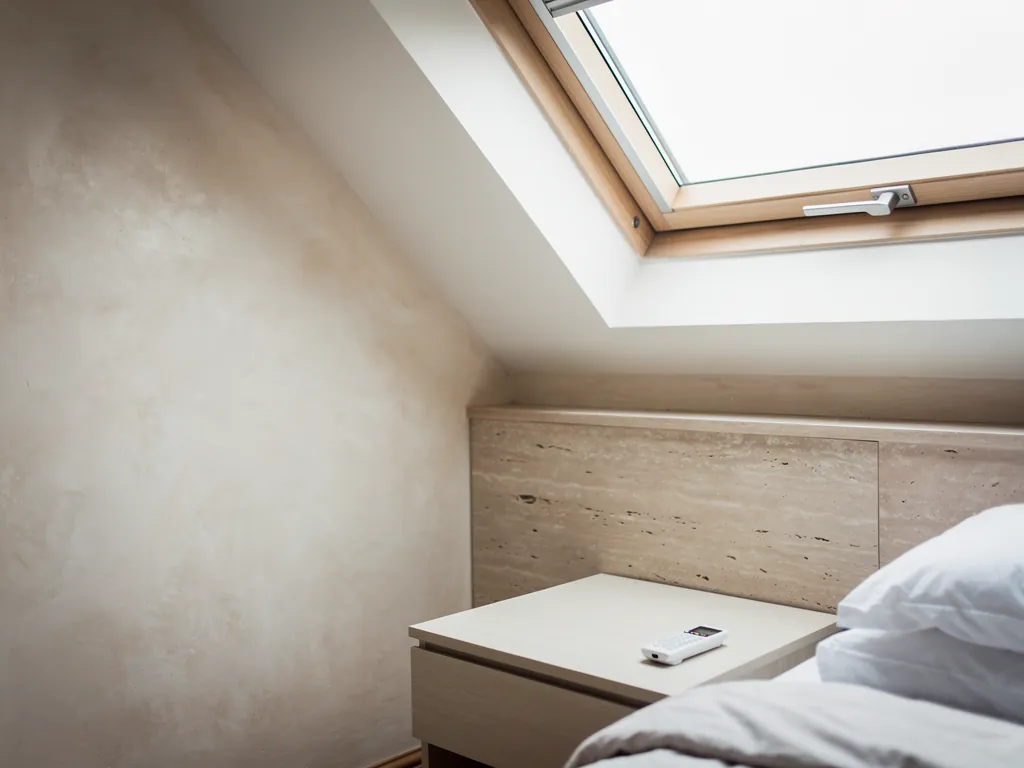
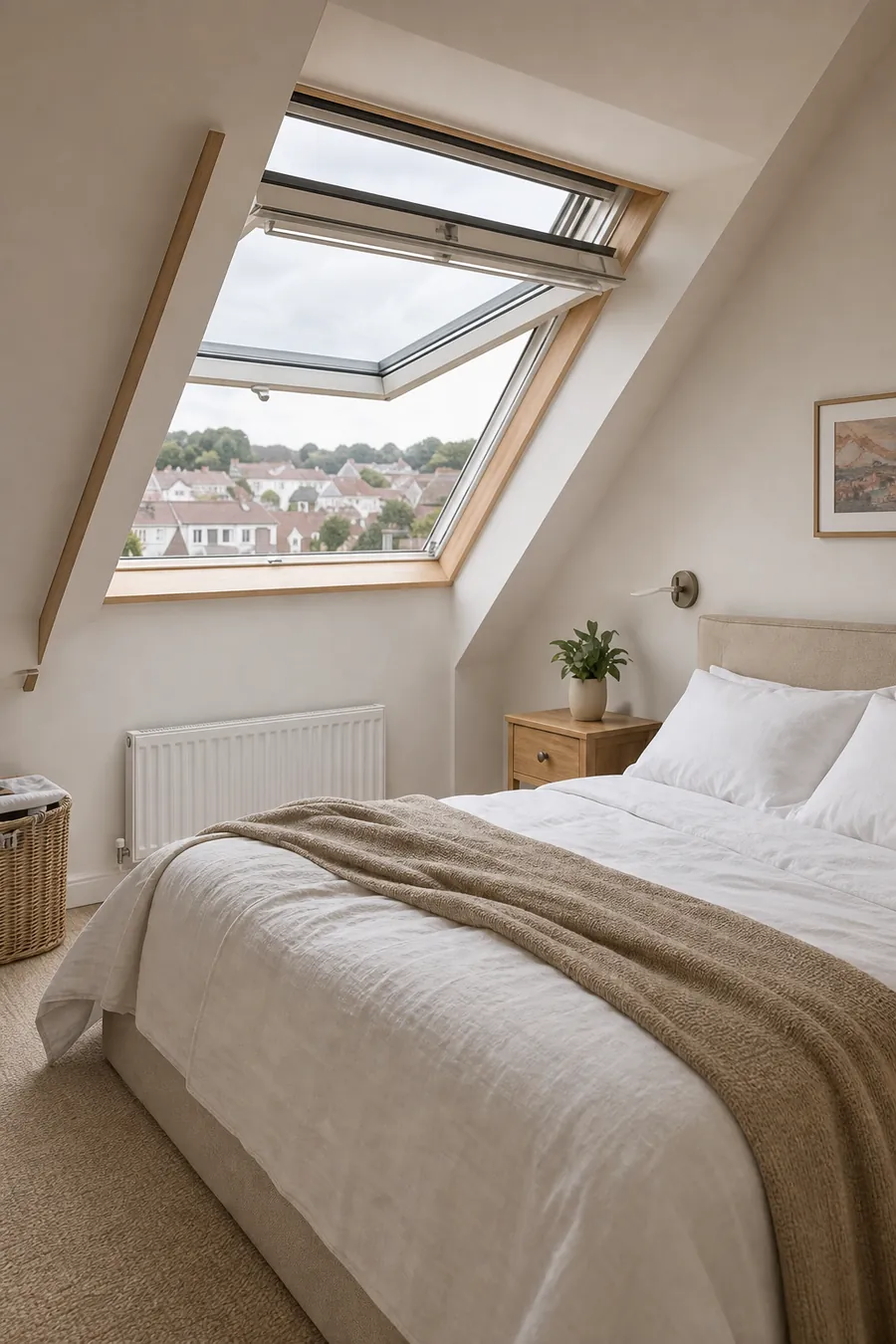
A loft bedroom with an electric roof window open and a small wall keypad beside it

Electric and Opening Rooflight Installation in Bristol A roof that opens at the press of a button

Some rooflights sit where no hand can reach, above the stairs, the bath or a loft bed. A little motor raises the sash at a button press, and a damp-sensing pad brings it down again when rain arrives.

Power
Mains-fed or solar, chosen to suit the room
Weather
A rain sensor closes the sash at the first drops
Paperwork
We handle the Building Control notification
Cover
A 10-year workmanship guarantee

Where a motor beats a pole

Three ways to move the sash

  • Mains electric

    • Wired to the house for steady, strong movement
    • Control pad, remote or phone
    • Needs a cable route to the unit
  • Solar powered

    • A small panel keeps the battery topped up
    • Radio remote, and a sensor that needs no wire
    • Tidy for a finished room
  • Manual with vent bar

    • Handle or pole, nothing to wire
    • A narrow setting for overnight air
    • Lowest cost, but within reach only

How the job runs

  1. Survey and advice

    We visit, measure and plan the best fit.

  2. Written quote

    A clear quote with no obligation.

  3. Fitted by one team

    One team fits everything, cleanly and safely.

  4. Signed off and guaranteed

    We sign off the work and your guarantee begins.

The long read

Electric and opening rooflights, from switch to sign-off

How the motor, the sensor and the controls work, what the wiring involves, whether an old unit can be converted, where opening helps, and what sits behind the quote.

  1. 01 What makes a rooflight electric
  2. 02 Rain, wind and the controls you use
  3. 03 Wiring, solar and the power cut
  4. 04 Turning a manual unit into a powered one
  5. 05 Rooms where opening pays and rooms where it does not
  6. 06 Price, rules and the paperwork
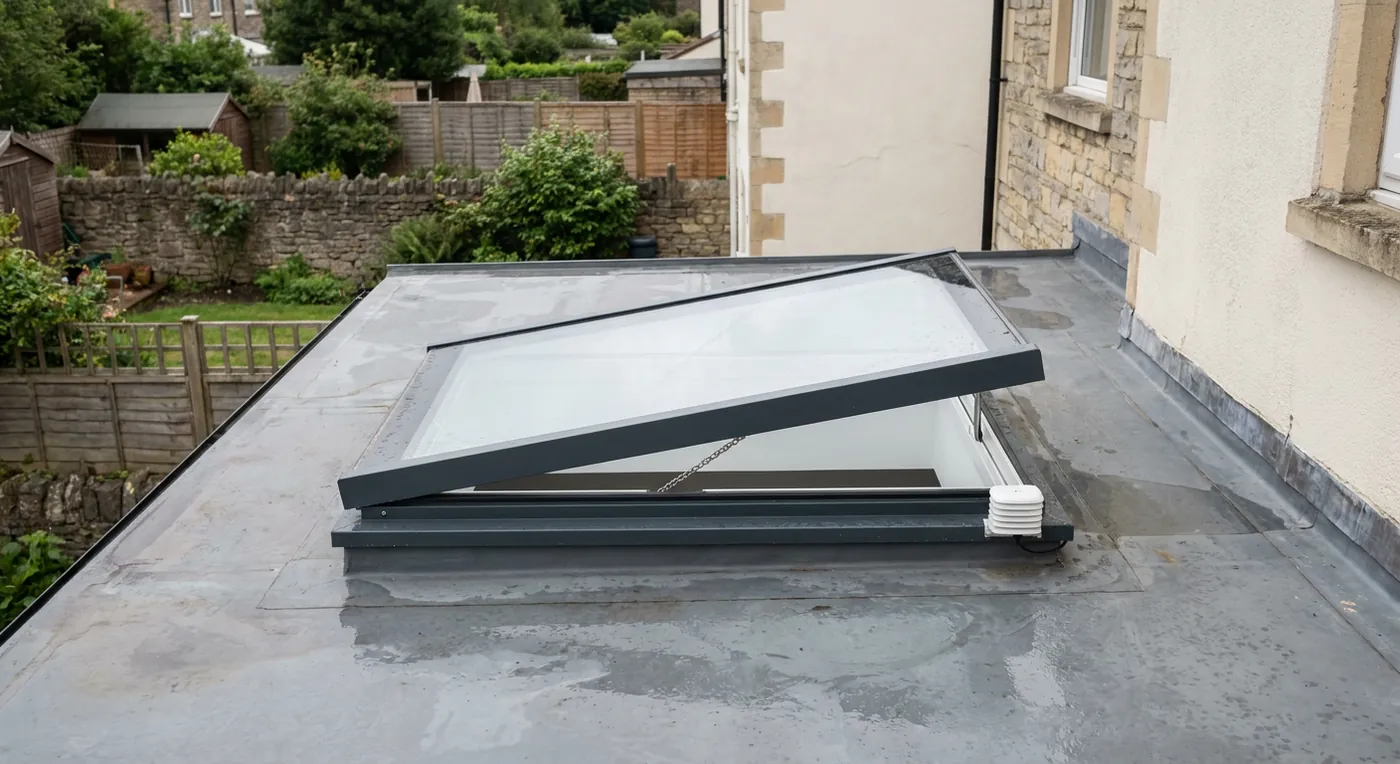
An electric flat rooflight open above a kitchen

01

What makes a rooflight electric

An electric opening rooflight is a roof window or flat rooflight whose sash lifts, tilts or slides on a small motor. You press a wall switch or a handheld remote and the glass rises a hand's width or more. Press again and it closes. It is the same idea as a car window, except it sits above the stairs, over the bath or at the top of a loft room where no arm can reach.

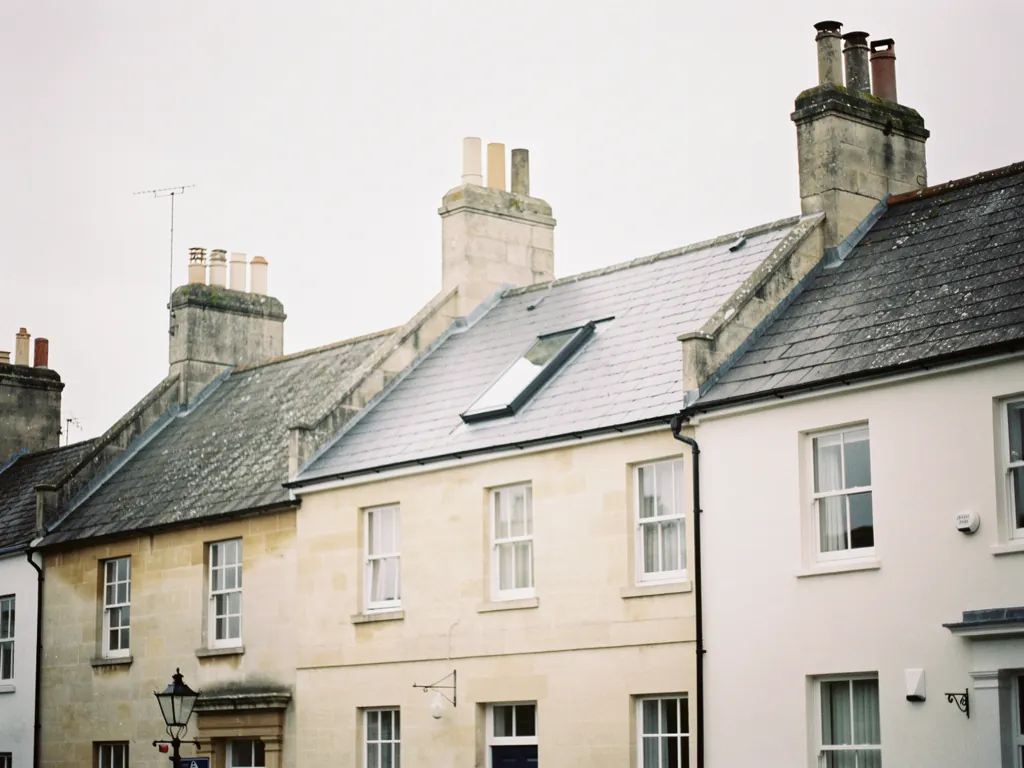
Bristol roofs give plenty of reasons to want one. A Victorian terrace in Easton or Bedminster has a landing rooflight set high above a narrow stairwell. The warm air of the whole house gathers beneath it, and a rooflight on a pole or a cord is awkward to reach with a hand full of laundry. A bathroom in the eaves of a Clifton villa has the same trouble, with steam and no window within reach. A flat-roofed kitchen extension on a newer estate has a unit in the middle of the ceiling that nobody can stretch to. In each case the motor does what an arm cannot.
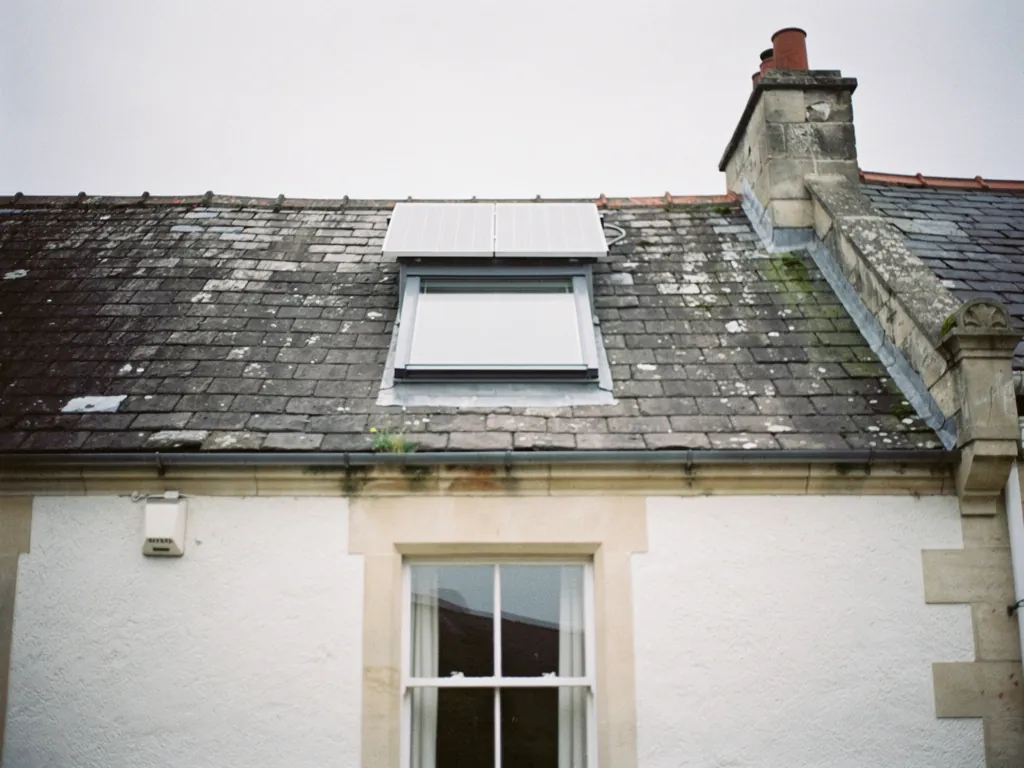
Three kinds of opening are on offer. A manual unit has a handle or a pole and costs least. A mains-powered electric unit is wired to the house and gives the strongest, most predictable movement. A solar unit charges a small battery from daylight and needs no cable to the house at all. All three can carry a rain sensor, though on a manual unit the sensor has nothing to close. The page on electric vs solar rooflight choices sets the two powered kinds side by side for a real house.

What the VELUX range calls it

VELUX groups its electric and solar units under the INTEGRA name. They arrive with a motor, a control pad and a rain sensor already in the box, and the control pad can run blinds and shutters from the same remote. Other leading makers have comparable ranges, and we quote from more than one so that you can see the choice laid out. Nothing here depends on a single brand.

Not every rooflight can be powered. Some designs open by a top hinge, some pivot on a centre bar, and some are fixed in the roof by design. A flat rooflight over a flat roof lifts from a hinged side or slides back over a fixed pane, and each style has its own motor arrangement. We check which style you already have, or which style suits the opening you want, at the survey.

  • Actuator the little motor and arm behind the sash
  • Chain drive a motor that winds a slim chain to push the sash
  • Control pad the wall switch or remote you press
  • Rain sensor a damp-sensing pad that tells the motor to shut
  • Vent bar a latch that parks the sash a finger's width ajar

What follows takes the subject in the order a homeowner meets it: how the sensor and the controls behave, what the wiring involves, whether an old unit can be converted, where opening earns its keep, and what sits behind the quote.

Rooflight open Warm air leaving Landing and stairs Cool air from below
A powered rooflight lifts open at the top of the stairs, so warm air leaves while cooler air rises from the open windows below.
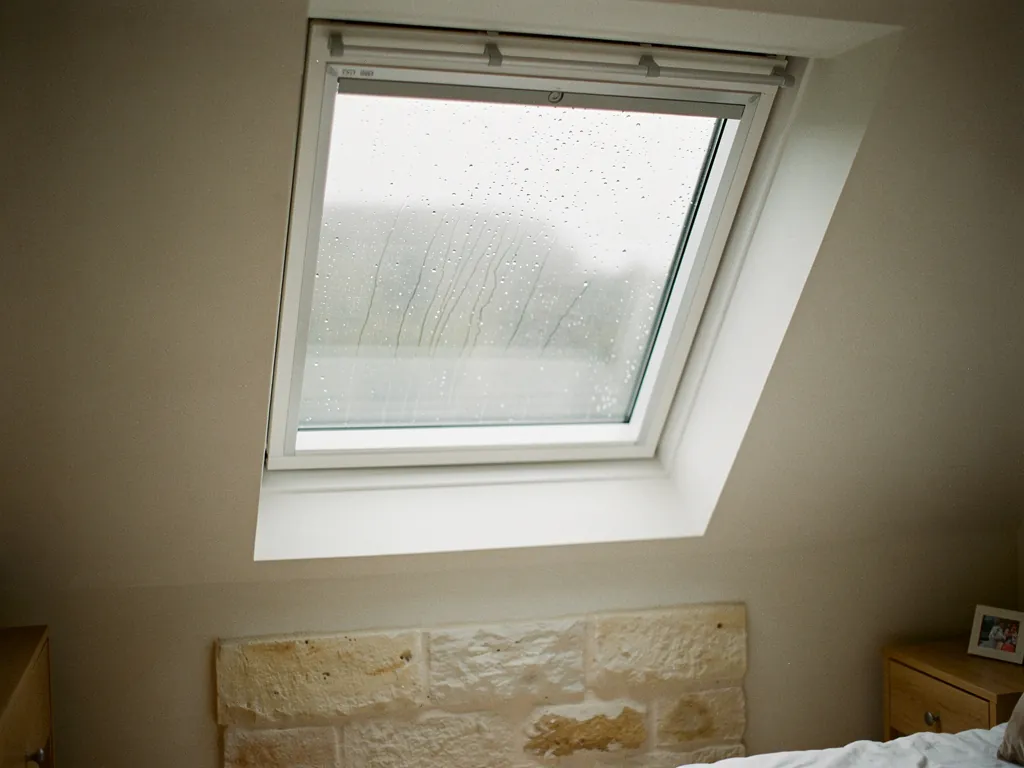
Raindrops on the glass of a closed electric roof window

02

Rain, wind and the controls you use

A rain sensor is a small flat panel mounted on or beside the glass. When water bridges two contacts on it, a signal travels to the control unit, and the control unit tells the motor to close the sash. It does not need you to be watching. It works at the first drops, so a window left open on a sunny morning is shut by the time a shower arrives. Our guide to the rooflight rain sensor covers how it is placed and tested.

Two limits apply. The sensor reacts to moisture, so dew on a cool morning or a heavy mist can trigger it, and the unit may close when you expected it to stay open. And the sensor only works if the unit has power. On a wired unit that means the mains, and on a solar unit it means a battery with charge left in it. The next chapter comes back to the power question.

Controls you can live with

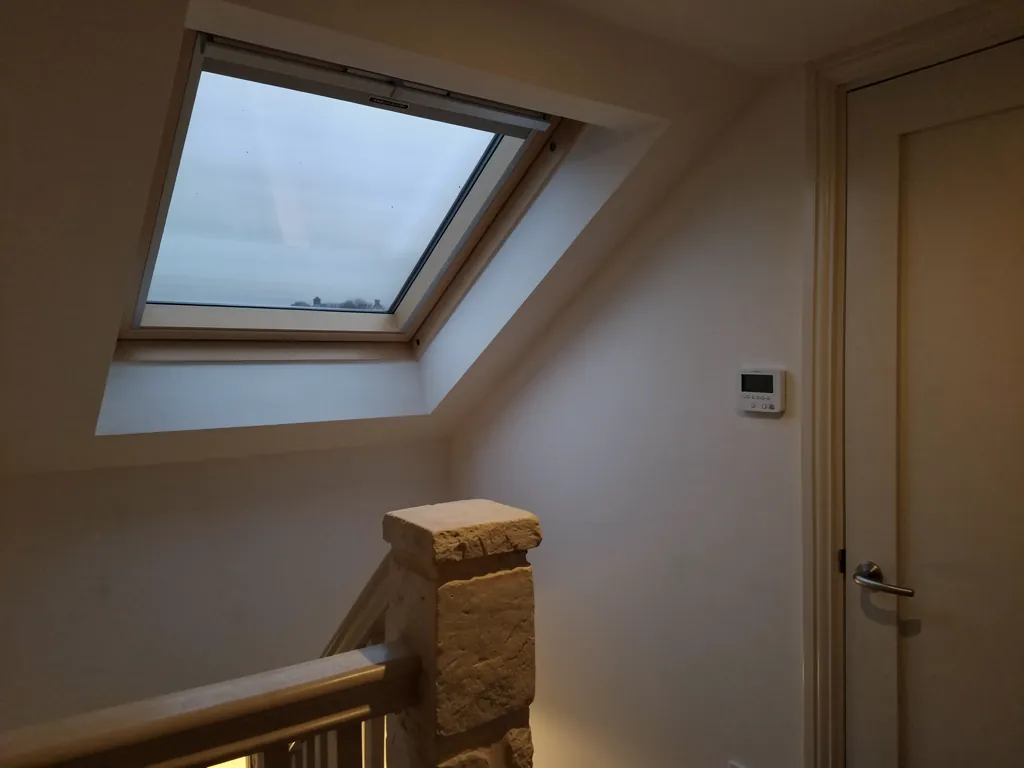
The best control is the one the household actually uses. A wall switch beside the stair suits a landing unit, since you pass it every day. A handheld remote suits a loft bedroom, where it lives on the bedside table. Some systems also link to a smartphone or a smart-home hub, which is handy for closing everything from the sofa. The common thread is a close button that is easy to find in a hurry.

ControlBest forWatch for
Wall switchLandings, bathroomsNeeds a cable run
Handheld remoteBedrooms, loftsEasy to mislay
Phone or hubSeveral units at onceNeeds home Wi-Fi
Timer or sensorBathrooms, kitchensSet up with care

Leaving it open at night

Many people ask whether a rooflight can safely stay open overnight. The answer is that it can be set to a narrow gap on a vent bar, which lets stale air leave while the sash stays close to the frame. A fully lifted sash is a different matter, as it is a wide opening in your roof while you sleep, and a rain sensor is no help if the power fails. The detail is in the answer on whether to leave a rooflight open overnight, and our advice there is plain: use the narrow setting, and close the sash fully when you go out.

A rain sensor means I never need to think about the weather again.

It closes the sash when it feels water. It cannot close a unit that has lost power, and it cannot warn you of a storm coming. A quick glance at the forecast before a long day out still pays.

Wind is the other matter. A sash lifted fully open on a gusty day behaves like a sail. Good units are built to hold against ordinary wind, and the stay or the motor arm carries the load, but it is sensible to close any opening rooflight in a gale. Some wired systems include a wind sensor as an extra, and it goes on the quote as an extra when a roof is exposed, such as on the open edge of a hill estate.

The position of the sensor also matters on a flat roof, where puddles and falling leaves can keep the contacts wet or blocked. We place it so rain reaches it freely and debris does not sit on it, and we show you how to wipe it clean with a damp cloth.

A solar-powered roof window with its small panel

03

Wiring, solar and the power cut

A mains rooflight needs a feed to its control unit, and a route for that cable. In a loft conversion, the route is often simple. The cable runs along a rafter, behind the plasterboard, and down to a switch on the wall. In a finished house with a plastered sloping ceiling, it is harder. Chasing the plaster means redecorating, and running a cable in surface trunking is not something every household wants to look at. Our guide to electric rooflight wiring goes through the routes in detail.

Most electric rooflights run on a small transformer that steps the supply down, so the cable that reaches the motor carries a low voltage. The transformer, or the supply to it, still comes from the house circuits. A qualified electrician makes that connection, tests it and signs it off. We plan the work around the electrician so that the cable is in place before the plasterboard goes up, which is the best time for it.

How the cable goes in

  1. At the survey, we mark where the switch will sit and the route the cable could take.
  2. On a new opening, the cable is run to the frame before the ceiling is closed.
  3. The motor is fitted to the sash or the frame and connected to the control unit.
  4. The electrician connects the supply and tests the circuit.
  5. The unit is set up, the limits are programmed and the rain sensor is tried with a damp cloth.
An old sealed unit lifted out of a timber rooflight frame, ready for the new one
A control unit and cable run behind a loft ceiling, ready for plasterboard.

When a wire is a nuisance

Some rooms make a cable almost impossible. A listed Georgian house with fragile lime plaster, a stone-walled Bath cottage with no cavity, or a recently finished kitchen all have good reasons to avoid cutting. A solar unit sidesteps the whole problem, since it takes its energy from a small panel set into the frame and stores it in a battery. It opens, closes and reads the rain sensor from that supply alone, and the remote works by radio. For the cost of a slightly slower motor and a battery that eventually needs changing, there is no cable at all.

Solar is not magic, though. The panel needs daylight, so a north-facing rooflight in a shaded valley has less to work with than a south-facing one on an open slope. The battery runs the unit through long grey weeks, and a good unit warns you before it runs low. We discuss which suits your roof when we see it.

When the power goes

A mains-fed unit stays wherever it was when the supply failed. If it was shut, it stays shut. If it was open on a wet evening, it stays open until power returns, unless the unit has a battery back-up or a manual override. Many units have a way of closing the sash by hand using a key or a pole, and we will show you where it is. The answer on an electric rooflight power cut explains what to do, and the sensible habit is to close any open unit before you go to bed or leave home when the forecast looks poor.

Wiring is also where regulations come in. Electrical work in a home has its own rules, handled by a competent person who tests and certifies it. The rooflight itself, if it is a whole new unit, is notifiable building work. We keep both strands in order so that nothing is left unfinished on the paperwork side, and you receive the certificates at the end.

An electric roof window high above a double-height space

04

Turning a manual unit into a powered one

This is the question we are asked on nearly every survey, and it deserves a straight answer. Some modern manual roof windows were designed with a motor kit in mind. The sash, the hinges and the frame can carry an actuator added later, and the kit includes the control unit and rain sensor. If your window is one of those, converting it can be neat and cost less than a new unit. Our page on how to convert a manual rooflight to electric explains how we tell.

Many older units were not built for it. The frame may be too shallow for a motor, the sash too heavy, or the maker may no longer sell a kit for that model. A rooflight that is already misted, stained or draughty is a poor candidate, as a motor does nothing for the glass. In those cases we advise a new electric unit, fitted into the same opening, which is notifiable building work and which brings the whole opening up to current energy standards.

A manual roof window with its handle bar in a loft room, before conversion to electric
What we look at on a manual roof window before suggesting a conversion.
  1. The maker's label on the frame, which tells us the model and age
  2. The hinge type, which sets how the sash can be moved
  3. The depth of the frame, where a motor would sit
  4. The glass, to see whether it has misted
  5. The ceiling below, for a cable route to a switch

Convert or replace

QuestionConvertReplace
Glass is soundSuits wellNot needed
Glass has mistedPoor valueSuits well
Frame is oldMay not fitSuits well
Must keep the finishSuits wellNeeds a match

Replacing gives you more than a motor. The new frame is insulated to current standards, the flashing is renewed and the glass is modern. An old unit may have lost its seal, and if the glass has clouded, a new sealed unit is the sensible move. The case for swapping a clouded unit is made on the misted and failed rooflights page.

Roof windows with a different history

Roof windows fitted in a 1980s or 1990s loft conversion often have timber frames, and some have a pole hook on the sash. They were made well, and some have lasted for decades. Those are the units where owners ask about a motor, because the loft room is now a bedroom and the pole is a nuisance. Where the frame is sound, a new sash and glazing unit is sometimes available for the same frame, and where it is not, a new unit goes in the same opening with the least disturbance, as the roof structure is already trimmed.

If the opening is changing size, perhaps going wider to give more air, it counts as a new opening and the roof structure needs trimming properly. We measure for that at the survey and show the options on the quote. A first look costs you nothing, and you have the choice between converting, replacing and leaving things as they are, all written down with the prices beside them.

Whatever we recommend, the opening options appear on every quote, so you can compare a motorised version with a manual one before deciding. Our page on roof windows covers the wider range if you would like to look at fixed and manual types as well.

05

Rooms where opening pays and rooms where it does not

Warm air rises and leaves a room through a high opening, so a powered rooflight earns its keep in the places where heat and steam collect and no window can reach. It earns less in a room that already has a good window at head height. We would rather tell you that at the survey than sell you a motor you will not miss.

Where opening helps

A bathroom or shower room under the roof is the clearest case. Steam rises to the ceiling and condenses on cold surfaces. An opening rooflight above the shower lets that steam leave, and it can help condensation clear, though it works best alongside an extractor fan. A stair landing in a three-storey Georgian house in Clifton or Bath is the next. The stairwell acts as a chimney, and an opening unit at the top lets the warm air out while windows lower down let cooler air in. A loft bedroom is the third, since the room is warmest at night just where the sleeper wants cool air.

A kitchen extension with a flat rooflight over the cooker or the island is the fourth. Cooking heat and smells rise and leave through an opening unit. Part F, the ventilation regulation, lets an opening roof window count for the rapid airing a room needs to clear smells and moisture.

An opening rooflight will make the room draughty in winter.

A closed sash seals against the frame like any window. A draught comes from poor fitting or a worn seal, not from the opening feature. A narrow vent setting gives a gentle trickle of air when you want it.

Where fixed is better

A fixed rooflight suits a room with plenty of opening windows already. It is cheaper, it has no moving parts, and the frame is slim. A hallway or a walk-in wardrobe with no heat or steam gains little from a motor. A walk-on rooflight in a floor or terrace is always fixed, and our page on walk-on rooflights covers those. A rooflight in a very sheltered corner might be fixed too, as the occupants do not need air from that point.

The other time fixed wins is a listed or conservation-area roof where a bulky actuator would spoil the look of a slim conservation-style unit. Much of Bath sits inside its World Heritage setting and a conservation area, and Clifton and Kingsdown in Bristol have their own protected streets. Our conservation rooflights page deals with the slim, flush units used there.

  • Purge ventilation quick airing of a room to clear smells and steam
  • Trickle vent a narrow slot that admits a little air at all times
  • Stack effect warm air climbing a tall space and escaping at the top
  • Top-hung hinged at the head, so the sash swings outward from below

Houses where we fit them

Terraces in Totterdown and Bedminster have a landing rooflight above the stairs and a loft room beyond it. Bath's Georgian terraces have a tall stairwell and often a rooflight at the very top. In Bath, listed building consent and conservation-area rules are the first question. On 1930s semis in Keynsham, loft conversions are common and a motor above the landing suits the stairs. In a bungalow with rooms in the roof, the unit can double as the way out in a fire, where the regulations allow.

The page on fresh air rooflights gives the wider case for opening, and our flat roof rooflights page covers the extension side. Fixed or opening, both go on the quote so you can see what the motor adds.

A written quote for a roof window on a kitchen table

06

Price, rules and the paperwork

We do not quote prices before we have seen the house, because the same unit can cost very different amounts to fit in two roofs. For rough market figures, turn to the costs page, then read the guide to electric rooflight cost walks through each factor. In general, an electric unit costs more than the same unit with a handle, and a unit with a cable run through a finished ceiling costs more than one with an open loft behind it.

Cost factorPushes the price upKeeps it down
PowerLong cable runSolar, no cable
OpeningNew, wider openingSame opening
AccessScaffold neededEasy ladder access
ExtrasBlinds, wind sensorSensor only

Energy figures

The energy rules treat the two products differently: a roof window must meet the usual window figure, while a flat rooflight has a looser limit of its own. Our page on energy-efficient rooflights gives the exact numbers, and fitting a motor changes none of them. Electric units run on very little power, so running costs are small, and the more important question is whether the glass is good.

Rules around the work

Taking out a whole unit and fitting a new one needs a Building Control notification. Replacing only the sealed glass unit in an existing frame generally is not. A new opening in a roof is building work too, and the structure must be trimmed properly. Where the work is notifiable, we send the notification ourselves and pass you the certificate afterwards.

Planning is usually simple. In England, Class C permitted development means rooflights usually need no planning permission if they stand clear of the slope by 150mm at most and sit below the ridge line. Side-facing units need obscure glass and must not open unless the opening part is more than 1.7m above the floor. Those rights stop at the front door of a flat. A listed house needs consent from the council before any roof work, and some protected streets lose the rights altogether, so ask before you book. The Planning Portal has the national guidance.

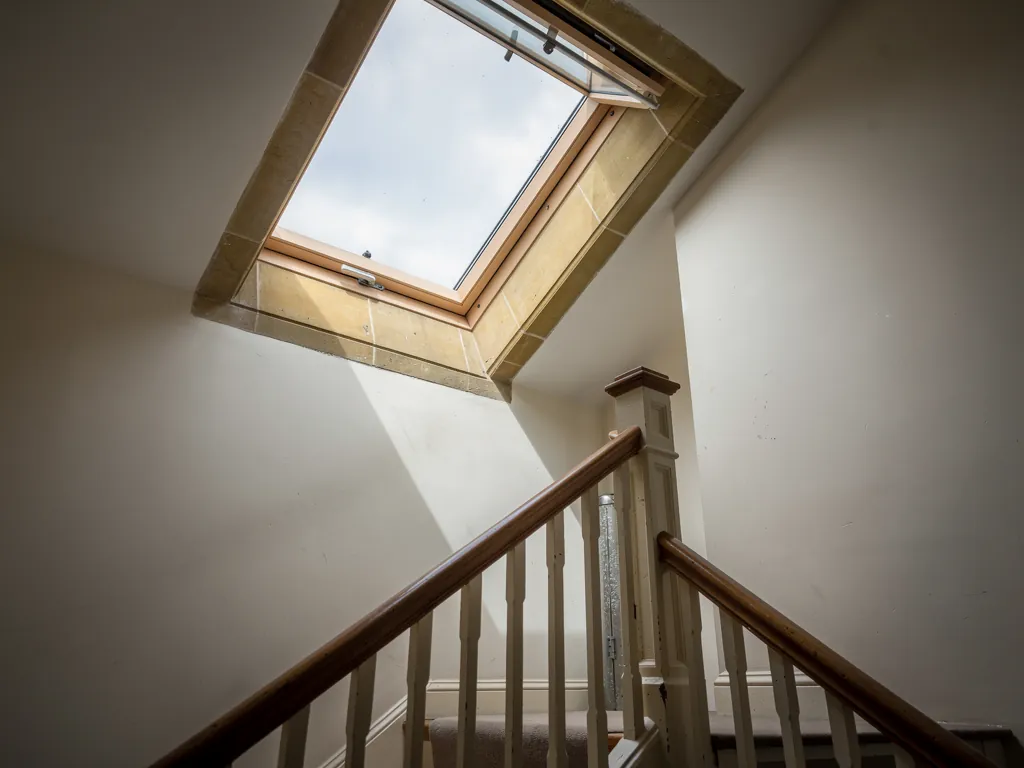
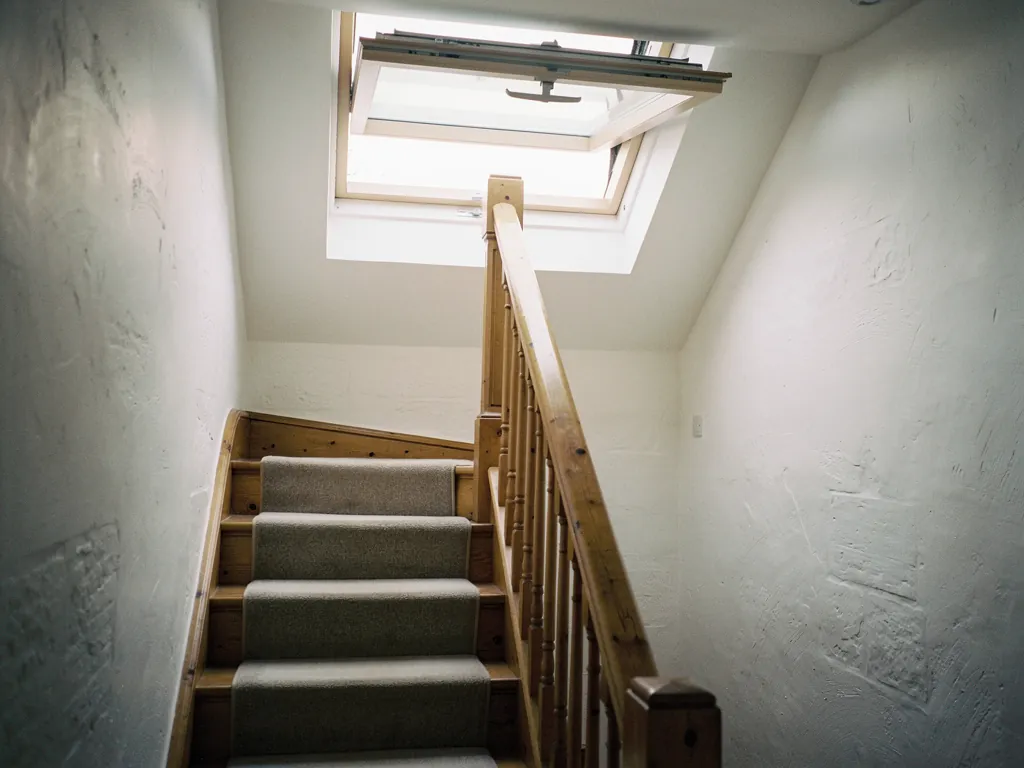
An electric rooflight open over a top-floor landing
A motorised sash tipped open over the top of a loft stair.

The visit, the quote and the guarantee

Nothing is charged for the first visit, and you are under no obligation. We measure the roof and the room, check the structure, trace a cable route and note the finish you want. Afterwards a written quote arrives, itemised line by line, with the opening options shown, for example mains against solar and a rain sensor with or without a wind sensor.

One team carries out the work. Before we leave each day the opening is closed against rain, and dust sheets cover your floors. The completed work carries a 10-year workmanship guarantee, set out on our guarantee page, and the fitting follows current Building Regulations.

Homes in Bath, Keynsham and across Bristol get the same visit, because we come to you. If you would like to compare with other ways of opening a roof, the pages on VELUX windows and sun tunnels show the alternatives, and the one on roof lanterns covers raised glass for extensions.

Guides and answers on electric & opening rooflights

Motors, sensors and opening by hand

Do electric rooflights need servicing?

Very little. The motor is sealed, and the seals and hinges need only a wipe. We suggest cleaning the rain sensor with a damp cloth now and then and testing the close button once a season, so you notice any sluggishness early.

Can a rooflight with a motor still be opened by hand?

Most can. A mains unit usually has a manual release, a key or a pole socket, so you can close the sash if the supply fails. We point out where yours is when we hand the job over.

Are solar rooflights any good on a north-facing roof?

They can work, because the panel needs daylight rather than direct sun. A deeply shaded roof gives the battery less, so we judge each roof on the day and may suggest a mains unit if the light is poor.

Will I need an electrician as well as your team?

For a mains unit, a qualified electrician makes and tests the supply connection, and we arrange that alongside the fitting. A solar unit needs no house wiring, so no electrician is needed.

How noisy is the motor when the sash opens?

A soft hum and a quiet click, much like a car window. It is low enough not to wake a sleeper in the next room, though a long-throw chain drive sounds a little louder than a short arm.

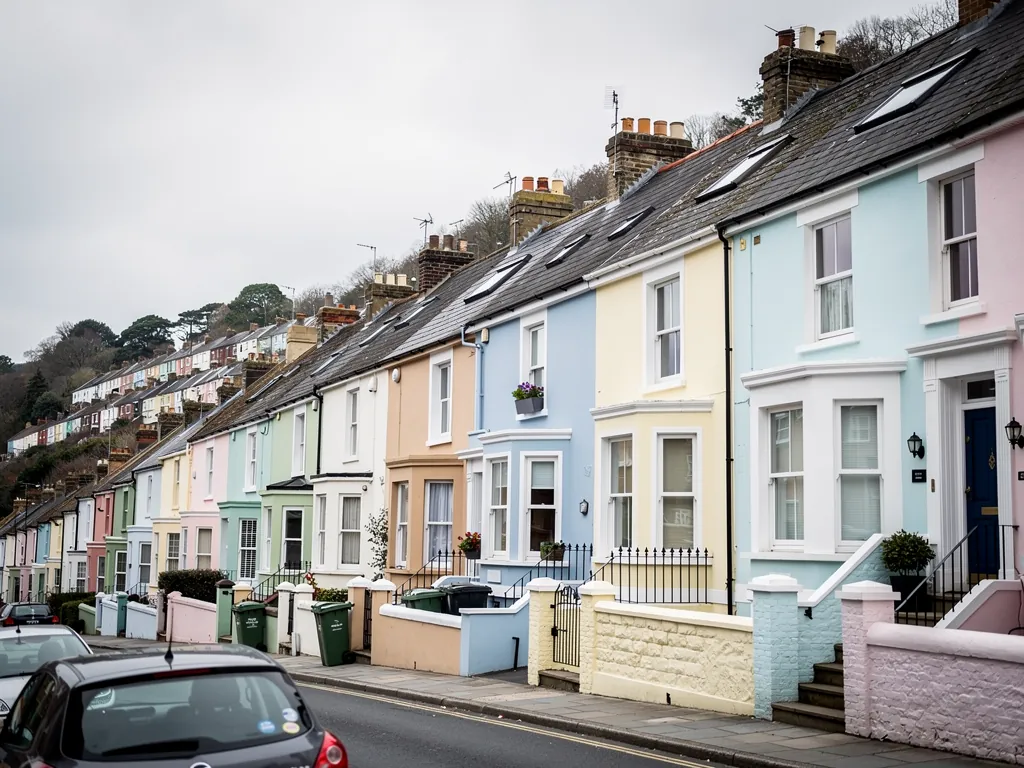
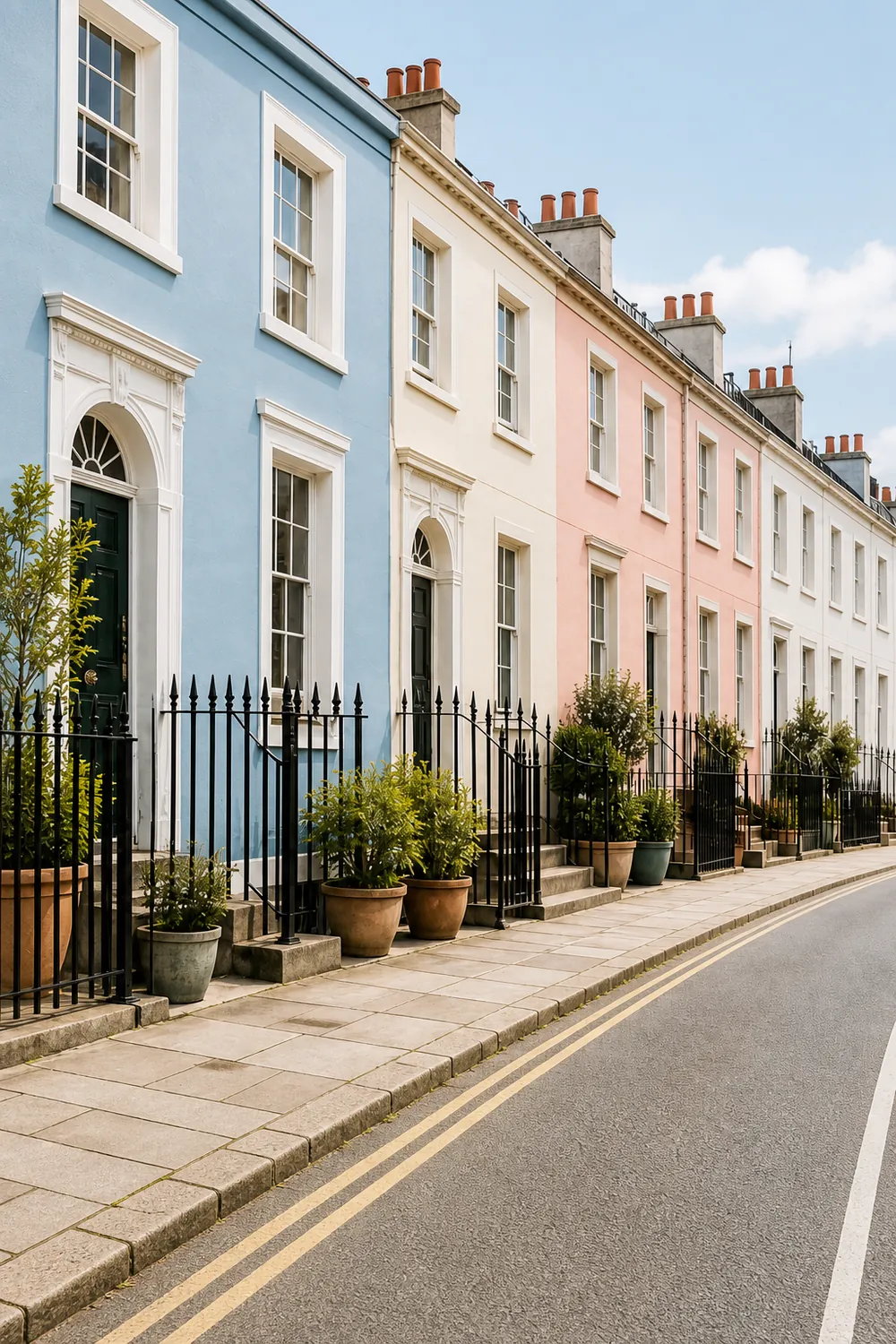
Pastel-painted Georgian terraced houses with iron railings on a Bristol street

Tell us about the room

A few details is all we need. We'll come out, advise and give you a written quote.

No pressure, no obligation.

Call Get a free quote