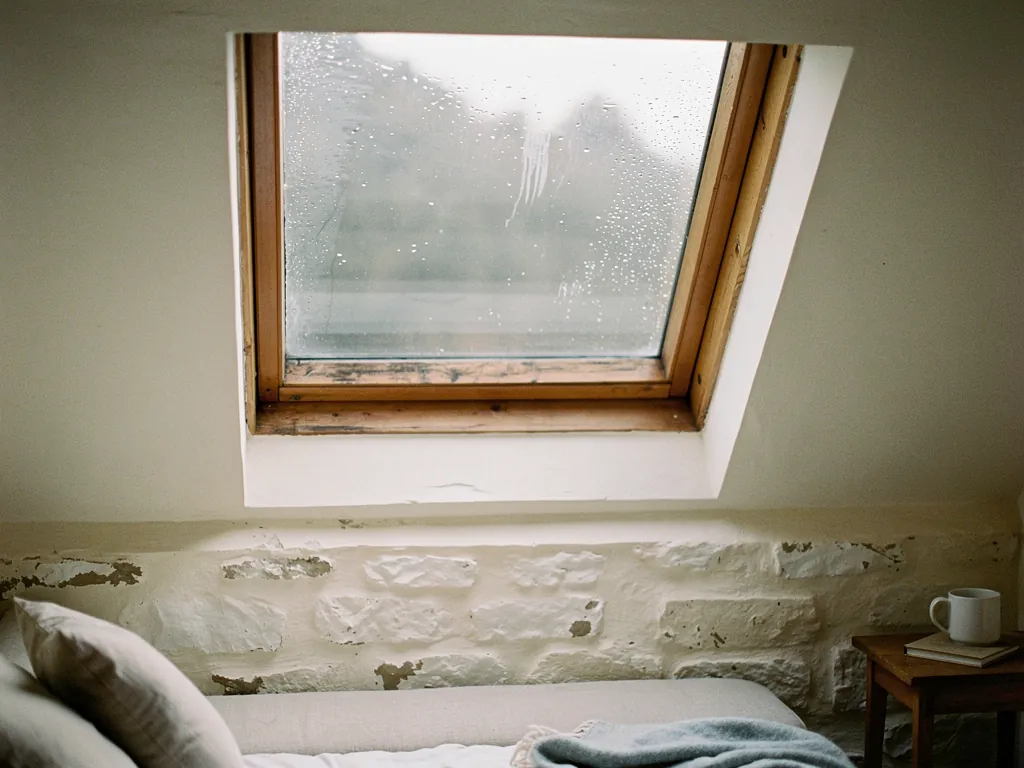
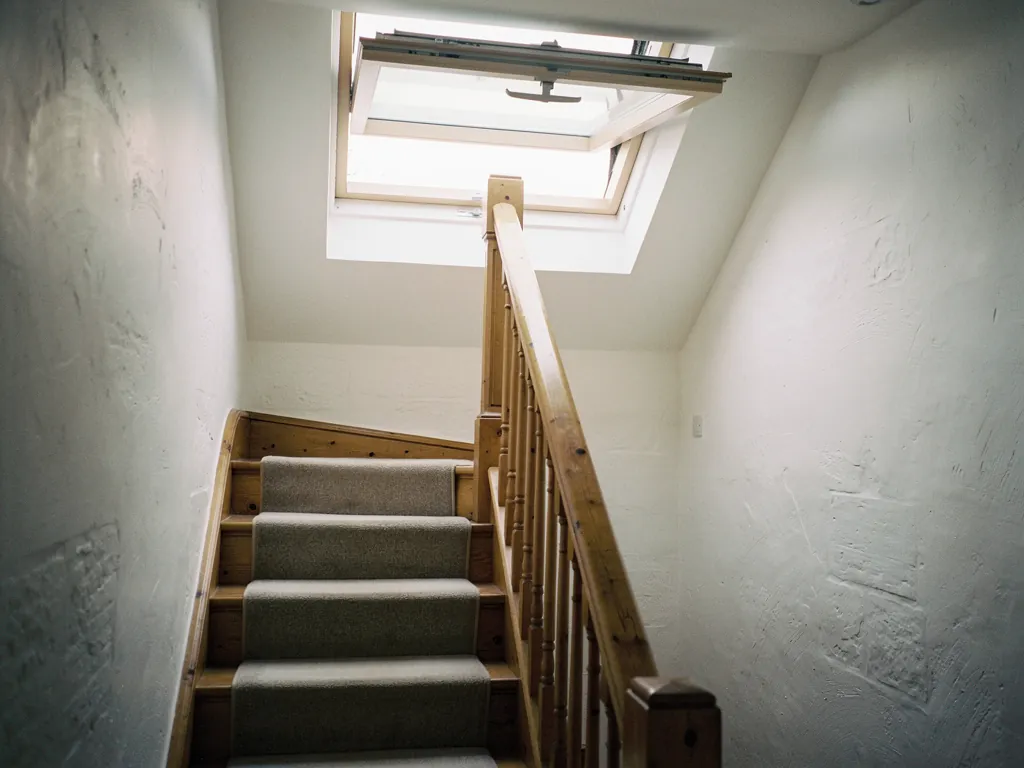
A misted double-glazed rooflight with fog between the panes

Misted and Failed Rooflights Replaced in Bristol Clear glass back overhead, and a vent bar to keep it that way

When cloud forms between the panes of a rooflight, the seal has failed and the glass cannot be cleaned. We replace the sealed unit, or the whole rooflight, and show opening options so the next one earns its place.

The fault
Fog trapped between the panes, out of reach of any cloth
The fix
A new sealed unit, or a whole new rooflight if the frame has gone
Building Control
Notified for you when a whole unit is replaced
Guarantee
10 years on our workmanship, in writing

Where a clouded pane gets noticed first

Three ways to clear the glass

  • New sealed unit

    • The old unit lifted out, a made-to-measure one fitted
    • Frame, kerb and roof covering stay untouched
    • The quickest route when the frame is sound
  • Unit with a better spec

    • Solar control, obscure or laminated inner pane
    • Warm-edge spacer and a gas fill
    • Chosen to suit the room below
  • Whole new rooflight

    • Frame and glass replaced together
    • Notified to Building Control for you
    • Can be made to open at the same time

How the job runs

  1. Survey and advice

    We visit, measure and plan the best fit.

  2. Written quote

    A clear quote with no obligation.

  3. Fitted by one team

    One team fits everything, cleanly and safely.

  4. Signed off and guaranteed

    We sign off the work and your guarantee begins.

The long read

Misted and failed rooflights, from first sign to clear glass

How a seal fails, how to tell it from ordinary condensation, which fix suits which frame, the rules that apply, how long a unit lasts, and what is different for a roof window.

  1. 01 What misted glass is and why it will not wipe off
  2. 02 Telling a failed unit from a damp morning
  3. 03 Swap the glass, or replace the whole unit
  4. 04 The rules behind a new unit
  5. 05 How long a sealed unit should last
  6. 06 Roof windows, size codes and the question of cost
A misted pane in an older roof window

01

What misted glass is and why it will not wipe off

A rooflight or roof window is normally glazed with a sealed unit: two panes of glass held a few millimetres apart by a spacer bar, with the gap filled with dry air or a heavier gas such as argon, and the edges closed by a double seal. That gap is what makes the glazing insulate. When the seal fails, damp air creeps into the gap and the spacer's drying crystals fill up. After that, any change in temperature leaves a film of moisture on the inside faces of the glass, where no cloth can reach it. You see it as a milky haze, a ring of droplets, or a pale fog that comes and goes through the day. The guide to misted rooflight glass explains how that fog forms and why it keeps coming back.

This page is for people who have looked up at a rooflight over the landing, the kitchen extension or the loft bedroom and found the view gone. We replace the failed glass, or the whole unit where that is the better answer, and we put the new one in so it opens or stays fixed as you want. Because we are in the business of fresh air through the roof, we also use the visit to ask whether the old unit should have been an opening one all along.

What we are looking at on the day

The first job is to tell a failed seal from the other things that make glass look poor. Dirt on the outside, a film of grime on the inside of a bathroom unit, a scratch, and condensation on the room-facing pane in cold weather can all look like a fault. Condensation on the room side is ordinary moisture from the house meeting a cold surface, and it clears when the room warms or is aired. Fog between the panes does not clear for good. It may thin in dry weather and return in the next damp week, but it never goes.

The second job is to look at what surrounds the glass. A sealed unit sits in a frame of aluminium, timber, PVC or coated timber, and the frame may be fixed to a roof or kerb with its own flashing. If the frame is sound and the glazing bead can be taken off, a new unit can go in without disturbing the roof. If the frame itself has decayed, or its glazing method makes a clean swap impossible, then the whole rooflight or roof window is replaced.

  • Sealed unit the factory-made double or triple glazed pane that goes into the frame
  • Spacer bar the strip between the panes that holds the gap and carries the drying crystals
  • Argon a gas that slows heat loss across the gap
  • Glazing bead the trim that clamps the unit into its frame
  • Kerb the raised upstand a flat-roof rooflight sits on

Around Bristol the units we meet are of every age. A Victorian terrace in Bedminster may have a fixed timber rooflight over the stair, reglazed once in the nineties. An interwar semi in Henleaze tends to carry a roof window put in with the loft room. A Georgian house in Clifton can have a lantern over a rear stairwell. Newer estates have flat-roofed extensions with a pair of aluminium rooflights over the kitchen. Each one fogs for the same reason, but each asks for a slightly different method, so the chapters below follow the order in which you will face the choices, ending with roof windows and what a replacement costs.

New sealed unit, sash open Damp air leaving Landing below the old fog Drier air drawn in
Damp air has crept into the gap between the panes, while the room's warm air rises to leave through the open sash.
An old rooflight with a failed seal

02

Telling a failed unit from a damp morning

The quickest test is to find which face of the glass the mist is on. Wipe the inside pane with a dry cloth. If the haze moves, it was condensation on the room side. If it stays put, run a hand over the outer pane from a ladder or from the roof edge. If that is clean, the mist is trapped in the gap. Our guide to the signs of a failed rooflight has a fuller checklist, with the patterns to look for.

Look at the pattern as well as the position. A failed unit fogs first at the lowest edge, where water settles against the seal. Then a pale cloud spreads from the corners. Some units show fine white lines of mineral deposit in the gap, left behind as trapped moisture evaporates and returns. The crystals in the spacer are saturated at that point, so the fog will not stop.

Other signs worth noting

Misting is the loudest sign, but a unit can be on its way out earlier. A rooflight that has gone slightly cold to the touch in winter, a pane that looks faintly rainbow-tinted in sunlight, or a room beneath that seems chillier than it did all point towards a seal under stress. None of them is a verdict. They are reasons to have someone look before the glass clouds over.

It also helps to check what is around the glass. Stained plaster on the reveal, softened paint on a timber frame, or a trickle line on the wall below suggest the trouble may be at the flashing or the kerb rather than in the glass. Water getting past the frame is a separate matter from a failed seal, and it changes the job. We look at the roof junction at the same visit so that a new unit does not go into a frame that is letting moisture in.

What you seeLikely causeWhat it points to
Haze that wipes off insideRoom condensationAir the room, check the vent
Fog between panesFailed sealNew sealed unit
Stain on the revealWater at the frameCheck flashing or kerb
Cold, tinted paneSeal under strainPlan a replacement

Photographs help a lot

If you send two photos before we visit, one of the whole rooflight from inside and one close to the corner where the haze is worst, we can say a good deal over the phone. Note the make if it is printed on the frame or the spacer (a small label is sometimes stuck on one edge of a roof window), and measure the visible glass if you can. A tape across the opening, width by height in millimetres, is more use than a guess.

We then visit for the survey. The visit costs nothing, you receive an itemised written quote, and you are not committed to anything. The quote shows each option beside the others: a new sealed unit in the existing frame, a new unit with different glass, or a complete replacement. If the window might be improved by an opening vent or a motor, that goes on the page as well, because opening options appear on every quote we write.

Some people ask whether they can wait. A foggy unit does not stop working at once, and nothing about the fog itself harms the room. The gradual loss is in the view, in the daylight, and in how well the glazing insulates, because the gas has escaped and the gap is full of damp air.

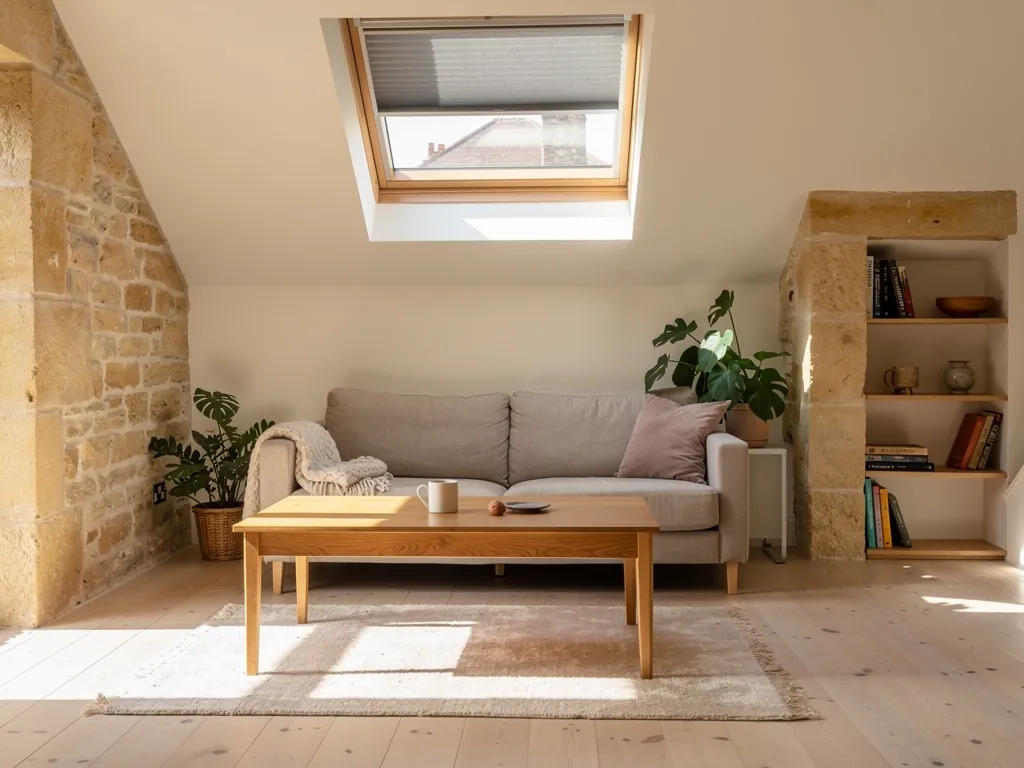
Afternoon sunshine through a rooflight with solar control glass and a blind half drawn

03

Swap the glass, or replace the whole unit

There are three ways to put a clear view back, and the right one depends on the frame, not on the fog. We price all that apply. The guide to rooflight sealed unit replacement sets out how each method is carried out on the day.

Swap the sealed unit only

If the frame is straight, sound and holds the unit with a bead you can lift, the old unit is taken out and a new one made to the exact size goes in. The kerb, the flashing and the roof covering stay as they are. This is the quickest route and the least disruptive, and a dry room is kept dry throughout. The new unit can carry better glass than the old, such as a low-emissivity coating and a warm-edge spacer, as long as the frame can hold the thickness.

Fit a new glass unit with a change of spec

A swap is a chance to improve the glazing. A south-facing loft that overheats might take a solar control coating. A bathroom rooflight might take obscure glass for privacy. Over a stair where people pass beneath, a laminated inner pane (one with an inner film that keeps a cracked pane in one piece) is worth asking about. Part K sets no such rule for a house roof, so it stays a recommendation. We list it on the quote with its price beside it so you can see the difference.

Replace the whole rooflight or roof window

If the frame has decayed, if the unit is bonded in so it cannot come out without breaking the frame, or if the roof window is old enough that its parts are no longer made, then the whole thing is replaced. A new frame and glass go in together, usually in the same opening, with new flashing. That counts as notifiable building work, so the paperwork is ours: Building Control is told, and you receive the completion certificate.

A foggy unit just needs the glass cleaned from the inside.

The fog is in the sealed gap, so no cleaning reaches it. Only a new sealed unit clears it for good.

Whichever route suits, the new glazing can be a fixed pane or part of an opening one. If the existing frame is fixed and the room could use air, we price an opening version alongside, so you see the extra for a vent bar or a motor next to the cost of a like-for-like swap.

An old sealed unit lifted out of a timber rooflight frame, ready for the new one
An old sealed unit lifted out of a timber rooflight frame, ready for the new one.

Why we do not guess from the ground

We have to see the frame to say which route fits. Two rooflights side by side on the same roof can need different answers, because one frame has been painted every few years and the other has not. We open the bead, check the rebate (the groove the glass sits in), and look at the condition of the timber or the finish on the metal. Only then do we write the quote. If a swap would put a new unit into a frame with a short life left, we say so, and let you choose between a cheaper swap now and a full replacement that lasts.

It is also worth asking why the unit failed. Units that sit in a bathroom full of steam for years, or on a roof that bakes in afternoon sun, may fail sooner than ones that live in calm conditions. A new unit with a better edge seal, and a vent or a fan that moves steam out of the room, can help the next one last longer.

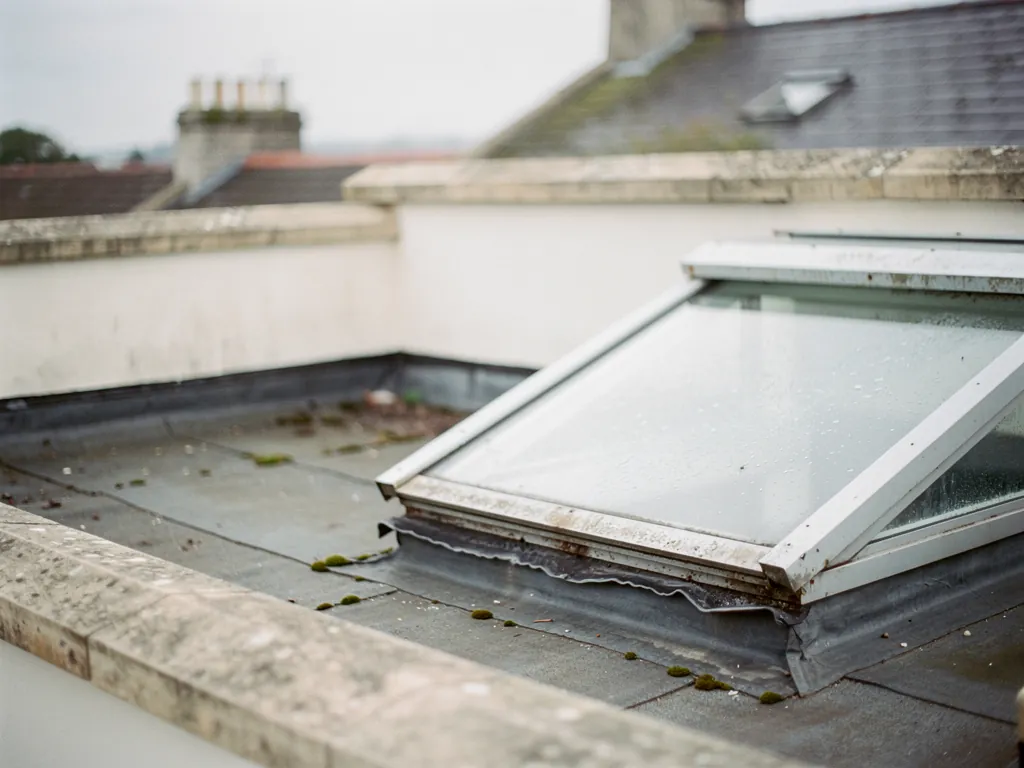
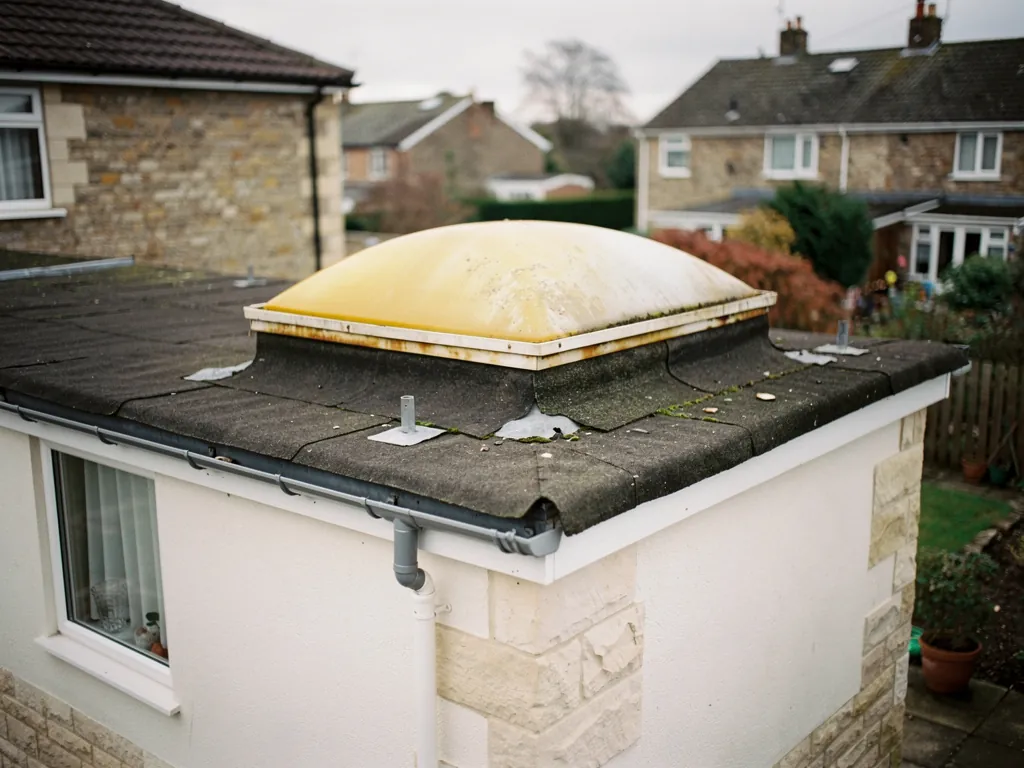
An old plastic dome rooflight due to be replaced

04

The rules behind a new unit

The rules turn on what you replace. Swapping just the sealed glass in a frame that stays is generally outside notification. Replacing a whole rooflight or roof window, frame and glass together, needs notifying, and we take that through Building Control, or through a registered building control approver, whichever you prefer. The page on rooflight glass building regulations sets this out step by step.

Under Part L 2021, in Table 4.2 for existing dwellings, a roof window takes the window limit: 1.4 W/m²K, or Window Energy Rating Band B. A rooflight takes 2.2 W/m²K. The distinction is simple. A roof window is the sloping window in a pitched roof that you reach and open. A rooflight is the glazed unit in a flat roof or on a kerb. The quote says which of the two yours is and which figure it meets.

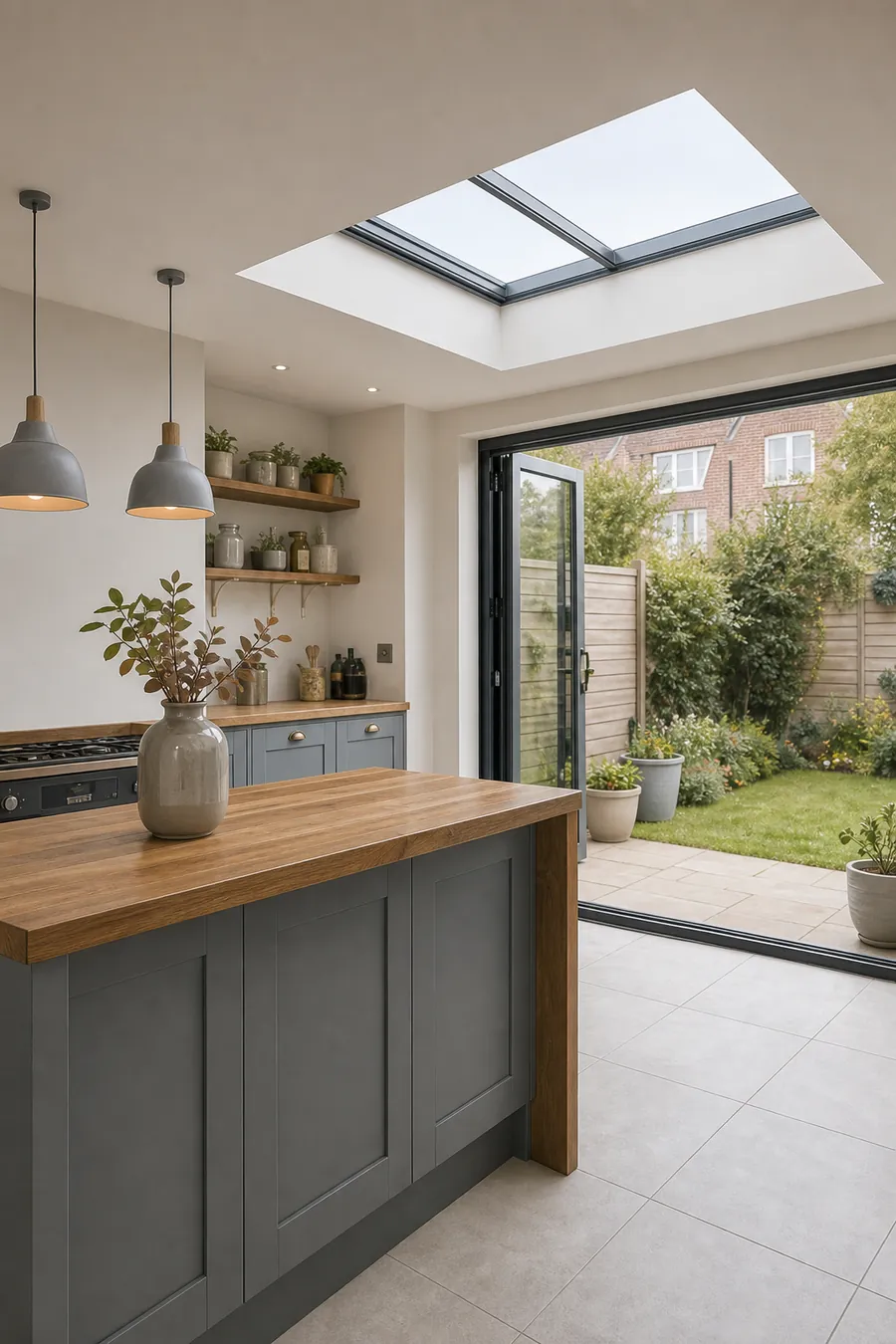
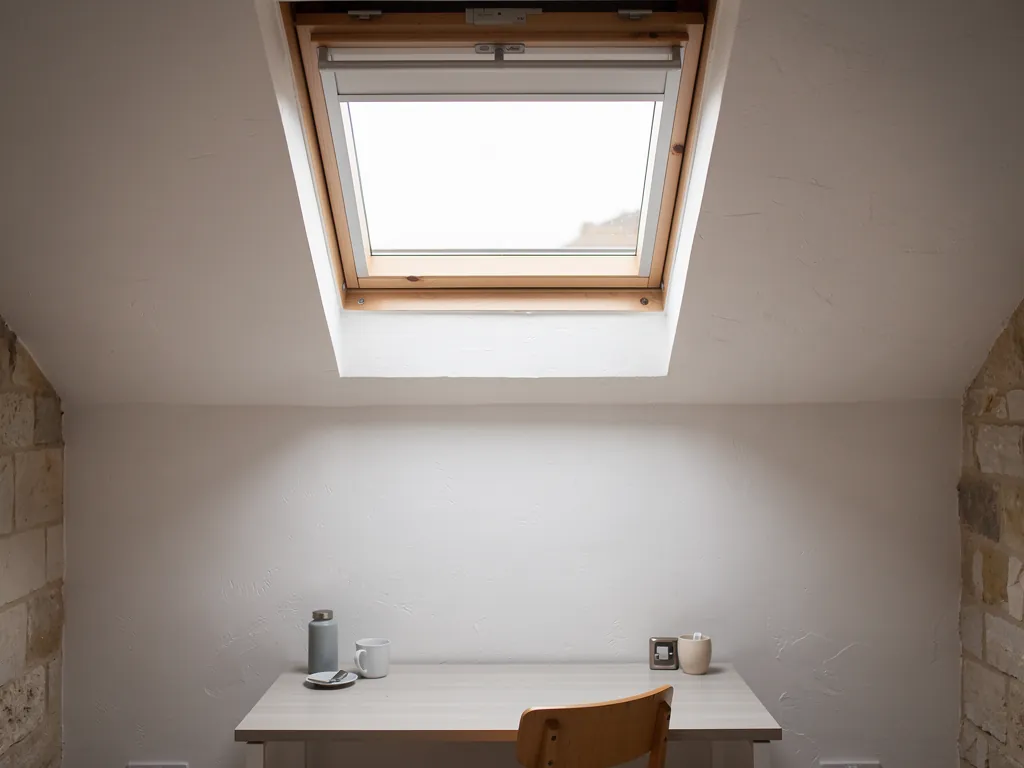
Clear sky through a newly replaced rooflight
The parts of a sealed unit, from the room to the sky.
  1. Inner pane: faces the room, sometimes laminated over a stair or kitchen
  2. Spacer bar: holds the gap and carries the drying crystals
  3. Gas fill: slows heat passing across the gap
  4. Outer pane: toughened, and can be self-cleaning
  5. Edge seal: the double seal that failed when the glass fogged

What stays the same, and what changes

A new opening is a different matter from a swap. Enlarging a rooflight, or adding a second beside it, creates a new opening in the roof. The structure around it must be trimmed correctly and the work must comply. We raise this at the survey.

Planning is usually simple for a like-for-like replacement, since nothing changes in size or position. A rooflight in England generally falls under Class C permitted development if it projects no more than 150mm from the roof slope and sits no higher than the highest part of the roof. A flat or maisonette has no rights of this kind, and a listed house needs its consent even where only glass changes. Some conservation areas, in Clifton, Kingsdown and much of Bath, can carry Article 4 directions that remove those rights, so check with the council first. Our planning guide covers the full list at planning permission for a rooflight.

Other rules touch the job only lightly. Part F counts an opening roof window as a way to purge a room of damp air quickly, which is one more reason to consider an opening unit. Part O, the overheating rule, applies to new dwellings only. Nothing in the Building Regulations sets a daylight minimum for an English house, so how much glass you fit is your call.

Glass specification in plain terms

Four choices go into a new sealed unit. The first is double or triple glazing, which sets the insulation and the weight. The second is the coating: low-emissivity for warmth, solar control for a hot roof. The third is the outer pane, which is toughened, and may be self-cleaning. The fourth is the inner pane, plain or laminated, clear or obscure. The unit has to fit the frame, which limits the total thickness. A slim frame may not take a heavy triple unit, so we measure the rebate before we order.

Because the unit is made to measure, there is a wait for it to arrive and we do not rush you into a decision at the survey. Once you accept the quote, the glass is ordered and a fitting date follows. We fit it in a day for a single rooflight, the opening closed in before we leave and the floor below covered.
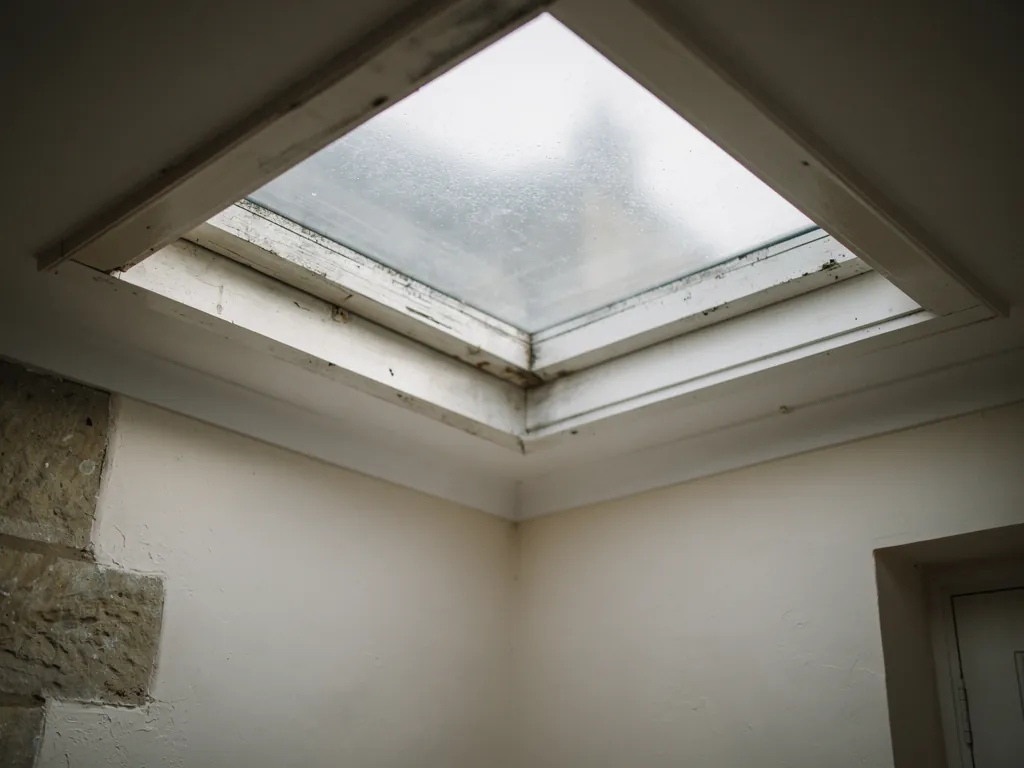
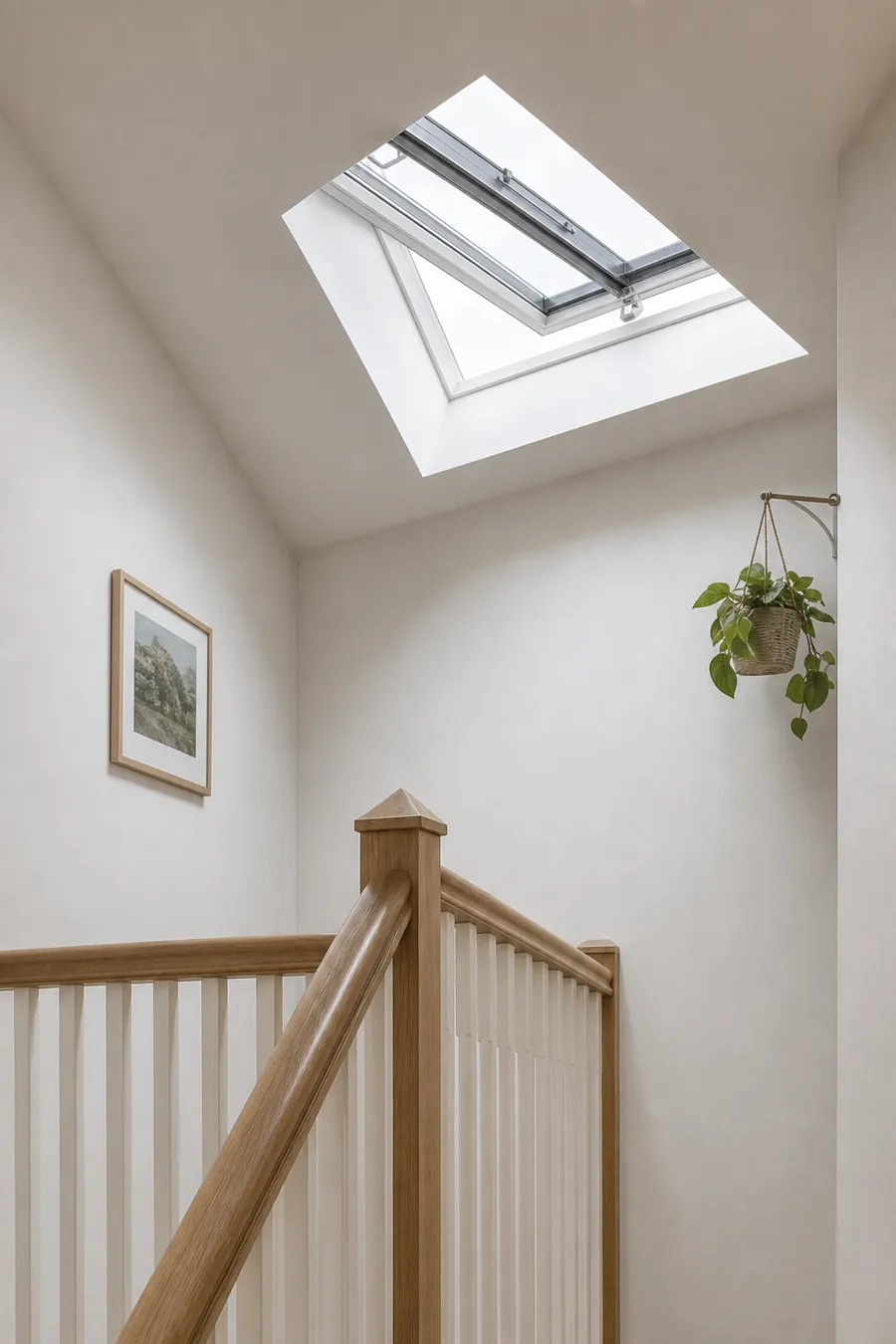
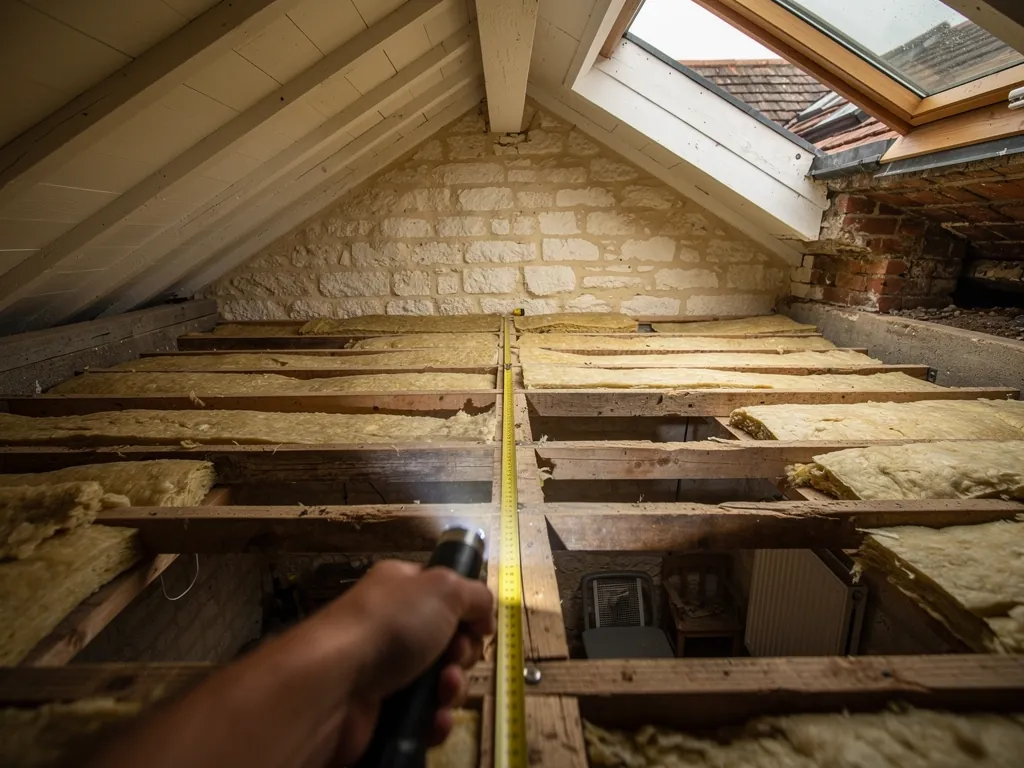
A loft space checked for a sun tunnel route between the rafters

05

How long a sealed unit should last

People ask how long a sealed unit should last. No honest answer comes as a single number, because the seal is exposed to sunlight, heat, cold and moisture on every day it is on the roof. The guide to rooflight sealed unit lifespan goes into the factors, and this chapter covers the main ones. What we can say is that the factors below shorten or lengthen a life, and that a unit in a sheltered, well-aired spot lasts longer than one in a harsh spot.

  1. Sun and heat. A south or west roof bakes the seal each afternoon, and dark frames hold more heat than pale ones.
  2. Steam. A bathroom or kitchen rooflight sees damp air every day, which works on the edge seal from the inside.
  3. Movement. A frame that flexes with the roof, or a timber frame that swells and shrinks, loads the seal along its length.
  4. Quality of the unit. A warm-edge spacer and a double seal outlast a basic aluminium spacer with a single seal.
  5. Fit. A unit sitting on poor packers, or with water standing in the rebate, ages early.

Keeping a unit healthy

You cannot make a seal immortal, but you can avoid shortening it. Keep the drainage holes in the frame clear, because standing water in the rebate attacks the seal. Wipe condensation from the glass in a steamy room and air the room afterwards. If the unit opens, open it after a shower. A vent bar, which holds a roof window a finger-width ajar, gives overnight air without a draught. Over time these small habits keep the glass drier, and a drier pane means less strain on the seal.

Check a timber frame's paint every few years, since flaking at the bottom edge lets water in.

A clear pane means the unit is healthy.

A clear pane can still have lost its gas fill, so the glazing insulates less than it did. Fog is the visible sign, and not the first change.

Guarantees on old and new

For the new unit, the maker's guarantee covers the product, and our own 10-year workmanship guarantee covers how it was fitted. The two are separate. A product guarantee is about the glass, and the workmanship guarantee is about the fitting, the sealing round it and the finish. Both are written down, and you get them with the paperwork when we finish. Details are on our guarantee page.

It is also fair to say when a swap does not pay. A unit in a frame near the end of its life, or one that has failed twice, tells you the frame or the conditions are the real trouble. We would rather price a full replacement than have you pay for a new unit that fails again. The next chapter weighs this properly.

The cost of waiting

Costs do not stay still while a unit is left to fog. The glazing insulates less, a cold pane draws more condensation onto the reveal, and the fog itself spreads. A room that depends on the rooflight for daylight, such as a stair with no other window, gets gloomier. None of this is urgent in itself, and we do not suggest it is. It is a reason to book a survey while the choice is open, because a measured unit can take a few weeks to arrive.

A manual roof window with its handle bar in a loft room, before conversion to electric
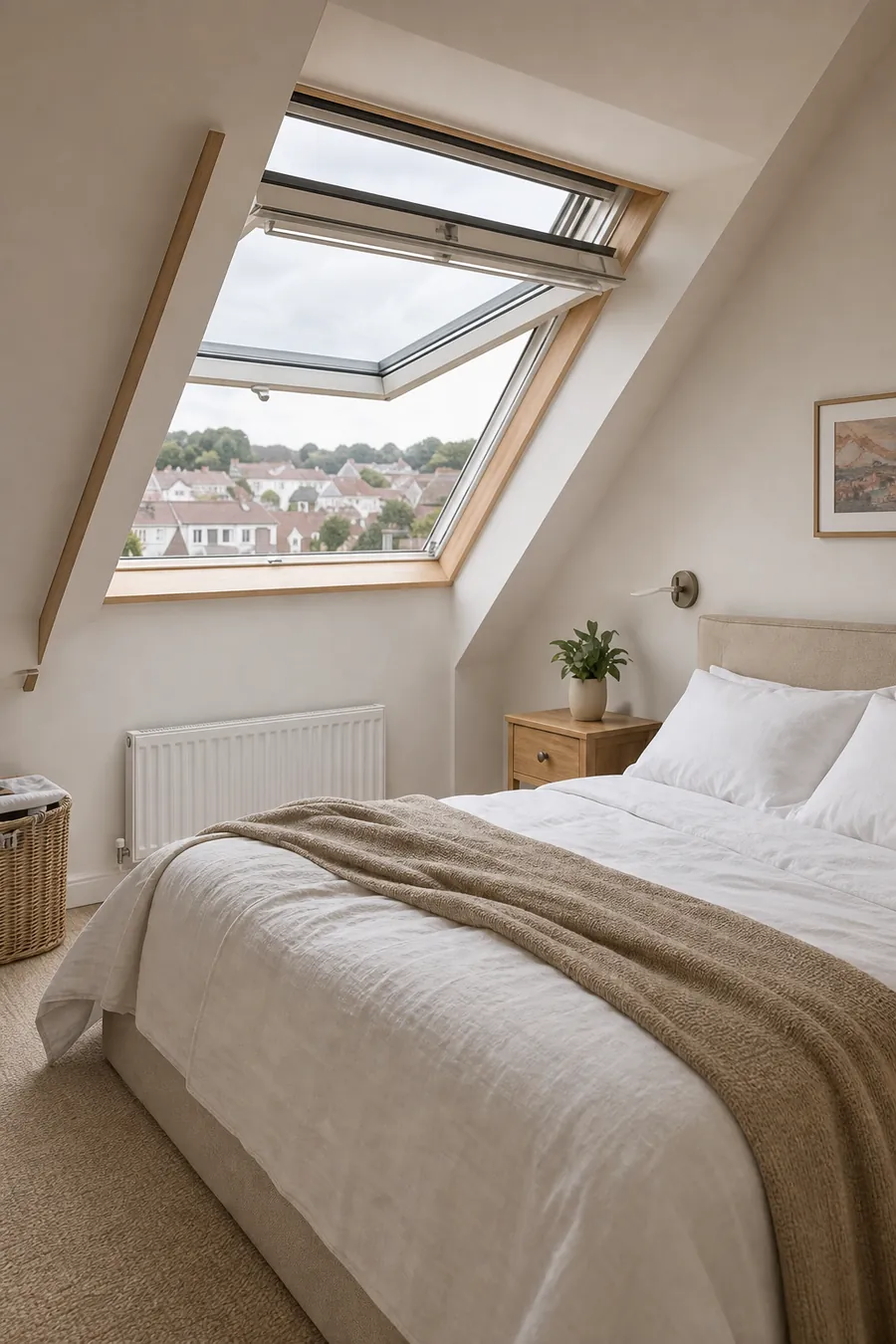
A clear new unit in a loft room, with the sash tilted open for overnight air.

If a whole roof window or rooflight has reached the end of its life, our main page on rooflight replacement in Bristol covers the full job, from survey to a roof that is weathertight every evening.

A written quote for a roof window on a kitchen table

06

Roof windows, size codes and the question of cost

Roof windows are different from kerb-mounted rooflights, because the sash (the part that opens) carries the glass and the frame is built into the roof. In some designs the sealed unit can be removed from the sash and a new one fitted, with the roof covering left alone. In others the glazing is part of the sash, so the sash or the whole window has to go. The guide on how to replace glass in a VELUX window covers each case. For the full range we fit, see VELUX windows and roof windows.

VELUX is a brand, and its windows are labelled with a size code on a sticker on the frame, found on the inside of the sash edge or on the frame side. In a code like MK04, read the letters as the width and the digits as the height. With that code and a photograph of the label, we can tell which unit and glazing you have before we visit, and whether a matching pane is still made. Other leading makers have their own codes and their own parts, and we deal with them in the same way.

A choice that matters in a loft

If a roof window in a loft room has failed, ask whether it opens the way you want. An older window may swing on a pivot bar across its middle. A top-hung one tilts outward from the top. Either can take a vent bar. When the glass is being renewed anyway, it is the cheapest moment to ask for an electric or solar sash, which opens and closes at a switch and shuts itself when the rain sensor feels water. The page on electric opening rooflights shows the options.

WindowGlass swapWhole window
Newer roof windowPossibleIf the frame is worn
Older pivot windowCheck parts firstOften the better route
Fixed rooflightPossible if soundIf frame has failed
Flat-roof kerb unitUsually possibleIf the kerb needs work

Whichever you pick, the sum of the work is the same shape: measure, order, fit, make weathertight, tidy. A glass swap on a roof window means working from inside and out, with a ladder or scaffold at the eaves. Where the window is high on a steep slope we use a proper access system, not a ladder alone.

Is it worth it?

The honest question behind these jobs is whether to renew the glass or the whole window. The guide on whether a misted rooflight is worth replacing sets out the sums. In short, a sound frame with a failed unit is the best case for a swap. A tired frame with a failed unit leans towards a full replacement. Price follows the unit's size, spec, access and whether the sash opens. You will find broad UK market figures on the costs page, and after the survey you receive our own itemised quote in writing.

Where we work

We come to you, wherever you are within 30 road miles of Bristol. That covers terraces in Totterdown and Southville, semis in Hanham and Kingswood, Georgian homes in Clifton and Bath, and estates beyond the city edge. Councils differ, so we name the right one on the quote: Bristol City Council, Bath and North East Somerset Council, North Somerset Council or South Gloucestershire Council. The 10-year workmanship guarantee comes with every fitting, in writing.

If you are comparing a glass swap with moving to a fresh-air design, read fresh air rooflights for the rooms where a sash that opens earns its keep, and those where fixed glass wins.

Guides and answers on misted rooflights replaced

When the glass has fogged for good

Will the fog come back after the new unit goes in?

A new sealed unit starts with a fresh seal and dry gap, so the fog does not come back from the old failure. Any fog on the room side comes from household moisture, and clears when you air the room or open the sash.

Can I stay in the room while the glass is swapped?

Yes. We protect the floor, keep the work to one area and close the roof in before we leave each evening. A glass swap on a single rooflight is normally done within a day.

What if only one of two rooflights has misted?

We price the failed one on its own. It is also the moment to ask whether the second is close behind, because the two were fitted together and share the same sun and the same age.

Do I need Building Control for a new sealed unit?

Replacing only the sealed glass in an existing frame is generally not notifiable. Replacing a whole rooflight or roof window is, and we handle that notification for you.

Could the new glass be tinted or frosted?

Yes. Obscure glass suits a bathroom, and solar control suits a hot loft. We list each choice on the quote with its price, so you can compare it against clear glass.

Pastel-painted Georgian terraced houses with iron railings on a Bristol street

Tell us about the room

A few details is all we need. We'll come out, advise and give you a written quote.

No pressure, no obligation.

Call Get a free quote