Guide · Misted Rooflights Replaced · 8 min read
New Sealed Unit or a Whole New Rooflight?
When the glass in a rooflight has failed, there are two ways to put it right. You can fit a new sealed glass unit into the frame you already have, or you can replace the whole rooflight. The right one depends on the frame, the age of the unit and what you want the room to do next.
Two jobs that look alike from the room
From inside the house, a replaced glass unit and a replaced rooflight look much the same afterwards: clear glass in a frame, with sky above. The work behind them is quite different, and so are the cost, the rules and the result.
With rooflight sealed unit replacement, the old glass sandwich comes out of the frame and a new one, made to the same measurements, goes in. The frame, the flashing and the surround stay where they are. It is a skylight glass unit job, and it is small.
With a whole rooflight replacement, everything comes out: sash, frame, and on a pitched roof the flashing that joins it to the slates or tiles. A new unit is set into the same opening, or a slightly altered one, and it is made weathertight again from scratch.
Neither is better in every case. A glass-only job on a sound frame is sensible and tidy. The same job on a tired frame spends money on one part of the unit and leaves the rest to fail next. So the sensible way to decide is to look at the frame first, not the glass.
When a new sealed unit is enough
Fitting new glass into the existing frame suits a fairly narrow set of cases, and it is worth being honest about them.
- The frame is square and the joints are tight, with no soft timber, no split corners and no corroded metal.
- The sash, if the unit opens, swings and closes smoothly and the seals around it are in good shape.
- The flashing or the kerb has done its job without trouble, so there is no staining below.
- The glass specification is already good enough for what the room asks of it.
- The maker still supplies the glass, or a glazier can make a matching unit to size.
Where all of those hold, a glass-only job has real advantages. The opening in the roof stays exposed only briefly. There is less to dispose of. And for most such jobs the work is not notifiable to Building Control, because it does not replace the rooflight itself. It is a replacement of a component in an existing frame.
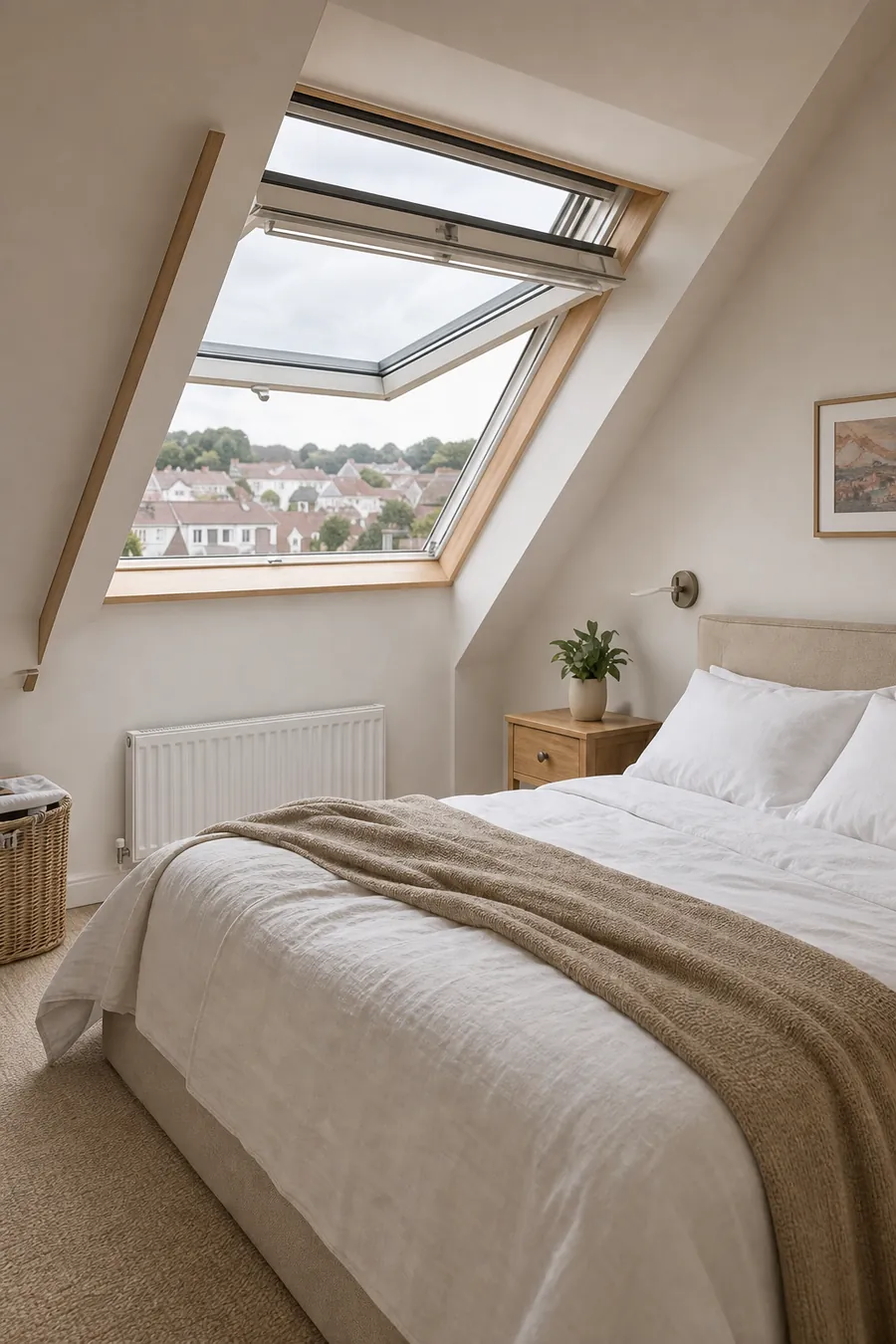
It also helps to ask what the old unit did. A pitched-roof window in a loft bedroom, on a south-west slope, may have fogged because the seal gave up after a run of hot summers. A new unit in the same frame cures the fog but not the heat, unless you choose a different glass type at the same time. That is a good moment to talk about a solar control coating or a quieter-in-rain pane.
If you want to know how mist forms in the first place, why rooflight glass mists between the panes explains the sealed unit from the inside.
When the whole rooflight should go
Some frames are past helping. The signs are usually visible to anyone who stands under the unit with a torch.
- Timber that is dark, soft or flaking at the lower corners.
- Metal that has bubbled, flaked or turned chalky.
- A sash that drags, sticks or no longer sits flush when closed.
- Staining on the lining or ceiling that follows the line of the frame.
- An old spec that no longer meets the thermal limits a new unit would have to.
In any of those cases a new sealed unit is a poor investment. It would sit in a frame that will need replacing soon, and the second visit would repeat the access, the protection and the mess.
A whole replacement also lets you change things the old unit could not do. A fixed rooflight can become an opening one. A manual unit in an awkward place can become electric with a rain sensor. A small unit can move to a larger size, if the rafters or the kerb allow it, and the roof structure is trimmed properly where it has to be. A new opening in a roof is building work in its own right, so that part is done with the structure in mind.
The age of the unit matters as well. A roof window whose frame is the same age as the failed glass has had the same weather, so it is sensible to look at it as a whole. The page on rooflight sealed unit lifespan separates what to expect from the glass and from the frame.
Side by side
The table lays out the two jobs against the things a householder usually wants to know. It uses broad terms on purpose; the actual figures come from a survey of your own roof.
| Question | New sealed unit | Whole rooflight |
|---|---|---|
| What changes | Glass only | Frame, flashing, glass |
| Time on the roof | Short | Longer |
| Notifiable work | Generally not | Yes |
| Can add opening | No | Yes |
| Thermal limit | None applied to the frame | Part L 2021 applies |
| Best when | Frame is sound | Frame is tired |
The thermal row is worth a line of explanation. For a whole replacement in an existing English home, Part L 2021 gives a roof window the window limit of 1.4 W/m²K (or Window Energy Rating Band B) and gives a rooflight 2.2 W/m²K. A new glass unit in an old frame is not held to those limits as a package, which is why the choice of glass still matters even when the rules are quieter.
The rooflight glass and building regulations page goes into the notifiable-work question in more detail.
Matching the new glass to the old frame
A replacement unit has to fit. Frames are made to close tolerances, and a sealed unit that is a few millimetres out will not sit properly, or will not seal against the beads that hold it.
On a VELUX roof window, the code printed on the frame plate gives the frame size. The letter is the width and the digits are the height, so a plate reading MK04 describes one particular opening. The glass unit is then made to suit that frame and its sash. If the plate has worn away, we measure and match by hand.
On a flat rooflight, the dome or pane sits on a kerb or a frame, and the unit is sized to the frame it seats in. If a plastic dome is being replaced with a glass unit, the framing may need to change as well, which is another reason to look at the whole rooflight in that case.
Specification is the other half of matching. Do not simply copy what failed. A bedroom might gain from a laminated inner pane, the kind that stays in one piece when struck; it is advice and not a rule, because Part K sets no laminated requirement for a house roof. A kitchen might gain from a coating that cuts summer glare. A bathroom might need nothing special at all. Each of these appears as its own line in the quote, which lets you take one and leave another.
What the day looks like for each
The glass-only job and the whole replacement are both run by one team, and both end with the roof sound and weathertight that evening. The difference is the number of steps in the middle.
For a new sealed unit, we cover the floor and furniture below, lift out the beads that hold the old unit, remove the failed glass and lower the new one in. The beads and seals go back, the sash is tested if it opens, and both faces of the glass are cleaned. The whole thing is often a matter of hours, depending on access.
For a whole rooflight, the old unit comes out with its flashing, the opening is checked and any trimming done, and the new frame is set, levelled and fixed. On a pitched roof the flashing is dressed into the slates or tiles; on a flat roof the kerb is checked and the new unit is sealed to it. We make the Building Control notification, since this work is notifiable. Then the room is cleaned and the roof closed in.
- Survey and written quote, with both options shown where both could work.
- You choose the route, and the glass specification.
- The unit is made to the surveyed size, which takes time for any made-to-measure glass.
- We fit, test and clear up in one visit where the job allows.
The made-to-measure wait is the one bit that surprises people. A new glass unit is not on a shelf. It is cut and sealed to your frame, and so we measure carefully and book the fit once the glass is ready.
Making the call
For the wider picture, start with the hub page. Put the two jobs next to the state of your own rooflight and the answer tends to be plain. Sound frame, good seals, glass already near the right spec: a sealed unit. Tired frame, a sash that sticks, or a wish for a different kind of opening: replace the lot.
Where it is less clear, the useful move is to price both. A survey costs nothing, and the quote shows each route as its own itemised option, so you are comparing real figures and not guessing. If one of the routes turns out only a little dearer than the other, the longer-lasting one is usually the sensible pick. Our page on whether a misted rooflight is worth replacing helps with that weighing.
Two other pages may help while you decide. Signs of a failed rooflight lists what to look for in the frame and around it, and swapping glass in a VELUX roof window deals with that brand on its own. For typical price ranges and what moves them, see the costs page.
The overall picture of what we replace across Bristol, Bath and the towns nearby sits on the misted and failed rooflights replaced hub, and what we stand behind once the job is done is explained on the guarantee page. Because a replacement is the one chance to improve a room's air, the fresh air rooflights page shows what an opening unit could add.
Whichever way you go, bring the question about the frame to the survey. It is the answer that settles everything else.
If you are weighing the whole-window job on its own terms, see replacing an old rooflight, which keeps to the whole unit and what goes with it.
New glass or new rooflight: points that come up at the survey
Can a sealed unit be replaced in any rooflight frame?
Not in every one. The frame has to be sound and the unit has to be made to fit it. Some old frames are too worn, and some flat units hold a single dome that cannot take a glass sandwich. We check both at the survey before suggesting either route.
Will a new glass unit make my skylight open?
No. The glass has no say over how the sash moves. If you want the room aired from the roof, that means a different unit with an opening sash, and our quote shows that option alongside the glass-only price.
If I replace only the glass now, can I replace the frame later?
Yes, though you pay for access and protection twice. If the frame is already near the end of its life, it is usually cheaper and tidier to do both together.

Tell us about the room
A few details is all we need. We'll come out, advise and give you a written quote.
No pressure, no obligation.