Guide · Skylights & rooflights · 8 min read
Replacing an Old Rooflight or Skylight: What the Job Involves
An old rooflight that has misted, stuck or stained the ceiling can be swapped for a new one in a day or so, often in the same opening. This guide covers how to tell when a unit is finished, whether the glass or the whole thing should go, and what is worth changing while the roof is open.
Signs the old unit has had its time
Rooflights do not fail all at once. They give hints for a couple of years first, and the hints are easy to put down to the weather.
The clearest sign is a film of moisture or a milky cloud between the two panes of a sealed glass unit. That means the seal around the edge has gone and the gas or dry air inside has been replaced by damp air. The unit still keeps the rain out, but it no longer insulates properly, and the cloudiness only spreads. Our page on misted and failed rooflights goes into the cause in more detail, and our Bristol skylights home page lists the units that go in their place.
The second group of signs is mechanical. A sash that needs a shove to close, a handle that has gone loose, a hinge that has rusted, or a frame whose paint has lifted to bare timber all point to a unit that is wearing out as a whole rather than in one part. On an old flat rooflight, look at the acrylic dome: crazed, yellowed or brittle plastic is a sign the material has aged.
The third group shows on the inside. Brown rings on a lining or ceiling below, flaking paint around the reveal, or a frame that is cold to the touch on a mild morning tell you the unit is no longer doing its job.
- Sealed unit the double or triple glazed pane, sealed at the edge, that sits in the frame
- Flashing the metal skirt that joins a roof window to the slates or tiles around it
- Kerb the raised upstand a flat rooflight sits on
- Lining the sloping finish that connects the frame to the ceiling inside
None of these needs panic. They are a prompt to book a look while the weather is kind, so the job can be planned rather than rushed.
Glass only, or the whole unit?
This is the first real decision, and it changes the cost, the paperwork and the time on site.
| Option | Best when | Building Control | Time on site |
|---|---|---|---|
| New sealed glass in the old frame | Frame sound, only the glass has failed | Generally not notifiable | A short visit |
| Whole unit, same opening | Frame tired, or you want to open it | Notifiable | About a day each |
| Whole unit, new size | Opening needs widening or moving | Notifiable, roof trimmed | Longer, roof structure work |
Swapping only the sealed glass unit is the lighter job. It suits a frame that is still straight, still sealed to the roof and still opens properly. The catch is that the new glass has to match the old frame's rebate, and older frames sometimes cannot take a modern thickness of unit. A frame that has gone soft at the corners is not worth fitting new glass into.
Replacing the whole rooflight or roof window, frame and glass, is notifiable building work. That is the point at which the energy rules also apply, so the new unit has to reach the current figure. We make the Building Control notification where the work needs one, and the Building Regulations guide sets out what that means in plain terms.
If you are unsure which route fits, the survey answers it. We look at the frame, press on the corners, check the flashing and tell you which of the three rows above applies, with the price of each on the written quote.
What a like-for-like swap involves
A straight swap in an existing opening follows a sequence. Knowing it helps you plan the day, especially if the room underneath is a bedroom or a kitchen you want to keep using.
- Floors, furniture and the stairs are covered, and the area below the opening is cleared.
- The old flashing, and the slates or tiles around it, are lifted back carefully and set aside for reuse.
- The old unit is unscrewed from the rafters and lifted out through the roof or lowered inside, depending on its size.
- The opening is checked. Timbers that have been wet are looked at before anything new is fixed to them.
- The new unit is fixed to the rafters, levelled and sealed with its own flashing kit, then the roof covering is dressed back around it.
- The inside lining is fitted and finished, the sash is tested, and everything is cleaned up.
One team does the whole job. If the weather turns while the roof is open, the opening is covered, and at the end of each day the roof is made weathertight whatever has or has not been finished inside. For a loft room, that means you sleep under a closed roof that night.
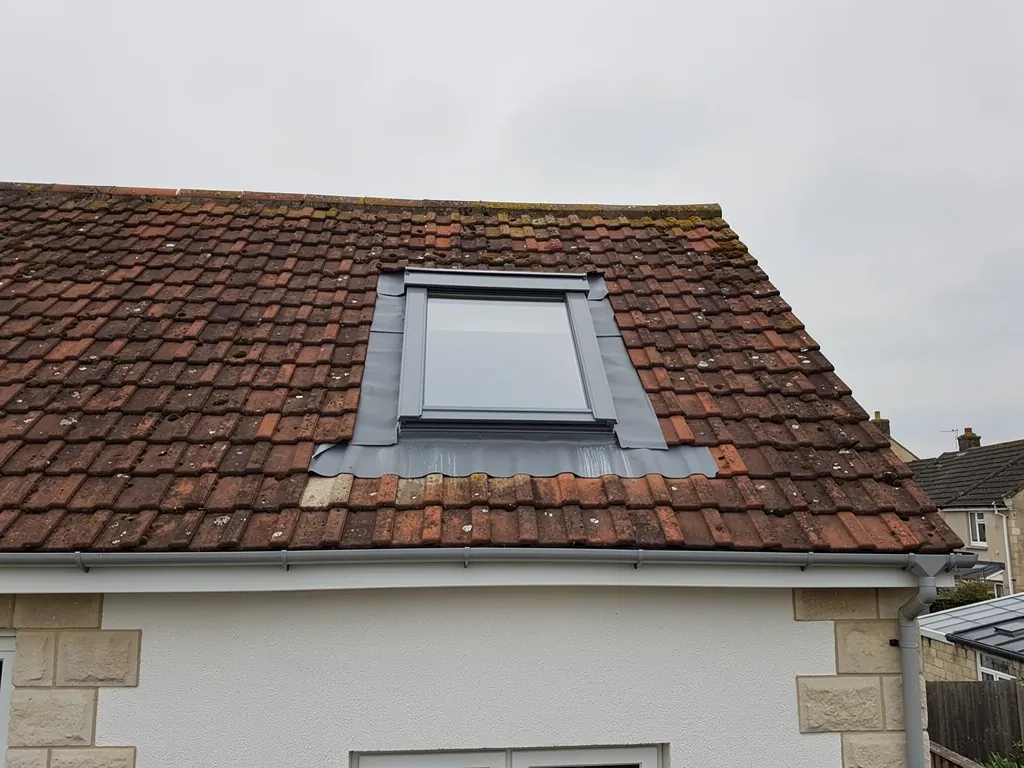
Our page on time on site for a skylight gives a realistic idea of the hours for each kind of unit, and the guide to reusing the roof when you replace a skylight shows why the roof covering does not need to be renewed for a normal swap.
When the opening itself has to change
A like-for-like swap is the easy case. Sometimes the old unit is simply the wrong size, in the wrong place, or the only one in a room that needs two.
Widening a roof window means cutting into a rafter. Moving it up the slope means a new opening in a different spot and the old one made good. Either way, cutting a bigger or different opening is building work, so the roof structure is trimmed properly, with the cut rafters carried on new timbers either side. That is why we ask to see into the loft at the survey: the rafter spacing, the condition of the timbers and any water tank or wiring in the way all affect the plan.
A bigger rooflight just means a bigger hole.
A wider opening changes how the roof carries its load. The rafters either side of it are trimmed and supported, and that structural step is what the job is really about.
It helps to look at the size code on the data plate of the existing unit. On VELUX windows the code reads width first, then height, so two codes with the same letter are equally wide and differ only in length. A taller unit at the same width can sometimes go into a slightly longer opening without touching a rafter, which gives more daylight for a modest amount of extra work.
Flat roofs follow the same logic. A new rooflight on the existing kerb is simple. A larger one means rebuilding the kerb, which we cover in the flat roof rooflights service.
Using the swap to change how it works
Once the old unit is out, you have a free choice about what goes back. That choice is worth a little time, because a fixed skylight put in twenty years ago was often chosen when nobody was thinking about air.
Opening. A manual roof window within reach gives you a tilting sash and a simple handle. Out of reach, an electric or solar opening rooflight works from a switch or remote, with a rain sensor that shuts the sash at the first drops. A vent bar lets in a trickle of air overnight with the sash shut.
Glass. New units are far better insulated than anything fitted a generation ago. Solar control glass cuts the heat on a south or west slope, and a laminated inner pane suits a room where you sleep or bathe. Part K does not make laminated glass a legal requirement in a house roof. Our energy efficient rooflights page explains the glass choices.
Energy figure. Part L 2021 sets a heat-loss limit for replacements, and it differs by type. A new roof window is measured as a window, a new flat rooflight against a more relaxed number, and the quote names the figure each unit reaches. Any unit we fit meets the figure for its type.
Choosing between the options follows the order set out in how to choose a rooflight: the room first, then the roof, then how it opens.
Older houses and protected roofs
The house changes the job. A Victorian terrace in Bedminster with a plain slate slope is a different brief from a Georgian house in Clifton or a Bath stone terrace with a roof the council cares about.
Replacing a rooflight with one of the same size in the same place usually raises no planning question for a house in England. Changing the size, the position or the look of it is where planning rules can come in. Flats and maisonettes sit outside those allowances. A listed house calls for listed building consent first, and some conservation areas have local restrictions that take the allowance away. Bath is a World Heritage Site, much of it conservation area, while Bristol's protected streets include Clifton and Kingsdown. Where there is any doubt, check with the council. For the allowances in full, read planning permission for a rooflight.
On these roofs the usual choice is a conservation rooflight, a slim, low unit that sits close to the slates. It replaces a bulky 1980s window with something far closer to what the roof looked like before. Many styles open, with a narrower range of mechanisms than a standard roof window.
Pennant and Bath stone houses are sometimes roofed in stone slates or heavy clay tiles. These are taken up and relaid by hand, and the flashing for them is made to suit. It is slower than on modern concrete tiles, and the survey allows for it.
Getting a firm price and a date
Two quotes for the same swap can differ for good reasons: one may reuse the old flashing, another may fit a new kit; one may include the lining and the other leave it for you. The sure way to compare is to ask for it itemised.
The visit costs nothing and commits you to nothing. We come to you, look at the unit and the roof from outside and inside, take the size code and measurements, and check the loft where we can. Within that visit we can tell you whether the glass alone would do or the whole unit should go.
The written quote that follows lists the unit, the flashing, the lining, the making good, any Building Control notification and the opening options. Where an opening unit could replace a fixed one, it is priced on its own line, which lets you weigh the extra cost against the benefit. For typical UK ranges and the things that move them, see the costs page.
The work is covered by our 10-year workmanship guarantee, which the guarantee page sets out. If you would like to see every kind of unit we put in around Bristol, Bath and the towns nearby, the Avon Skylights homepage is the place to start.
Comparing the words skylight and rooflight can also trip people up when they ask for quotes. Skylight or rooflight clears up what each term usually means.
If only the glass has failed, the choice is narrower. Our guide on a new sealed unit or a whole new rooflight sets out how to choose.
Before the old unit comes out
Will the slates or tiles around my skylight need replacing too?
Not normally. The surrounding slates or tiles are lifted, set aside and dressed back around the new flashing. Any that are cracked or missing are shown on the quote as a separate line, so you can see what is needed before you agree.
Can the new skylight be fitted while the old frame is still in the roof?
No. For a whole-unit swap, the old frame is removed and the new one fixed straight to the rafters. Only a replacement glass unit leaves the frame in place, and that suits a frame that is still in good order.
How do I find the size of my old roof window?
Look for the data plate on the inside of the frame, usually near the top of the sash. On VELUX units it carries a code such as MK04, with the width in the letter and the height in the number. A photograph of it is enough for us to start from.
Tell us about the room
A few details is all we need. We'll come out, advise and give you a written quote.
No pressure, no obligation.