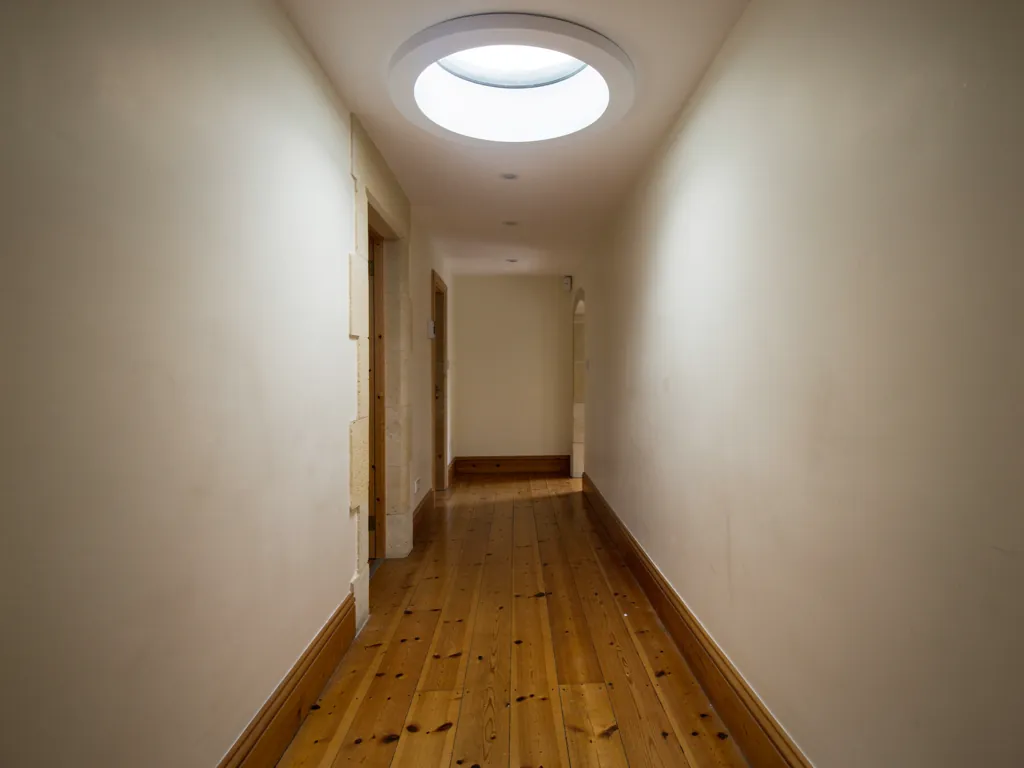
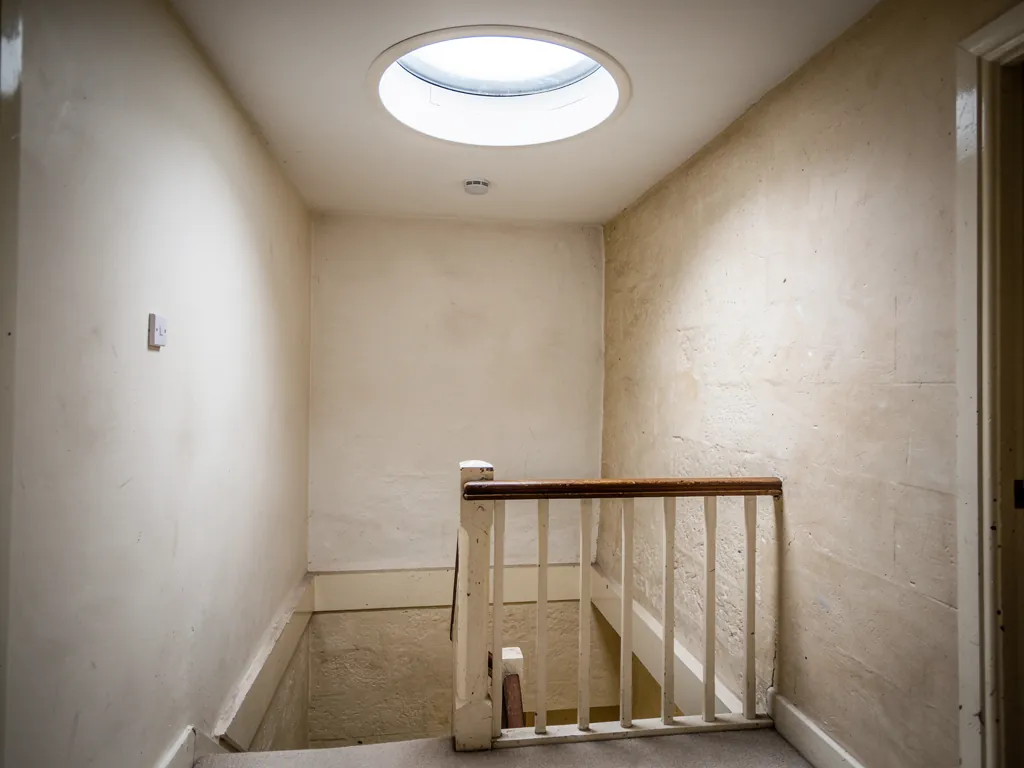
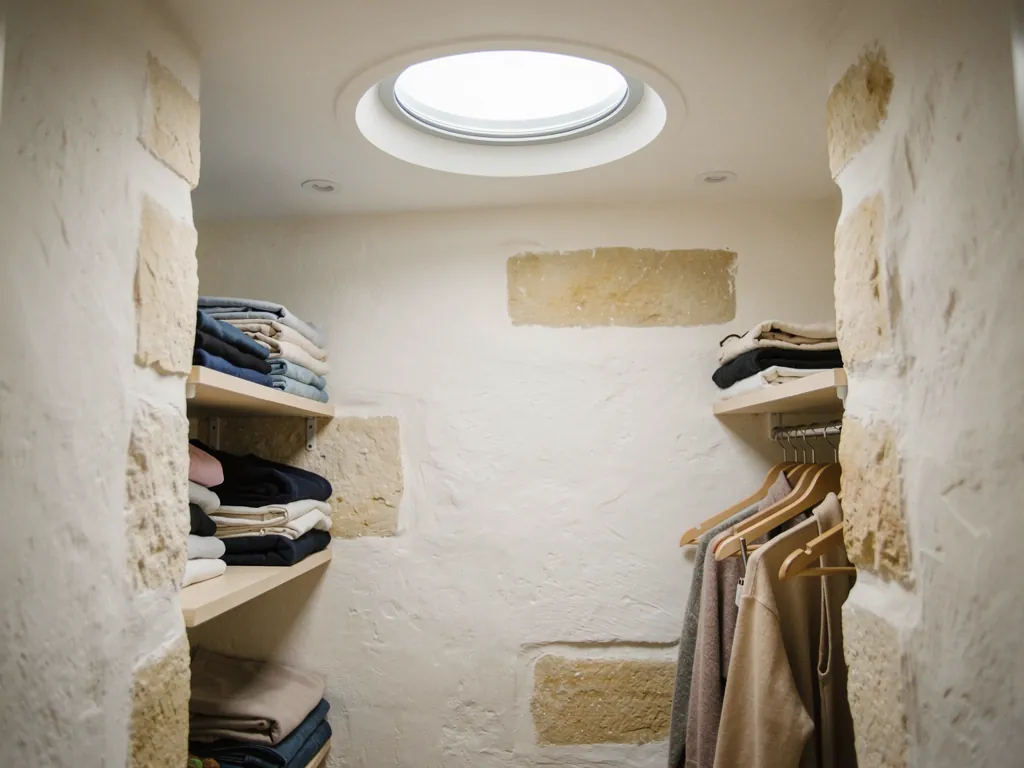
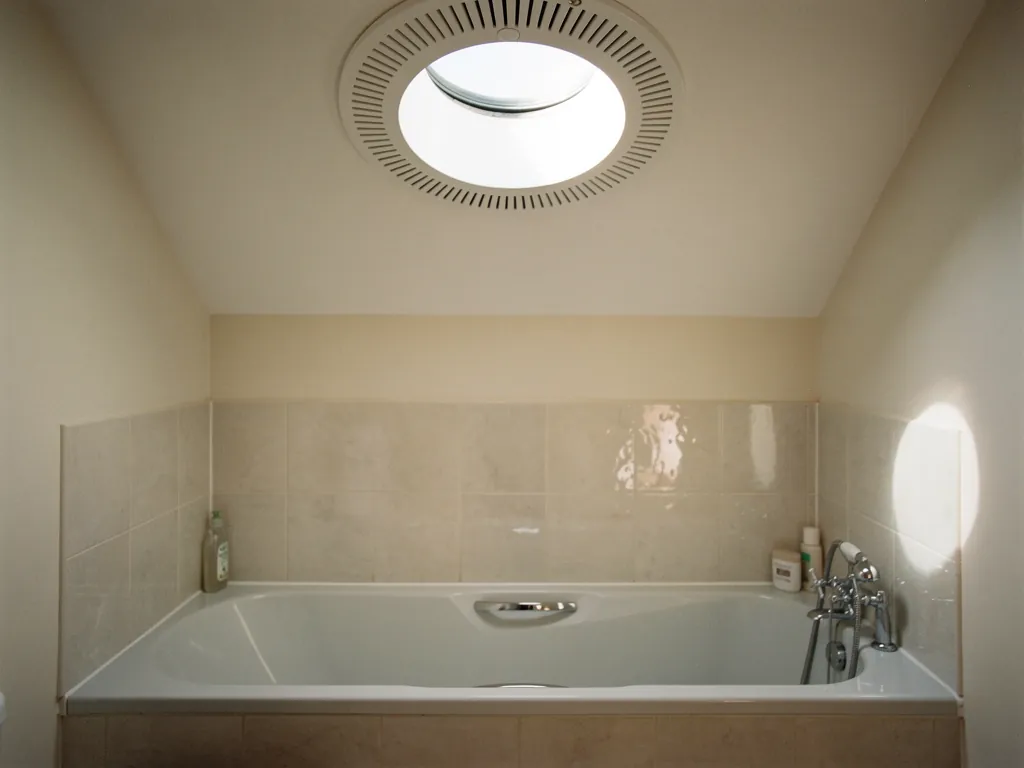
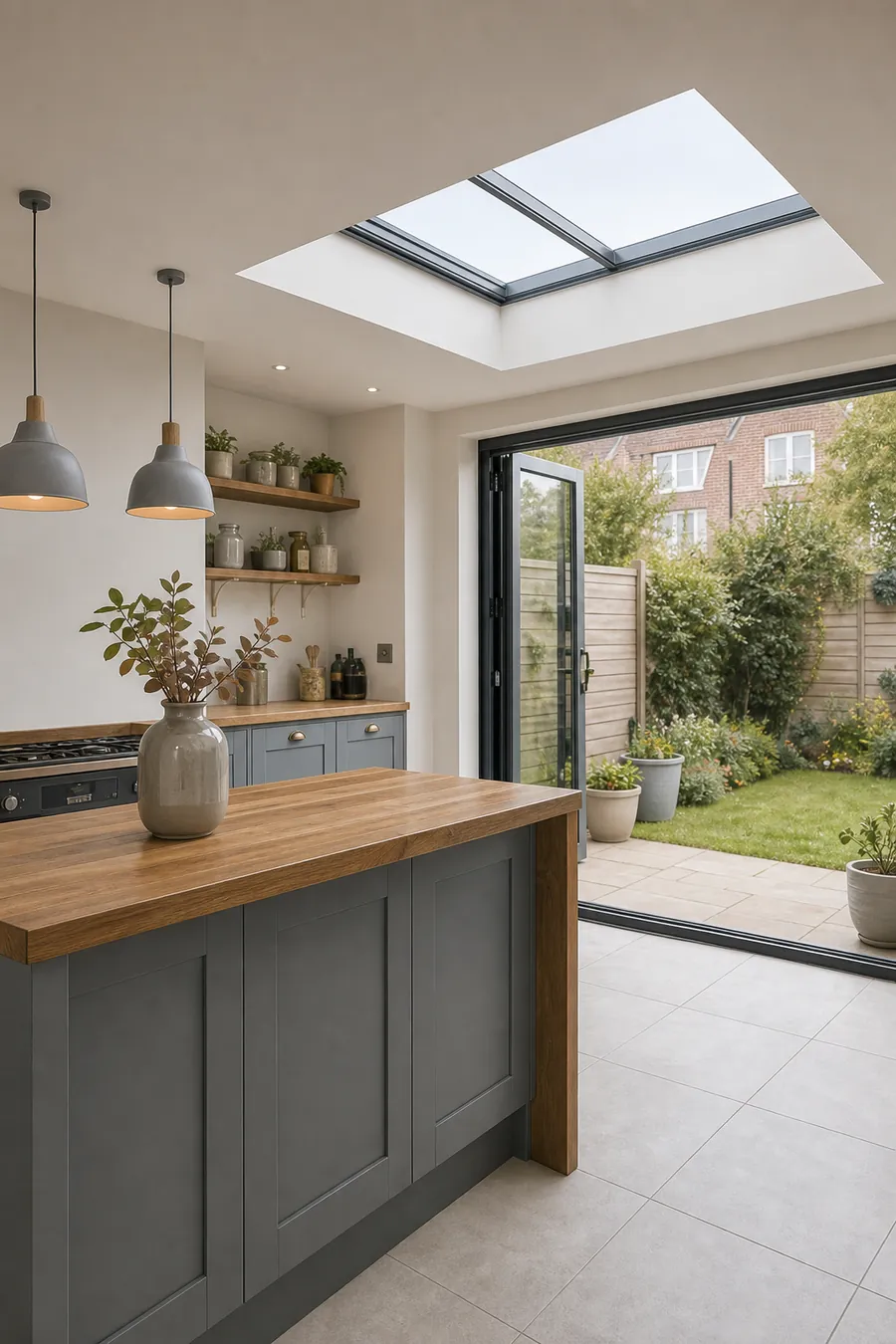
Flat roofs ask for a different detail, and the guide to a sun tunnel on a flat roof covers it in full. Here the dome sits on a raised curb, an insulated upstand, so rainwater cannot pool against it. The roof membrane, whether felt, GRP fibreglass or EPDM rubber, is turned up the curb and sealed. The drop to the room is usually short, because the ceiling of a flat-roofed extension is close to the roof. That means a straight, bright tube with little to get in its way.
The day of the fitting
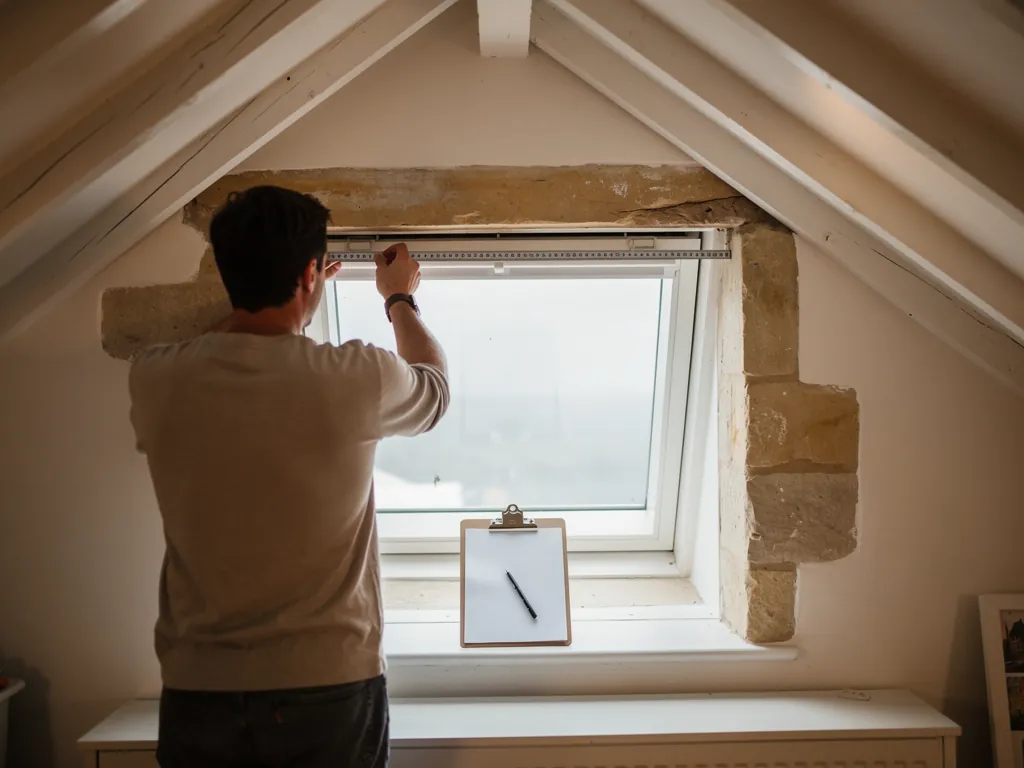
- The floor and furniture in the room below are covered, and the position is marked from inside and out so the tube lines up.
- A small area of covering is lifted, the roof timbers are trimmed if needed, and the opening is formed.
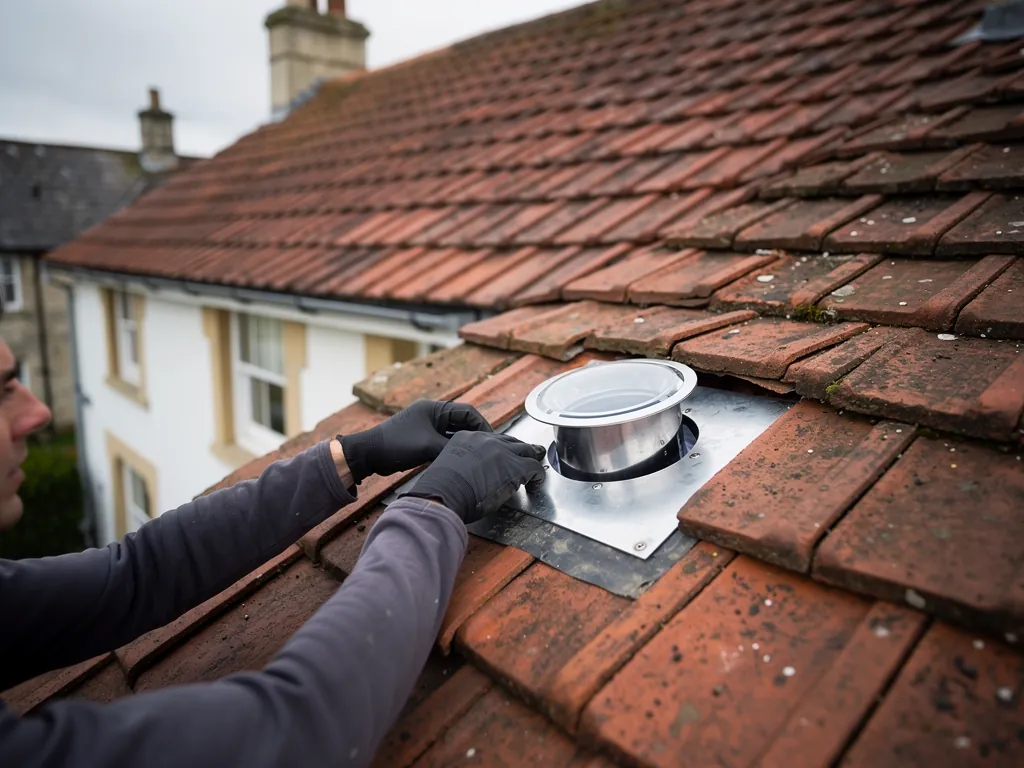
- The collar or curb is fitted and made weathertight, and the dome is fixed on top.
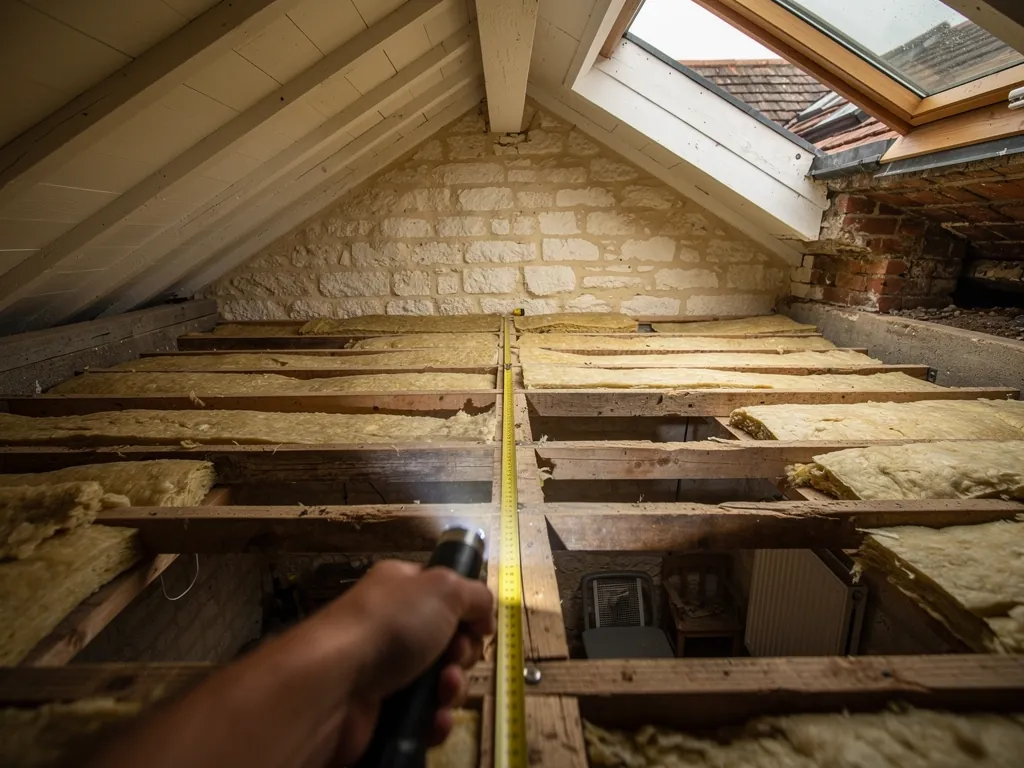
- In the loft, the tube is cut, joined and wrapped, then run down to the ceiling position.
- The ceiling is cut, the diffuser is fixed, and any ventilation kit is wired in.
A single sun tunnel is normally a short job, and the roof is made weathertight at the end of each day whatever stage the work has reached. One team does the job from the first tile lifted to the last screw in the diffuser, so there is no hand-over between a roofer and an electrician who have not met. You are left with a clean ceiling and no fresh plaster to wait for, though we leave a ceiling ready for a touch of paint around the diffuser.
Building work and planning
A new opening in a roof is building work. It needs the roof structure trimmed properly and the finished job has to meet the regulations. Where the work is notifiable, we handle the notification through Building Control, and you receive the certificate. A sun tunnel is small, and it usually falls under permitted development, since it projects only a short way above the slope. Flats and maisonettes have no such rights, and a listed house must obtain consent before any roof opening. For the wider picture, read our page on planning permission for a rooflight.
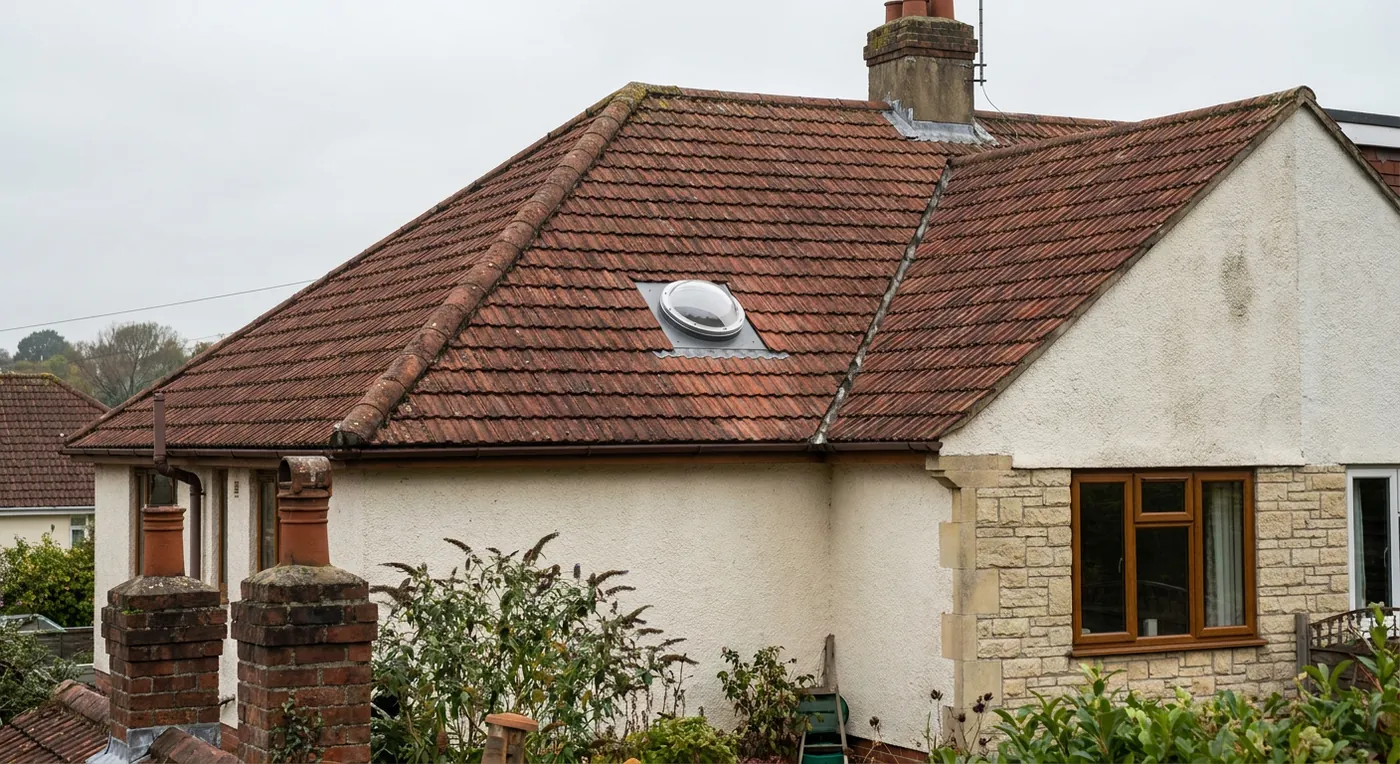
Across Bath, a World Heritage Site where conservation areas cover large parts of the city, the council may take an interest in domes visible from the street. Bath and North East Somerset Council is the authority to ask. In Bristol, the conservation areas include Clifton and Kingsdown, and Bristol City Council is the one to check with. We suggest a dome position on the back slope wherever that gives a good result, which keeps the street elevation untouched.