Guide · VELUX Windows · 8 min read
VELUX Size Codes Explained
A VELUX size code looks like a serial number, but it is a short description of the window's frame. Once you can read it, you can check a quote, order a like-for-like replacement or plan a bigger window. This guide shows where to find the code, what each part says and where the code stops being enough.
What the letters and digits tell you
Each VELUX roof window carries a code made of letters and digits. The letter, or pair of letters, stands for the width of the frame. The digits stand for the height. Take MK04 and MK08: same letters, so the same frame width, but the second runs taller up the slope. Set MK04 beside UK04 and the digits match, so the heights agree while the widths part company. That is all the code does, and it is enough to tell a surveyor what size of window used to sit in your roof.
- Letters the width band of the frame, so the same letters mean the same width
- Digits the height band, which grows as the number grows
- Data plate the small label that carries the code, fixed inside the sash or frame
- Frame the part fixed to the roof timbers, which the code describes
Notice what the code does not say. It does not give the glass area, the type of glass, the pitch of the roof or the way the sash opens. Those details sit elsewhere on the plate or in the specification, and they matter when you order. Think of the code as the window's shoe size: it tells you what fits the opening, not what the shoe is made of.
When people search for velux skylight sizes they usually want a chart of millimetres. A chart helps, but your own plate is better, because it names the window that is actually in your roof rather than a model that may have changed since it was fitted.
Finding the code on your own window
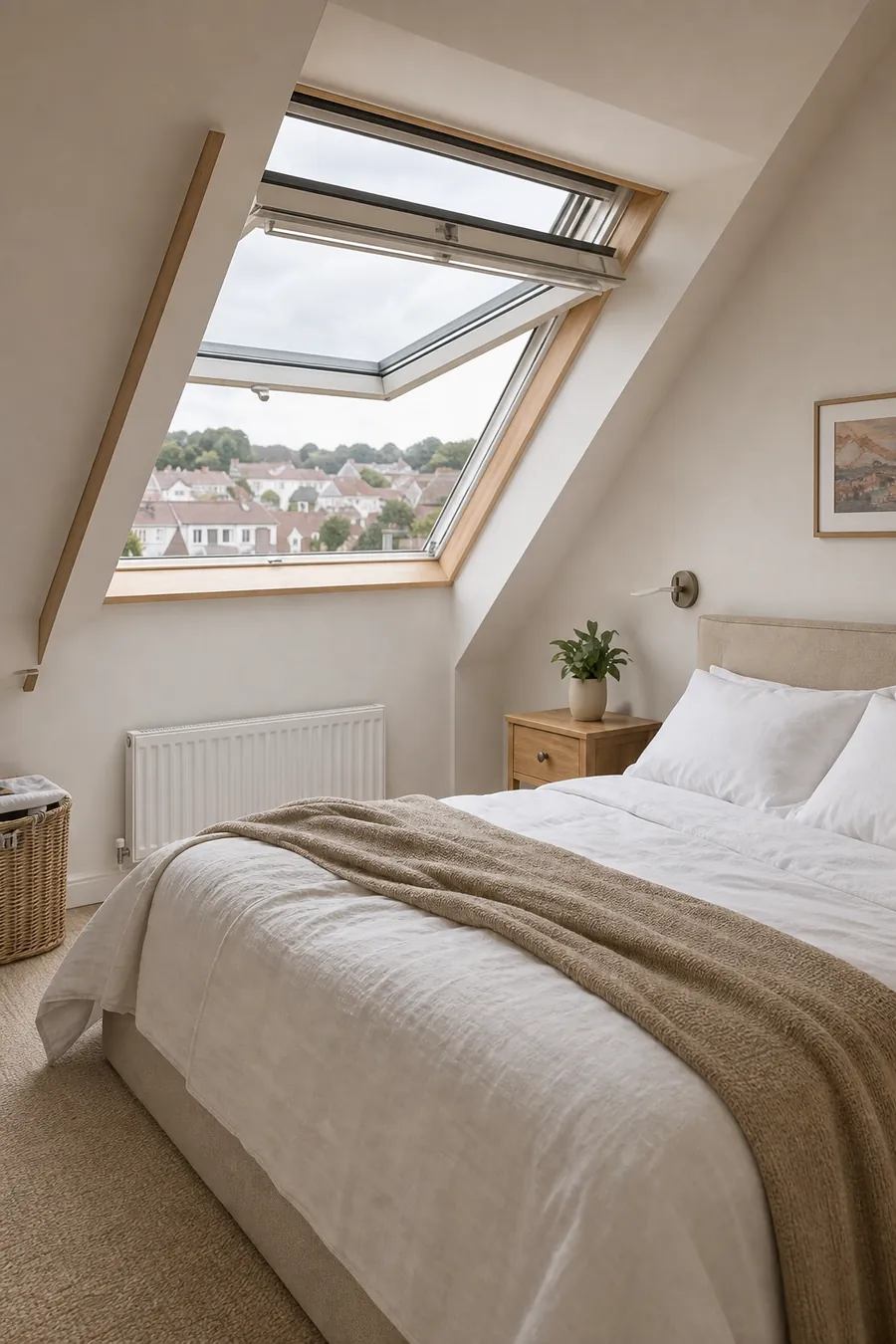
Open the sash and look at the inside of the frame, near the top edge or down one side. The data plate is a small sticker or printed label, often with a barcode. In a loft that has been boarded and painted, it may be partly covered, so a torch and a phone camera help. Photograph the whole plate, not just the code, because the other markings tell us the glass and the type of window.
- Open the sash fully so the frame edge is clear.
- Check the top of the frame first, then the sides.
- Read the letters, then the digits that follow.
- Photograph the full plate with the flash off, so the print is not washed out.
If the window is a few decades old, the plate may be faded or the code may follow an older style. That is not a problem. Send the photograph over anyway and we will read it at the survey, then confirm the frame against the opening itself. A tape measure never lies, and the plate is only a shortcut.

Reading a code, step by step
Take any code and split it in two. The first part is the width, the second part the height. Then compare it with a neighbour on the list. The table shows how to treat each part and what to do with it.
| Part | What it says | What to do with it |
|---|---|---|
| Letters | Frame width | Keep the same to fit between the same rafters |
| Digits | Frame height | Change to gain or lose height up the slope |
| Whole code | The frame size | Quote it on any enquiry |
| Other marks | Glass, type, finish | Photograph them for the quote |
Because width sits in the letters, a change in letters is the bigger decision. A wider frame means a wider hole in the roof, and a wider hole may mean cutting a rafter. A change in digits alone usually moves the window up or down the slope, within the same pair of rafters, and so it is the easier change to make.
That split explains a lot of quotes. Asking for the same code is the simplest job, because the opening already exists. Asking for a taller window with the same letters is the next simplest. Asking for new letters is a bigger job, and it is the one we survey with most care.
Why the same code can still need a different kit
Two roofs can take the same window code and still need different parts. The reason is the flashing, the metal and rubber collar that makes the join between window and roof covering weathertight. A flashing is made for a particular covering: flat tiles, profiled tiles, slate and so on. A Pennant stone roof in a Bristol village will want a different arrangement from a 1930s concrete tile roof.
Pitch matters too. Each window is made for a range of roof pitches, and a very shallow slope can rule a model out. That is why a size code alone is not a quote. The code gives the frame; the survey gives the covering, the pitch, the condition of the timbers and the way in.
The same thinking applies to extras. A blind or an awning is cut to the window's code, so your plate is the starting point for the accessories as well as the window. Electric and solar models are sized in the same way; the range is explained in our guide to VELUX INTEGRA.
Going bigger without enlarging the hole
Wanting more glass is a very natural reason to look at the size codes. The trick is to look for room inside the opening that is already there. A frame is not always as wide as the gap between the rafters, and a taller window can often go up or down the slope without touching the structure.
Going up one size means a big building job.
If the new frame stays between the same rafters, the work can stay close to a like-for-like fit. A wider frame is the one that brings in extra carpentry.
Our guide to a bigger VELUX in the same opening goes through those cases one at a time. In short, we measure the clear space between the timbers, compare it with the codes available, and show the choices on the quote so that you see the gain in glass against the extra work.
Cutting a hole where none exists is a different matter. That counts as building work, and the timbers must be trimmed correctly so the load travels around the gap. We plan and notify that work, and it is shown as its own line in the written quote.
If the plate is missing or unreadable
Old plates fall off, get painted over or fade in the sun. When that happens, work from the window itself. You do not need to be a builder to take useful measurements, and a short list of numbers is worth more than a guess.
- Measure the width of the outer frame across the widest point, in millimetres.
- Measure the height of the outer frame from top to bottom.
- Measure the distance between the two rafters either side, from the loft side if you can reach.
- Note the roof covering, such as slate, plain tile or concrete tile.
- Take a photo from inside and one from the garden, if you can see the roof.
Send those to us and we can usually say which code is likely before the visit. The survey then confirms it. We measure the frame again on site, because a fitted window sits a little smaller than the hole around it.
The same list works if you are in a hurry and want to describe the job over the phone or by message. It also helps if the house has been extended and nobody has the original paperwork. A surveyor reading your numbers can match them to a code and warn you where the opening may be an odd size.
Choosing a size for the room
With the codes understood, the useful question is which size suits the room. Size is a balance between daylight, air and the roof structure, and the right answer changes from room to room.
A loft bedroom in an Edwardian terrace likes a tall, narrow window high in the slope. Stale warm air drains out of the highest point, and the handle stays within reach of the pillow. A bathroom wants a smaller unit over the bath or basin, kept clear of the shower spray. A top landing in a 1930s semi needs enough glass to lift the whole stair, so a broader code is worth the extra framing.
In a bungalow or chalet bungalow, size has a second job. A roof window may serve as an escape window for rooms in the roof, and then the opening has to be big enough and low enough to climb through. Our page on the VELUX window in a bungalow covers that case.
Finally, think about cost as the codes get bigger, and see the VELUX window installation hub for the whole range. A larger frame costs more to make, more to flash and more to fit. The VELUX window fitting cost guide sets out the typical UK factors, and the wider costs page adds the market ranges. Prices stay out of guides like this one, yet each size option gets its own line in the written quote.
What we do with your code at the survey
When we visit, the code is where the conversation starts. We read the plate, check it against the frame and the opening, and then look at what has changed since the window was fitted. Roofs move, coverings are renewed and rooms are re-used, so the answer to "what fits" is not always the answer from the day it was made.
We then show you the choices. They normally include the like-for-like code, the next taller code with the same letters, and any wider code that the rafters allow. Each one carries the opening option, so you can see where a sash that tilts outward or a vent bar for overnight air could be added. The itemised quote comes in writing, with no charge for the survey and no obligation to go ahead.
If you are replacing a whole window, frame and glass, the work is notifiable through Building Control, and we handle the notification. The roof is made weathertight at the end of each day, and your floors are protected while we work. To see what the guide covers for the wider range, go back to the VELUX window installation hub, or look at how long these windows last in how long VELUX windows last.
Size code questions after the first read
Can I order a window from the size code alone?
The code is the right start, but it is not the whole order. The roof covering, the pitch and the opening type also decide the parts. We confirm all of them at the survey and set them out in the written quote.
What if my loft window has no code at all?
Measure the frame and the gap between the rafters, note the roof covering and send us photos. We can usually suggest the likely code from those, then check it on site before anything is ordered.
Does a bigger code let in more fresh air as well as more light?
Not by itself. Air depends on where the window sits and how it opens. A smaller window near the top of the slope can move warm air out more effectively than a larger one set low.
Tell us about the room
A few details is all we need. We'll come out, advise and give you a written quote.
No pressure, no obligation.