Guide · Roof Lanterns · 8 min read
Aluminium or Timber Roof Lanterns: Which Suits Your Extension?
The frame is the part of a lantern you see every day, from below and from the garden. Aluminium and timber both make good lanterns, and they differ in how slim they can be, how they age and what they ask of you afterwards. The sections below set them side by side, then match each to the kind of house it sits on.
What the frame does
The frame does more work than its size suggests. It carries the weight, keeps water out where the panes meet, forms the ridge and gives the whole structure its look. Choose it badly and the lantern may flex, stain or look wrong against the house.
The lantern rooflight frame is made of bars: rafters running up the slope, a ridge along the top, and a base that sits on the kerb. The bars are wider where the span is greater. Thin bars let more daylight through and look elegant. Thick ones look chunky but can bridge longer distances.
Aluminium and timber behave differently here. Aluminium is a strong metal that can be extruded into slim, hollow sections, so it can span a lot with very little visible frame. Timber is a natural material, usually hardwood or engineered wood, and needs a little more depth in each bar to do the same job.
The wider topic is covered in our roof lantern installation hub, and this page deals only with the frame.
We fit both across Bristol and Bath, and each suits some houses better than others, which is what the sections below sort out.
Aluminium frames
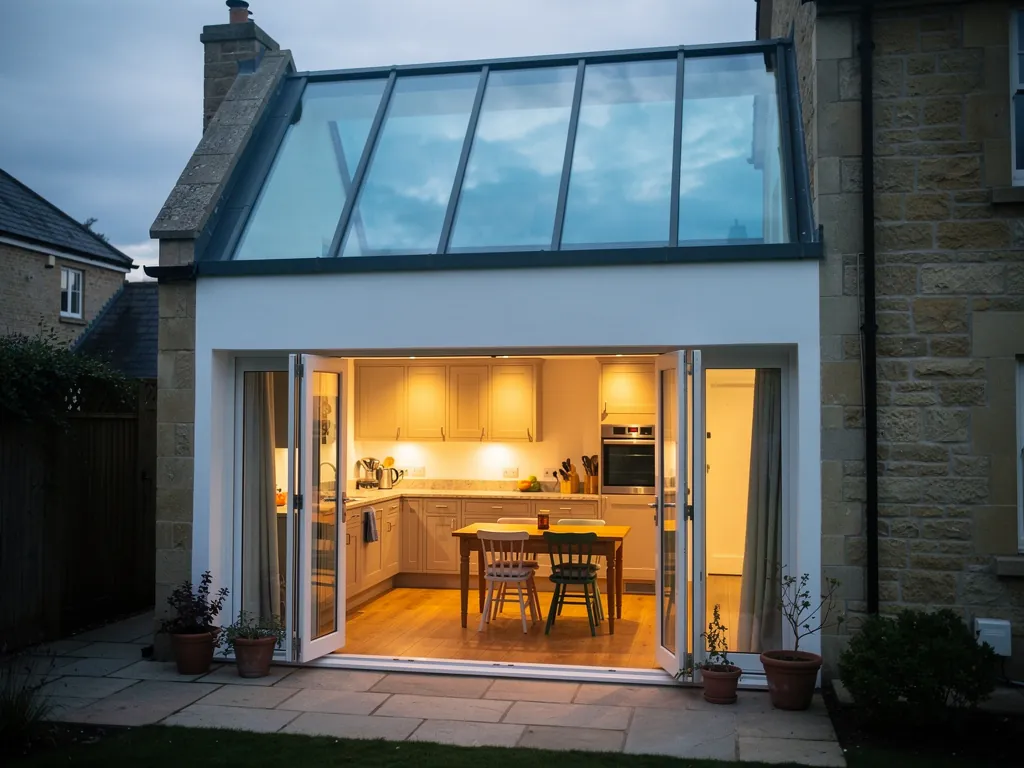
Aluminium lanterns are the common choice on newer extensions and contemporary rear additions. The slim bars let in more light and look crisp from the garden. A powder-coated finish comes in a wide range of colours, and many makers offer a different colour inside and out, so a charcoal exterior can sit above a white ceiling-line interior.
A dark grey outside is currently popular, and it echoes the aluminium window frames on many newer houses. A lighter colour shows less dust and reads as softer against the sky. Inside, white keeps the ceiling bright and lets the structure recede, while a darker interior frame makes the lantern a more graphic feature.
Upkeep is light. The finish is washed with water and a soft cloth, and does not need repainting in the way timber does. The frame does not swell or shrink with the weather.
There are two drawbacks. Metal conducts heat, so good aluminium frames include a thermal break, an insulating strip that separates the inner and outer parts of the section. Quality varies between makers, and it affects comfort and condensation near the bars. Aluminium can also look cold in a very traditional room, where a warm, painted timber ceiling might suit better.
For a bright, modern extension on a newer estate house, or a flat-roofed extension on a 1930s semi where the architecture is plain, aluminium is the natural fit.
Timber frames
Timber looks softer overhead than metal does. From inside, the bars look like part of a joinery scheme, matching the doors, the stair and the window frames. They suit period houses, where the extension should feel as if it belongs to the original building.
The wood is usually a stable hardwood, or engineered timber designed to resist movement. It is finished at the factory with paint or stain, in a colour you pick, and can be repainted later. Because the bars are deeper, the lantern looks sturdier and more traditional, with a slightly heavier outline.
The trade-off is care. A timber frame needs its finish looked after on the outside. The factory coating lasts a good while, but it does not last forever, and the outside of a lantern on a flat roof is a harder place to reach than a window at the back of the house. Planning for that, or choosing a timber lantern with an aluminium-clad exterior, is a sensible approach.
Joints and movement are the points to ask about. Wood takes up and gives off moisture, so a good timber lantern is built from stable sections with factory-sealed joints and a finish applied on every face before assembly. Ask how the maker treats the end grain and the bottom rail, since that is where water sits first. The answers tell you more about quality than the brochure does.
Timber also tends to cost more than a standard aluminium unit of the same size. Pricing is broken down on the roof lantern cost page.
Side by side
| Question | Aluminium | Timber |
|---|---|---|
| Bar width | Slimmest | Deeper, more solid |
| Look inside | Crisp, modern | Warm, joinery feel |
| Colour choice | Wide, in and out | Wide, repaintable |
| Upkeep | Wash only | Refinish outside in time |
| Cost tendency | Usually lower | Usually higher |
| Best on | Modern extensions | Period houses |
Any lantern can mist on the inside on a cold morning with a steamy kitchen below it, and the frame plays a part. A thermal break in an aluminium section and the natural insulation of timber both help the bars stay warmer than bare metal would. Good extraction, and an opening vent, help the moisture clear, but no frame is a cure on its own.
Weight is easy to overlook. Timber is heavier than aluminium, and a large timber lantern puts more load on the kerb and the beams beneath it. For a like-for-like swap on an existing roof that may be nothing to worry about, yet on a roof with a tired structure it can tip the choice toward aluminium. We check this on the survey before any frame is recommended.
The last row is a guide, not a ruling. We have seen timber lanterns that look right on a new house and aluminium ones that sit well on a Victorian terrace, when the bar width and colour were chosen carefully.
Timber lanterns leak more than aluminium ones.
Weathertightness comes from design, glazing seals and a correct fit to the kerb, not from the frame material alone. A well-made lantern of either type keeps the rain out.
If you want to see how frame width connects to a lantern's overall dimensions, our page on roof lantern sizes shows how footprint and span interact.
Matching the frame to the house
Start with what you can see from the garden and from the room, because the house usually settles it.
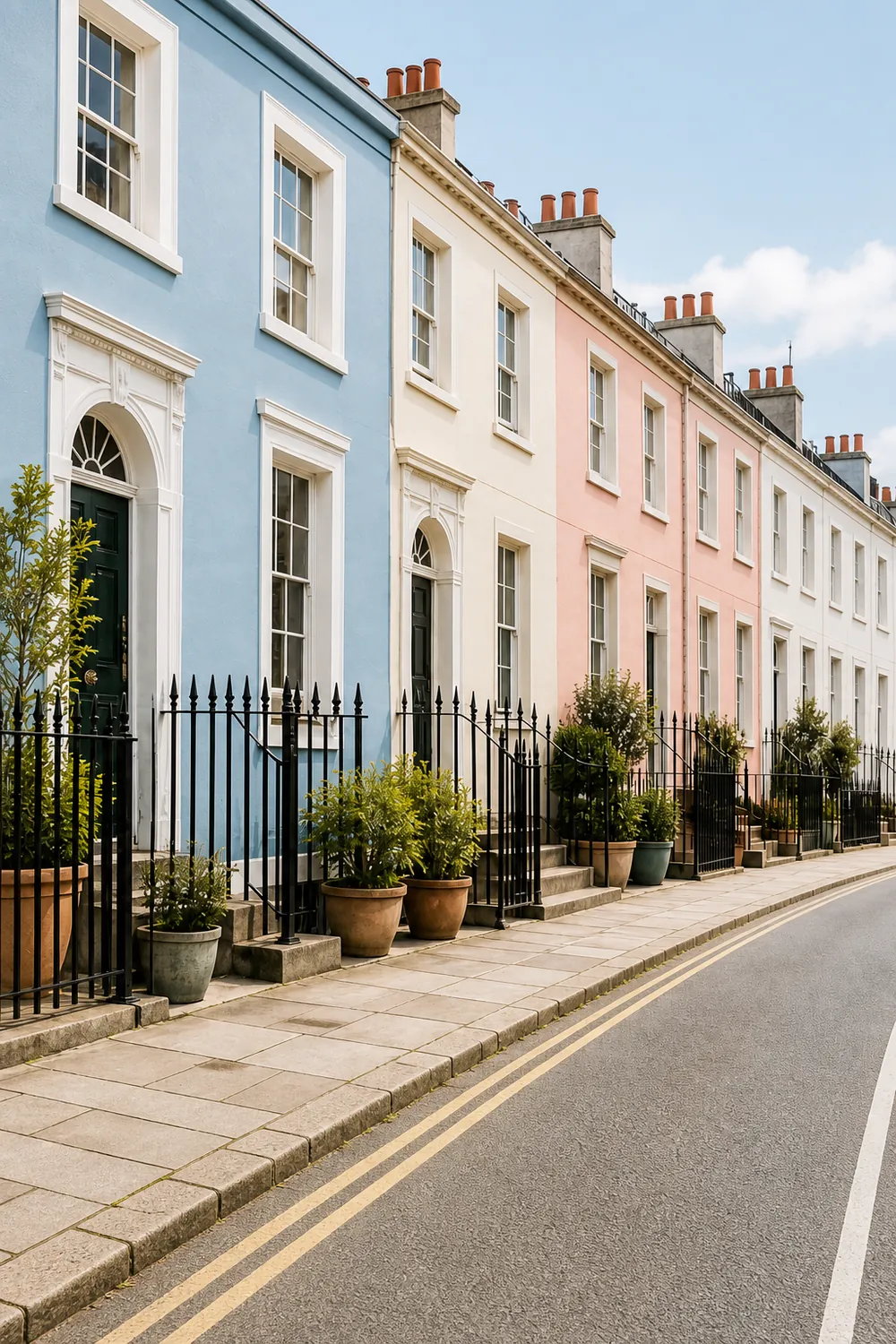
A Victorian or Edwardian terrace with a side-return extension in Bishopston or Cotham often has painted sash windows, panelled doors and a brick or render finish. A painted timber lantern, or a slim aluminium one in a muted colour, will sit comfortably. A Georgian house in Clifton or Bath, where the extension may be in a conservation area, tends to call for restrained detail. In Bath, a World Heritage Site where much of the city lies in a conservation area, the council can have a say, so check with Bath and North East Somerset Council before ordering. The conservation rooflights page covers the slimmer products made for older roofs.
A 1930s semi in Henleaze or Westbury-on-Trym with a flat-roofed rear extension has little period detail to match. Either frame can work, and the choice is more about the interior and budget. On newer estates, such as Bradley Stoke or Emersons Green, with crisp modern windows, aluminium usually matches the glazing already on the house.
Interior finish is the other half. Many lanterns are boxed in to the ceiling with plaster returns, so the frame meets a clean white edge. Others have an exposed internal frame, which suits a timber lantern or a slim aluminium one with a colour-matched interior. Decide this early, because it changes how the ceiling around the lantern is built and finished.
Think about neighbouring windows too. Frame colour that matches the window frames on the house looks calm. A contrasting colour on a lantern can look deliberate if you choose it that way, and awkward if it happens by accident.
Opening, glass and the frame
Both frames can take an opening vent, and the details differ a little. Aluminium makers tend to build vents into the section neatly, with concealed actuators. Timber lanterns can take them too, though the hinge and the seal need good fitting to stay tight as the wood moves with the seasons.
If a vent is a priority, read the guide to the opening roof lantern before you choose the frame. It explains drives, sensors and positions. Glass matters just as much as the frame for summer comfort, and our page on roof lantern overheating sets out how glass, blinds and venting combine.
Energy performance depends on the whole unit. A lantern is assessed as a rooflight, so the 2.2 W/m²K rooflight figure for existing homes applies, rather than the window figure. Either frame can meet it when it is specified properly, and the roof lantern building regulations page covers what applies.
Making the call
Stand where you would sit and look up at the lantern: the bars cross your view at an angle, and a deep timber bar can hide more of the sky than a slim aluminium one. On a dull day the difference is small. Under a bright sky, with the sun low, the shadow of a deep bar crosses the table and the floor, which some people enjoy and others find busy.
Aluminium frames usually show small stainless cap screws or none at all, while timber frames may have visible pins or beads at the glazing joints. You will see those joints every time you look up, so ask to see a corner section before you decide.
It helps to see samples. A short length of each frame, held up against the colour of your window frames and the brickwork, shows more than a catalogue photograph. Ask for sample sections on the survey so you can judge bar depth and finish in the light of your own kitchen.
In the end it comes down to how much frame you want to see, how much upkeep you will take on, and what the rest of the house looks like.
- If the answer is as little frame as possible, little upkeep and a modern house, choose aluminium.
- If it is a warm, joinery look and a period house, and you are happy to refinish the outside in due course, choose timber.
- If you want the timber look inside with less upkeep outside, ask about a timber lantern with an aluminium-clad exterior.
When we visit to survey, we look at the house, the room and the roof. The written, itemised quote then lists each frame option, with the opening choices marked. There is no obligation. Our roof lantern installation page shows how a job runs, and our costs page gives typical UK ranges. Every job carries our ten-year workmanship guarantee, described on the guarantee page.
Frame choice: what owners weigh before ordering
Will a dark aluminium frame make the room feel smaller?
Not usually. Slim bars take up little of the view, and a dark exterior with a pale interior keeps the ceiling light. It is a matter of taste, and we can show colour options on the quote.
How often does a timber lantern need attention?
The factory finish lasts a good while, then the outside wants a fresh coat. How soon depends on the finish, the exposure and the colour. Choosing a clad exterior removes most of that task.
Can I mix a timber inside with an aluminium outside?
Yes, several makers offer timber on the inside and aluminium on the outside. It gives the warm ceiling look with less to maintain on the roof. Ask for it on the survey and we will price it alongside the other options.
Tell us about the room
A few details is all we need. We'll come out, advise and give you a written quote.
No pressure, no obligation.