Guide · Conservation Rooflights · 8 min read
Steel or Aluminium Conservation Rooflights
Two metals dominate conservation rooflights, and the choice between them affects the look of the frame, the weight on the roof, the finish and the cost. Neither wins everywhere. This guide sets steel and aluminium side by side so you can match one to your roof, your council and the room below.
Why the frame material matters
On a slate roof the glass hardly shows. What the eye picks up is the frame: its thickness, its colour, and the way it catches the light. A conservation rooflight exists to make that frame as modest as it can be, and the material it is made from sets how thin it can go.
Steel and aluminium are the usual choices, with other metals appearing in some ranges. Both are cast, drawn or folded into slim sections that recall the iron rooflights found on Victorian roofs, which is why a good unit is sometimes described as a cast iron style skylight even though it is not cast iron at all. Real cast iron survives on old roofs, but a new unit made from it would be heavy and costly, and it is brittle if knocked. Few makers offer it for new work, so most owners looking for the old look choose one of the two metals below. That is no bad thing, since modern frames are built to current standards and made to fit.
The decision sits alongside other ones, such as whether the unit opens and whether the glass is double glazed. Our conservation rooflight installation hub shows the whole range, and the pages on double glazed conservation rooflights and opening conservation rooflights deal with those two questions.
- Sightline the width of frame you see from inside or out, as a strip around the glass
- Thermal break a plastic insulating strip inside a metal frame that stops heat passing straight through
- Powder coating a baked-on paint finish that gives a hard, even colour
- Galvanising a zinc layer that protects steel from rust
Nothing here is a rule that one material is correct for heritage work. Makers publish their own sections and finishes, and the same metal can look quite different from one range to another, so the drawing of the actual unit matters more than the name of the metal. Ask to see the section through the frame, with the glass in place, before you commit to either. Conservation officers look at the result on the roof, and a well-detailed aluminium unit can be accepted where a heavy steel one is not, and the reverse also happens.
Steel: slim, strong and traditional in feel
Steel is strong for its thickness, so a steel frame can carry the glass with a very fine section. That is its chief appeal. The bars are narrow, the corners are crisp, and the unit looks close to the drawn lines of an old iron rooflight. On a Georgian roof in Bath or a Victorian villa in Clifton, that finer line can help a proposal sit quietly in the slope.
The finish is the thing to ask about. Bare steel rusts, so a good unit is protected: galvanised, coated, or both. The coating is the frame's defence, and the maker's guidance on how to look after it should be followed. In a sheltered position it lasts well. By the coast, or where a roof is shaded and stays damp, a steel unit needs a watchful eye, and any chip in the coating should be dealt with promptly.
Steel is heavier than aluminium. On a roof of old timber, weight is not usually a worry for a single unit, though larger ones may need the rafters strengthened around the opening. Stainless steel is a further option that avoids the rust question, at a higher price.
Steel is also less forgiving to make in curves and complex shapes, so the range of profiles tends to be narrower and the lead times longer. Where a unit has to match an existing opening exactly, a made-to-order steel frame is common and worth allowing time for.
Aluminium: lighter, with more finishes
Aluminium does not rust, and it is light. A powder-coated aluminium frame holds its colour for a long time with little more than an occasional wash, which suits owners who do not want to think about upkeep. The coating can be matched to a wide range of colours, so a dark grey close to slate or a near-black can be chosen to suit the roof.
The metal is easy to extrude into precise sections, and this is where aluminium has an edge: it can include a thermal break and a channel for the seal. That helps a double glazed unit perform well without making the frame much thicker. Thermal performance is also why Part L figures come into the choice. Energy limits differ for a rooflight and a roof window under Part L 2021, so the quote states which category your unit falls into.
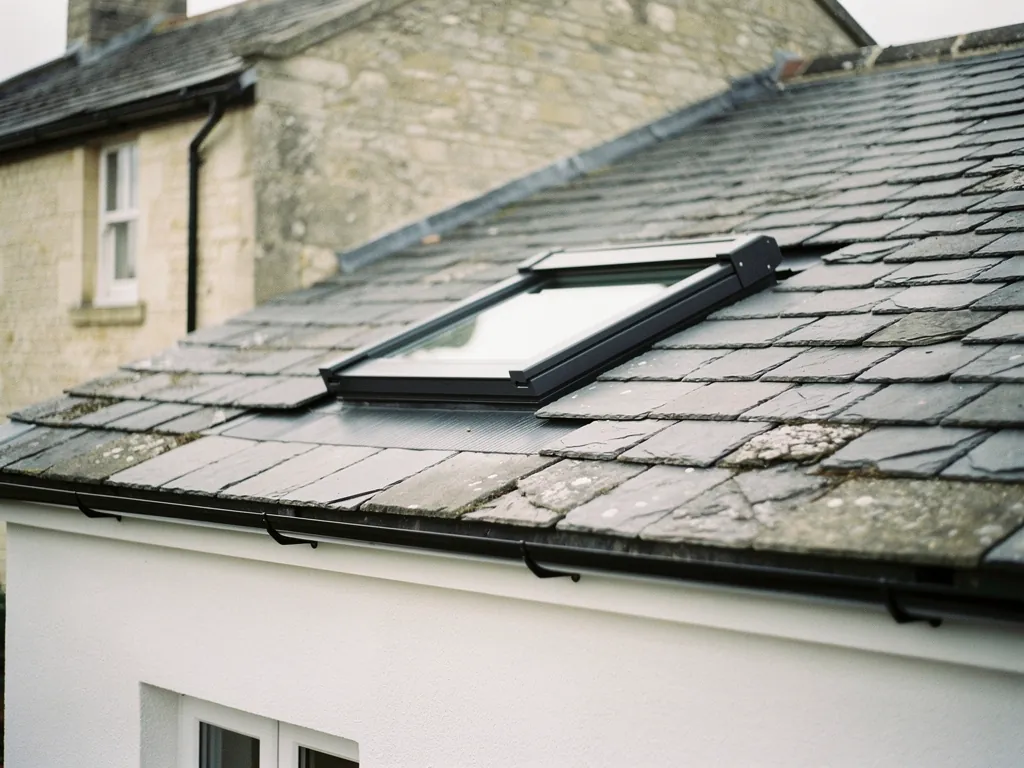
Aluminium is a little softer than steel, so the sections may be slightly deeper to match the strength, and the profile may look a touch less crisp up close. From the street the difference is small. Many people could not tell the two apart on a roof, though a conservation officer who sees many applications may.
Aluminium suits openers well. Hinged sashes, electric operation and rain sensors are easier to build into an aluminium frame, so if the rooflight is to open, particularly over a stairwell, the choice often leans this way. Opening options differ from maker to maker, and we show them on the quote.
The two side by side
| Point | Steel | Aluminium |
|---|---|---|
| Frame | Slimmest | Slim, slightly deeper |
| Weight | Heavier | Lighter |
| Rust | Needs coating care | Does not rust |
| Upkeep | Check the finish | Wash occasionally |
| Colour | Fewer options | Wide range |
| Opening | Possible, fewer styles | More styles |
| Cost | Typically higher | Typically lower |
The table is a guide, not a verdict. Prices depend on size, glazing and maker, so the cost line is a general pattern and not a promise. Our conservation rooflight cost page covers the factors behind a price, and the broader cost overview gives typical market ranges for different kinds of work.
It is worth saying that either material, properly specified and fitted, can last for many years. The difference is in what you have to do and how it looks, not in whether the unit will do its job. Deciding on the look first, then the practical points, tends to give a result that people stay happy with long after the scaffold has gone.
When two units seem equal, let the room settle it. A tall stairwell with an electric opener leans towards aluminium. A fixed unit over a landing in a listed Georgian house leans towards a fine steel frame, if the budget allows.
Matching the metal to the house and the council
Start with the house. A Georgian terrace in Clifton or Bath usually has a plain slate roof, and the rooflight there is judged against the cast iron originals that sometimes still survive on neighbouring roofs. A fine steel frame follows that tradition most closely. Over a Victorian terrace in Bedminster or Redland the roof may be more modest, and a dark aluminium unit does the job without fuss.
The status of the building matters next. A listed house needs consent, and the officer may have a view on the frame, so ask early. See our guide to listed building consent for a rooflight for how that works. A house in a conservation area but not listed follows the planning route described in rooflight planning in a conservation area, where the visible effect on the street is what counts.
The council will insist on steel for any heritage roof.
Councils judge the result, not the metal. A slim, dark, well-detailed aluminium unit is accepted in many cases, and a clumsy steel one can be refused.
Bristol City Council, Bath and North East Somerset Council and the other authorities around us each take their own view, so the reliable step is to ask. For the wider picture across both cities, with notes on slopes and sizes, read heritage skylights in Bristol and Bath.
Fitting, glass and what to ask before you order
Whichever metal you choose, fitting is where the quality of the job shows. A rooflight set into a slate roof needs its flashings dressed neatly, the slates cut and laid around it, and the upstand kept to a minimum so the unit lies close to the roof. Forming a new opening is building work, so the structure around it is framed up correctly, and Building Control is told by us wherever the job calls for it.
Questions worth putting to us, or to anyone quoting, include these:
- What is the finish on the frame, and what care does it need?
- Is the glass sealed double glazing, and how thick is the frame with it?
- Can the unit open, and how, and is there a rain sensor option?
- What is the lead time for a made-to-measure frame?
- What does the council need to see to approve it?
Glass choices follow the same pattern for both metals: clear for the most daylight, solar control for a hot aspect, and an inner laminated pane if the unit sits over a bed or a bath. Laminated glass is a recommendation, not a requirement; Part K does not demand it in a house roof.
The fitters are one team from start to finish. Each evening the roof is left sealed against rain, and floors are covered, which matters in an older house. A 10-year workmanship guarantee covers the installation, as explained on our guarantee page.
How to decide and what happens next
Put plainly, steel gives the finest line and a traditional feel, and asks a little more of you in care and budget. Aluminium gives a lighter, lower-maintenance frame with more colours and more opening styles, and sits a touch deeper. A fixed unit over a landing suits either. An opener over a stair leans aluminium.
If you are still undecided, bring both options to the survey. We visit for free, look at the slope and the room below, and send a quote in writing, itemised line by line and free of commitment, that prices each metal side by side, so the difference on your own roof is clear. We also show how each unit would open and where a fixed one is enough.
For anything involving a listed house or a conservation area, check the planning position before you order. Our planning answer explains the permitted development limits and where they stop applying.
When you are ready, return to the conservation rooflight hub to see the whole range, or book a survey and ask for both frames to be priced.
Steel or aluminium: the second thoughts owners have
Will a cast iron style skylight rust on a north-facing slope?
Aluminium will not. A steel unit is protected by its coating, and a shaded slope that stays damp is where that coating gets tested, so ask about the finish and keep an eye on it.
Can I mix materials if I fit two rooflights?
You can, but two different frames on one slope look uneven from the street. Using the same material and finish on both is usually the neater choice.
Does the metal affect how well the rooflight keeps heat in?
The frame design and the glass matter more than the metal alone. A thermal break and a sealed double glazed unit do most of the work, and the quote confirms the figure for each unit.
Tell us about the room
A few details is all we need. We'll come out, advise and give you a written quote.
No pressure, no obligation.